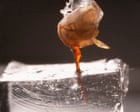
Honeybee stingers continue pumping venom after detaching from the insect's body, according to high-speed video footage captured by researchers at Macquarie University. The two-millimetre stingers remain active and deliver venom even when separated from the bee itself.
Researchers used a clear gel that mimics human skin as a target to conduct their experiments. They detached the stingers and filmed them using high-speed video to observe the venom-pumping process. The footage reveals a previously unknown mechanism that allows the stinger to function independently after leaving the bee's body.
This finding explains why honeybee stings remain dangerous even after the bee has flown away. The continued venom delivery from a detached stinger increases the amount of toxin delivered to a victim, amplifying the sting's potency. The autonomous venom-pumping action occurs through muscular contractions within the stinger itself, enabling it to operate without neural control from the bee.
The research contributes to scientific understanding of honeybee biology and insect defense mechanisms. It demonstrates that the stinger's venom delivery system functions as a semi-autonomous unit rather than relying entirely on the bee's muscular control. This adaptation represents an evolutionary strategy that maximizes the effectiveness of the bee's defensive response.
The study has implications for understanding how honeybees protect their colonies and why their stings pose persistent hazards. The discovery that stingers continue working after detachment could inform medical understanding of honeybee sting injuries and venom exposure in human skin.