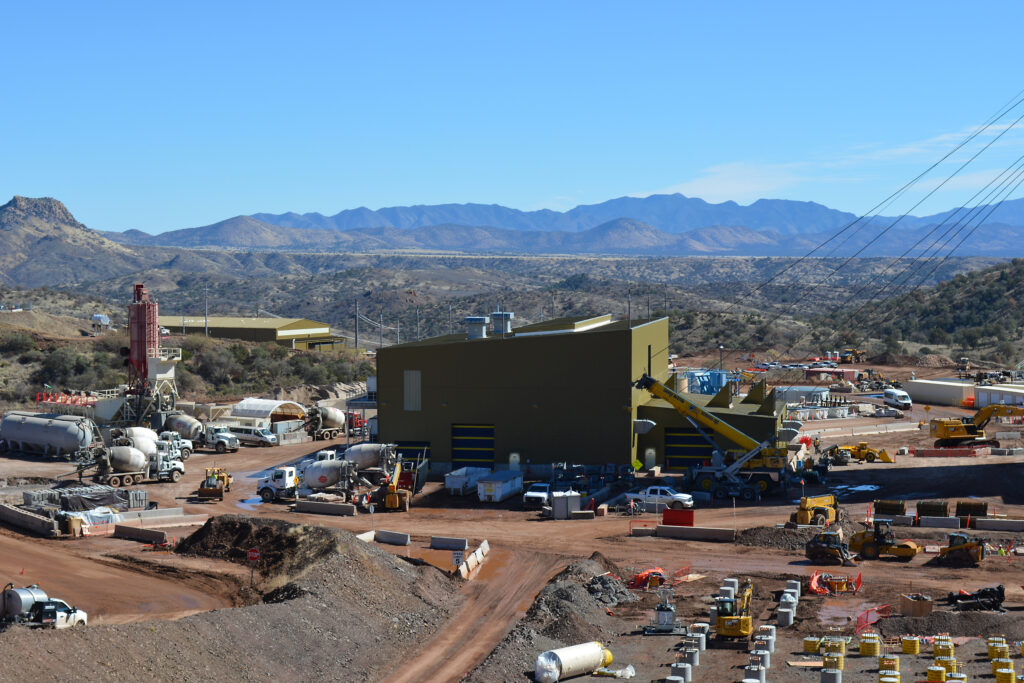
Environmental groups filed suit against the U.S. Department of Interior and other federal agencies this week, challenging the permitting of South32's Hermosa mine in Arizona's Patagonia Mountains. The case centers on whether the government correctly applied a streamlined review process designed to accelerate critical minerals development on federal lands.
Hermosa represents the first mining project admitted to the Biden administration's Critical Minerals Mining Permitting Pilot Program, launched to compress timelines for extracting zinc, copper, and other minerals deemed essential for electric vehicle batteries and renewable energy infrastructure. South32, an Australia-based mining company, secured approval under this expedited framework after the Interior Department determined the project met program criteria.
The lawsuit, filed by conservation organizations, contests the adequacy of environmental review under the National Environmental Policy Act (NEPA). Plaintiffs argue the streamlined process bypassed rigorous analysis of impacts to groundwater, wildlife habitat, and air quality in a region already facing water scarcity challenges. The Patagonia Mountains sit atop Arizona's fragile aquifer systems. Mining operations typically require substantial water extraction, raising concerns about depletion during an era of unprecedented Western drought.
Federal agencies defended the approval process. The Interior Department characterized Hermosa as meeting "clear timelines, real transparency, and comprehensive interagency coordination," signaling the pilot program's intent to balance development speed with environmental scrutiny. Proponents argue that accelerating domestic critical minerals production reduces U.S. reliance on imports from countries with weaker environmental standards, particularly China, which controls much of global rare earth processing.
The tension reflects a core policy dilemma. The energy transition requires massive quantities of battery metals. The U.S. Geological Survey identified zinc, copper, and cobalt among 50 minerals now classified as critical to national defense and economic security. Yet mining these materials invariably harms ecosystems. Hermosa would disturb approximately 3,500 acres and generate tailings stored in perpetuity.
The lawsuit names the Interior Department, the U.S. Forest Service, and the Bureau of Land Management. It requests the court halt mining activities pending fuller environmental review. A federal judge must now determine whether the pilot program's condensed timeline and simplified procedures satisfied NEPA's statutory requirements. Environmental law experts view the case as a test of whether fast-tracked permitting can survive judicial scrutiny.
The outcome carries implications beyond Hermosa. At least 10 other mining projects have sought entry into the pilot program, awaiting federal decisions. If courts reject the streamlined approach, future critical minerals projects face lengthy traditional permitting cycles, potentially extending timelines to a decade or more. If courts uphold the program, environmental litigation may become the primary mechanism for challenging controversial mines.
The Interior Department maintains that ignoring critical minerals demand forces the U.S. to import processed metals from less environmentally regulated countries, ultimately harming global emissions reduction goals. Environmental groups counter that water depletion in Arizona carries consequences for agriculture, municipalities, and desert ecosystems that warrant extended analysis regardless of geopolitical considerations.
Oral arguments have not yet been scheduled. The case unfolds as Congress continues debating broader mining reform legislation and as EV adoption accelerates demand for battery materials.