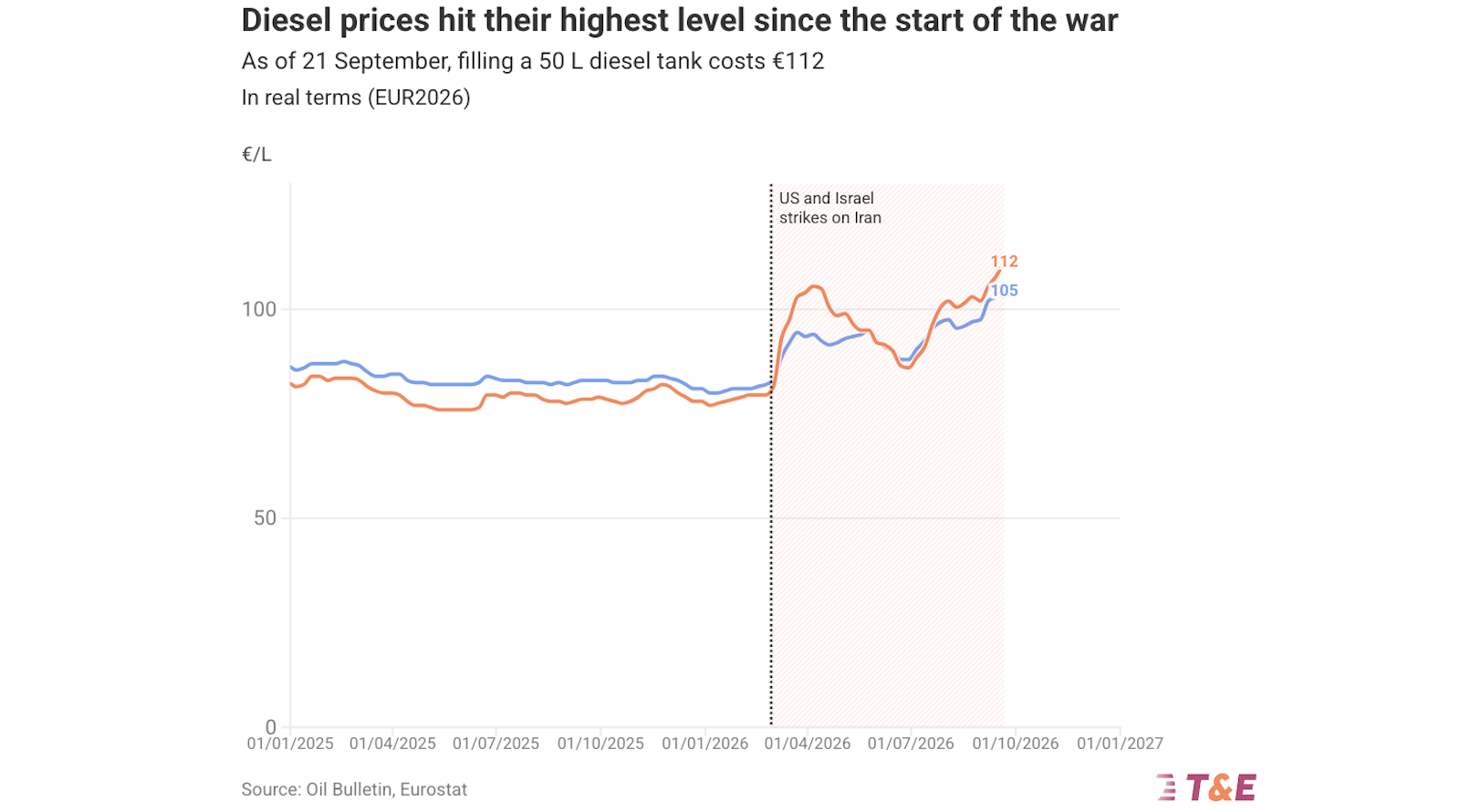
European diesel prices have surged to levels not seen since geopolitical upheaval in Iran, creating a widening cost gap that now favors electric vehicles by a factor of two. Transport and Environment (T&E), a Brussels-based advocacy group, released analysis showing EV drivers pay roughly half what diesel drivers spend per kilometer traveled.
The disparity reflects both fuel and electricity price movements across Europe. Diesel costs have climbed €32 per tank above pre-Iran crisis levels, according to T&E's data. Meanwhile, charging an EV remains substantially cheaper. The organization calculated average per-kilometer operating costs, finding electric propulsion delivers dramatic savings for drivers willing to shift technology.
This cost reversal arrives as European leaders convene in Brussels to address the continent's energy security crisis. The timing underscores a paradox: soaring fossil fuel prices now make the green energy transition economically rational, not merely environmentally necessary. For years, EV advocates framed electrification as an environmental imperative requiring consumer sacrifice. Current market conditions invert that argument entirely.
T&E's analysis carries weight in policy circles. The organization tracks vehicle emissions, fuel costs, and charging infrastructure across EU member states. Its research informs European Commission discussions on transport decarbonization and energy independence. The finding that EVs cost half as much to operate as diesel vehicles removes a primary barrier to adoption in price-sensitive markets.
Diesel's price climb reflects multiple pressures. Refinery constraints limit supply. Geopolitical tensions keep crude costs elevated. Winter demand for heating oil competes with automotive diesel for limited stocks. European governments face political pressure to shield consumers from energy price shocks while simultaneously accelerating transport electrification. These competing demands shape policy debates across the continent.
EV adoption remains uneven across Europe. Scandinavian countries lead with 80+ percent market share in some regions, driven by government incentives and charging infrastructure investment. Southern and Eastern European nations lag, where lower incomes and sparse charging networks slow transition. Cost parity at the pump eliminates excuses in wealthy markets. It becomes an option for middle-income buyers in markets with adequate charging.
Battery costs continue declining. Tesla's manufacturing expansion in Germany will boost supply and reduce prices further. Volkswagen, BMW, and other legacy automakers accelerate EV launches to compete. This supply surge will deepen cost advantages over diesel vehicles, making the transition less optional.
Infrastructure remains the binding constraint. Drivers need confidence that chargers exist on commute routes and long journeys. Public investment in charging networks lags vehicle production growth in most countries. France and Netherlands lead on charging density. Germany, Italy, and Spain play catch-up. Eastern European charging infrastructure remains sparse.
T&E's cost comparison assumes reasonable electricity prices and home charging access. Rural drivers without garage charging or those in countries with expensive grid power face steeper cost calculations. Commercial fleets, which account for substantial diesel consumption, show different economics. Heavy-duty vehicles and long-haul trucking require battery chemistries and charging times still under development.
The analysis strengthens the case for accelerating EV adoption in wealthy markets where charging infrastructure exists. For policymakers weighing transport decarbonization against energy security, diesel's cost spiral removes objections based on consumer burden. The numbers now favor electrification on pure economics. Implementation barriers shift toward infrastructure, manufacturing capacity, and grid readiness rather than vehicle affordability.