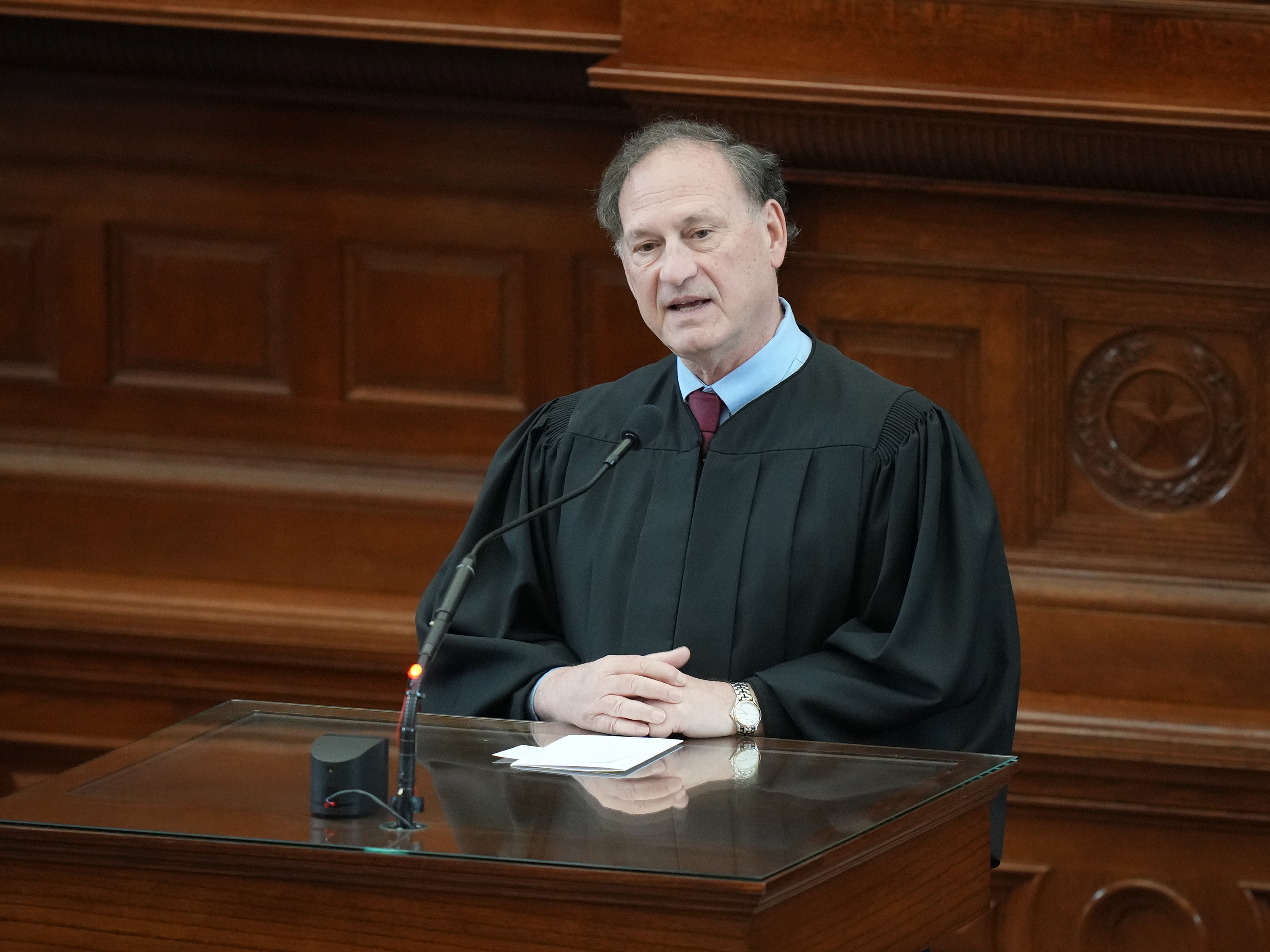
Justice Samuel Alito announced his recusal Monday from a major climate case before the Supreme Court, reversing months of resistance to calls for his withdrawal. The decision came one week before oral arguments and follows sustained pressure from ethics advocates and legal scholars who documented his holdings in fossil fuel stocks and other corporate securities.
Alito owns individual shares in multiple companies, including firms with direct exposure to climate policy outcomes. His financial interests created an apparent conflict in cases where the Court rules on greenhouse gas emissions, renewable energy mandates, or environmental regulations that could affect stock valuations. The justice initially declined to recuse himself despite disclosure of these holdings, prompting criticism that he remained on a bench considering cases where his personal wealth could rise or fall based on the Court's decisions.
The timing of Alito's recusal matters. Coming one week before oral arguments in a case experts describe as consequential for climate law, the move allows his replacement to enter with limited preparation time. Legal observers note the Court's calendar for the term had already been set with Alito as a full participant. His departure from this particular case does not address the underlying issue that prompted recusal calls. Alito continues to hold the same stocks in future terms, meaning similar conflicts could arise in upcoming environmental and energy cases.
Legal ethics standards for federal judges require recusal when "a judge's impartiality might reasonably be questioned." The standard applies when a judge has "a financial interest in the subject matter in controversy or in a party to the proceeding." Alito's fossil fuel holdings appear to meet that threshold according to ethics law specialists. His recusal from one case does not eliminate the conflict that persists across his docket.
The Supreme Court faces no external enforcement mechanism for ethics violations. Unlike lower federal courts, the justices police themselves. Alito's decision to withdraw from this specific case represents voluntary compliance rather than a ruling by a judicial ethics board or external authority. The Court does not publish ethics guidelines or require justices to recuse themselves in any binding sense.
The fossil fuel industry watches Supreme Court decisions closely. Environmental regulations, carbon pricing schemes, and renewable energy standards all flow from Court rulings on administrative law and the Clean Air Act. A justice holding stock in major oil and gas companies faces inherent pressure, whether conscious or not, to rule in ways that protect those investments. Even the appearance of conflict undermines public trust in the institution.
Legal experts anticipate the case will proceed with Alito's replacement. The Court has not announced which justice will take his seat on the bench for oral arguments. The decision preserves the Court's legitimacy on this particular case, but does not resolve the broader question of whether sitting justices should divest from companies whose fates depend on Court decisions involving environmental and climate policy.
This case represents one of several major climate matters on the docket. Future cases will likely present similar conflicts if justices retain holdings in fossil fuel and energy sector stocks. Alito's recusal sets a precedent for addressing the issue in individual cases, though structural reforms to judicial ethics disclosure and divestment requirements remain unaddressed.