# China's EV Dominance and Infrastructure Exports Create Global Climate Crossroads
China has emerged as the world's largest electric vehicle manufacturer and exporter, a position that reshapes automotive markets while its Belt and Road Initiative simultaneously exports carbon-intensive infrastructure across the globe. This dual trajectory defines one of the decade's central climate paradoxes: a nation racing ahead in clean technology while financing fossil fuel-dependent development elsewhere.
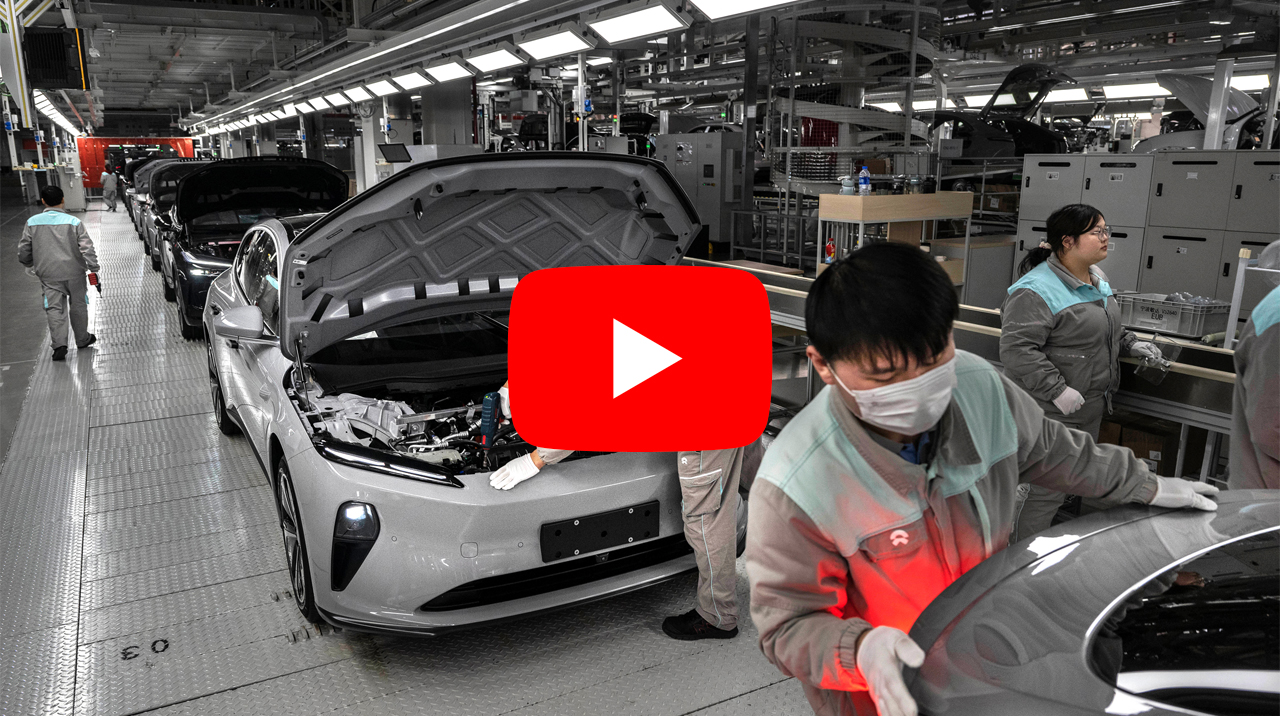
Chinese EV exports have surged dramatically. In 2023, China shipped 1.2 million electric vehicles abroad, capturing roughly 60 percent of the global EV export market. Tesla, once dominant in overseas EV sales, now competes directly with Chinese manufacturers like BYD, NIO, and Li Auto in markets traditionally controlled by American and European automakers. BYD alone sold more battery electric vehicles globally than any other company in 2023, exceeding Tesla's deliveries. These vehicles now penetrate markets across Europe, Southeast Asia, Latin America, and increasingly North America, where tariffs seek to limit their entry.
The economic stakes are substantial. China's EV supply chain, from battery production to vehicle assembly, operates at scales that competitors have struggled to match. The country controls roughly 80 percent of global lithium-ion battery cell manufacturing capacity. This manufacturing dominance translates directly into pricing power and market share. For consumers, Chinese EVs offer lower prices and comparable technology. For incumbent automakers in Detroit and Stuttgart, the pressure intensifies.
Yet China's climate footprint extends far beyond vehicle exports. The Belt and Road Initiative, launched in 2013, has committed over one trillion dollars to infrastructure projects spanning more than 140 countries. Roads, railways, ports, dams, and power plants funded by Beijing reshape development patterns across Asia, Africa, and Latin America. Environmental assessments reveal a troubling pattern: many Belt and Road projects lock recipient nations into coal-dependent electricity grids, cement production, and extractive industries. Hydroelectric dams have displaced communities and disrupted ecosystems. Coal plants financed by Chinese banks operate across Southeast Asia, South Asia, and Africa, generating emissions across decades.
The World Bank estimated that Belt and Road projects could increase annual global emissions by up to 15 percent if fully implemented as planned. Chinese institutions have financed coal plants in Bangladesh, Pakistan, Indonesia, and Mozambique. Simultaneously, Beijing has positioned itself as a climate leader, committing to carbon neutrality by 2060 and investing heavily in domestic renewable energy.
This contradiction reflects China's strategic interests: exporting clean technology maintains competitive advantage and attracts overseas investment, while infrastructure financing secures natural resources, market access, and geopolitical influence. The initiatives operate on parallel tracks, not integrated ones.
For policymakers in the United States and European Union, the challenge is clear. Chinese EV competition requires either matching manufacturing scale or imposing trade barriers. The infrastructure question proves more complex. Developing nations seeking investment have limited alternatives to Chinese financing, creating a structural dependency that perpetuates emissions even as individual nations commit to climate targets.
The outcome of these two trajectories will shape global emissions pathways for decades. China's EV exports accelerate the transportation sector's decarbonization. Its Belt and Road financing, conversely, embeds carbon-intensive infrastructure into developing economies precisely when those nations should be leapfrogging fossil fuels entirely.