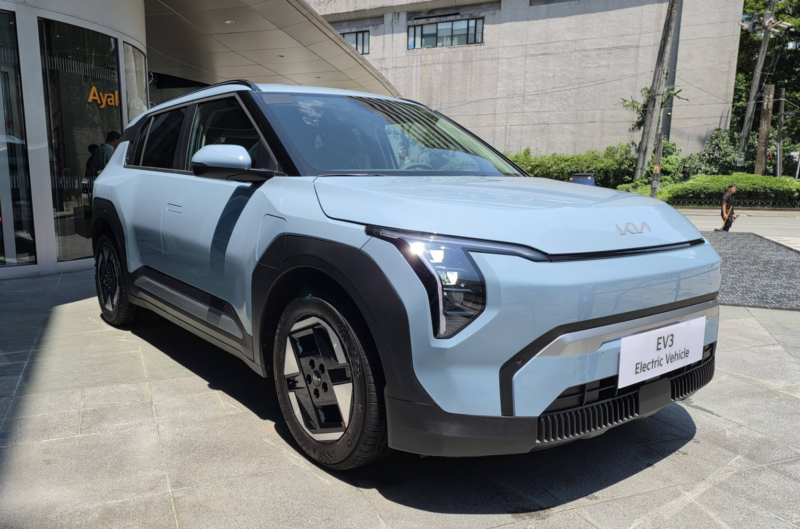
Kia Philippines launched the EV3 subcompact electric crossover on September 21, pricing the vehicle at 1.898 million Philippine pesos (approximately $30,400) to compete in the compact EV segment. The Ayala-backed distributor introduced the model in a single GL trim configuration, positioning it below the larger EV9 in Kia's local electric vehicle lineup.
The EV3 enters a market where compact battery-powered crossovers face growing demand across Southeast Asia. Kia's pricing strategy targets buyers seeking affordability in the EV space without compromising on practicality. The subcompact form factor addresses urban markets where parking and maneuverability present constraints for larger vehicles. At roughly $30,400, the EV3 competes directly with comparable battery-powered options available in the Philippines, where electric vehicle adoption continues accelerating across the middle-income segment.
Kia's move reflects broader automotive trends in the region. Southeast Asian manufacturers and importers increasingly recognize that affordable electric crossovers unlock larger customer bases than premium offerings. The EV3's positioning undercuts luxury-oriented competitors while maintaining quality standards associated with Kia's brand reputation. Single-trim configurations simplify manufacturing and distribution logistics, a practical approach for establishing new models in emerging markets.
Technical specifications for the EV3 remain partially disclosed in available materials. The vehicle's subcompact dimensions suit dense urban environments across Philippine cities like Metro Manila, where congestion and limited parking drive preference for smaller vehicles. Battery capacity, range, and charging specifications typically distinguish trim levels, though Kia's single GL option suggests a streamlined approach focused on core functionality.
The Philippine electric vehicle market shows measurable growth trajectories. Government incentives, including tax breaks for EV purchases, support consumer transitions from internal combustion engines. Infrastructure development for charging stations expands in major urban centers, reducing range anxiety that previously deterred adoption. Kia's local distributor positions the EV3 within this expanding ecosystem, capitalizing on improving conditions for EV ownership.
Competitive pressure intensifies as multiple manufacturers introduce affordable electric crossovers. Tesla, BYD, and local brands all pursue market share in the compact segment. Kia's established dealer network across the Philippines provides distribution advantages competitors sometimes lack. Service infrastructure for battery-electric vehicles remains critical to consumer confidence, and Kia's presence addresses this requirement directly.
The EV3 launch reflects parent company Hyundai Motor Group's broader electrification strategy. Kia targets significant EV sales growth across Asia-Pacific markets through 2030, with affordable models functioning as volume drivers. The Philippine market represents a test case for sub-$35,000 electric crossover positioning in developing economies.
Supply chain considerations shape Kia's regional approach. Manufacturing proximity in South Korea enables efficient shipping to Philippine ports. Local assembly remains unlikely given current market size, but volume growth could justify future production facilities. Import tariffs and regulatory frameworks in the Philippines influence pricing strategies and profit margins for foreign manufacturers.
Consumer response to the EV3 will inform Kia's commitment to additional trim levels or variants. Initial sales data will demonstrate market appetite for subcompact electric crossovers at this price point. If demand strengthens, expanded configurations and potentially smaller price points could follow.
The EV3 launch advances Philippines transport electrification incrementally. Individual vehicle introductions compound into systemic shifts toward zero-emission mobility. Kia's participation in this transition, through affordable pricing and practical design, contributes measurably to regional decarbonization objectives tied to climate commitments.