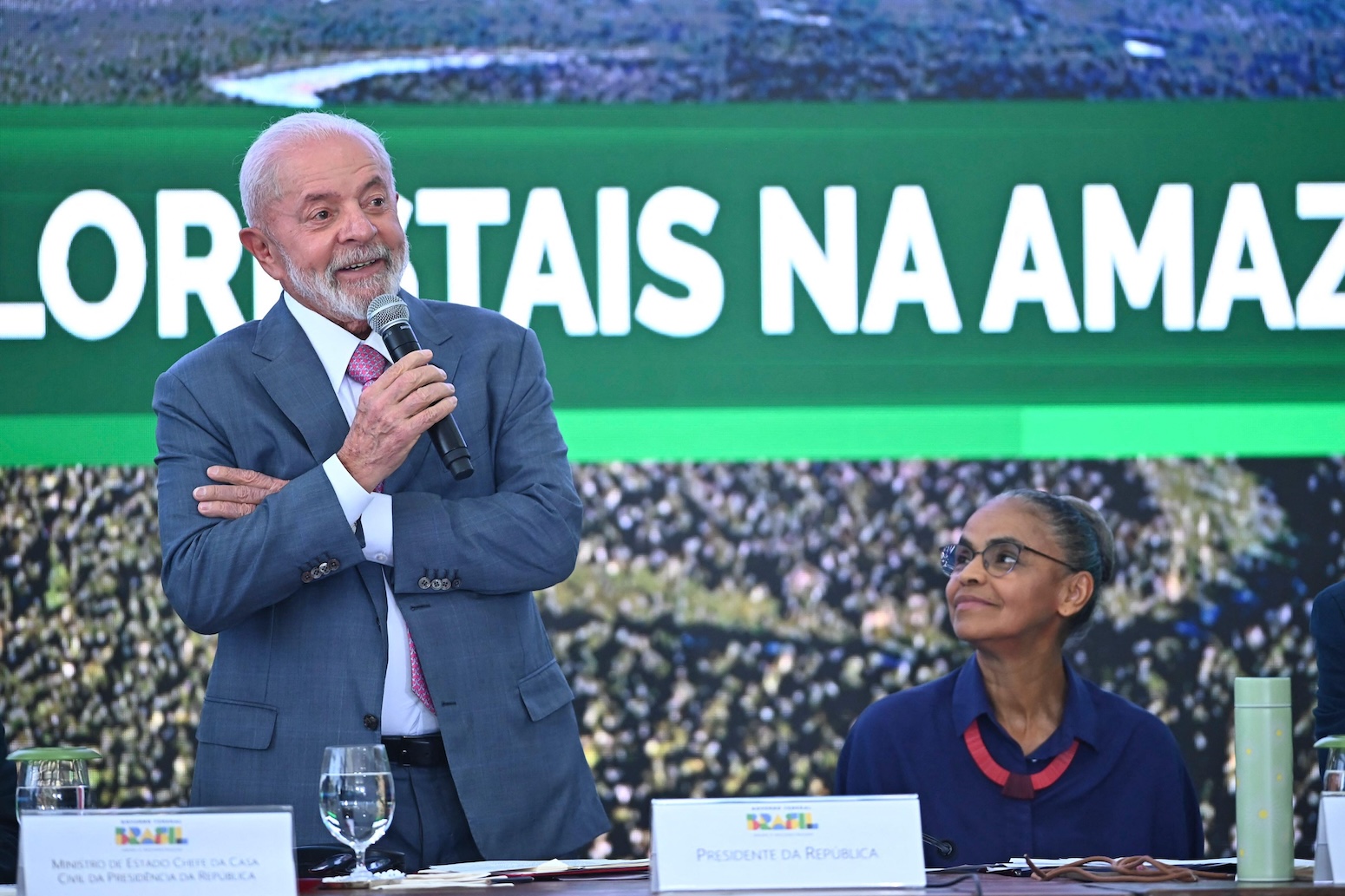
Brazil's Amazon deforestation rate has dropped sharply under President Luiz Inácio Lula da Silva, with at least 20,000 square kilometers of rainforest remaining intact that would have been cleared under the previous administration's trajectory. The preserved area equals roughly the size of New Jersey.
This analysis comes from Carbon Brief, which examined satellite deforestation data and compared forest loss trends between Lula's current presidency, which began in January 2023, and the administration of Jair Bolsonaro that preceded it. The finding reflects a dramatic policy reversal on environmental enforcement in the world's largest tropical forest.
The Amazon's annual deforestation rate has fluctuated significantly over recent decades. Under Bolsonaro's 2019-2022 tenure, deforestation accelerated substantially as the administration weakened environmental protections, reduced funding for enforcement agencies, and signaled tolerance for illegal logging and land clearing. Deforestation reached its highest rate in over a decade during that period.
Lula campaigned on a platform that included stronger Amazon protection and rejoining international climate agreements. Since taking office, his administration has increased funding and personnel for IBAMA, the Brazilian Institute of Environment and Renewable Natural Resources, which monitors illegal deforestation. The government has also deployed military operations in the Amazon to combat illegal logging operations.
The 20,000 square kilometer figure represents the cumulative difference between the deforestation that occurred and what models project would have happened if Bolsonaro-era policies and trends had continued. This calculation depends on satellite imagery from sources like NASA and the European Union's Copernicus program, which track forest loss with increasing precision through thermal imaging and radar technology.
The preserved forest area carries environmental and climate implications. The Amazon stores roughly 150 to 200 billion tons of carbon in its vegetation and soil. When trees are cleared, that carbon enters the atmosphere as carbon dioxide and methane. Preventing 20,000 square kilometers of deforestation avoids the release of roughly 1 billion to 1.5 billion metric tons of carbon dioxide equivalent, based on average carbon density measurements from the region.
However, deforestation in Brazil continues despite the policy shift. Monthly deforestation data shows ongoing forest loss, driven by cattle ranching, agricultural expansion, and illegal mining. Indigenous territories and protected areas remain the best-defended sections of the forest, with lower deforestation rates than unprotected zones.
The analysis underscores how policy choices directly translate to measurable environmental outcomes. Brazil controls roughly 60 percent of the Amazon's total area, making national enforcement capacity decisive for the forest's survival. The forest generates its own rainfall and helps regulate South American climate patterns, so its continued degradation threatens regional precipitation and global climate stability.
Lula faces political pressure from agricultural and mining interests that oppose stricter deforestation controls. His administration must maintain enforcement momentum while navigating Brazil's competing economic interests. International climate finance and market mechanisms increasingly tie commodity prices to deforestation rates, creating additional pressure on Brazilian policymakers to sustain forest protection efforts.