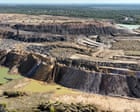
Queensland's government is reviewing rehabilitation laws designed to prevent taxpayers from absorbing cleanup costs when coal mines close, creating uncertainty for landowners who face abandoned extraction sites on their properties.
Trish, a cattle farmer in Queensland, confronts this problem directly. A coalmine on her land has been abandoned, leaving her responsible for a degraded property with no clear pathway to restoration. The state's regulatory framework, meant to protect public finances, now sits under review, leaving individual landowners like Trish in limbo about remediation obligations and timelines.
Queensland introduced financial assurance requirements to ensure mining companies set aside funds for site rehabilitation before closure. These bonds and guarantees theoretically protect the state from inheriting cleanup liabilities. Yet the review signals that existing protections may be inadequate or outdated as mines across the state reach end-of-life. The review comes as Queensland's coal industry faces contraction driven by global decarbonization and renewable energy expansion.
The abandoned mine on Trish's farm exemplifies a broader problem. When extraction companies enter administration or declare bankruptcy, financial assurance mechanisms sometimes fail to cover full restoration costs. Landowners then become custodians of contaminated, unstable land. Rehabilitation work can involve acid mine drainage treatment, soil remediation, pit stabilization, and vegetation recovery. Costs run into millions of dollars.
Under current Queensland law, mining operators must lodge financial assurance before extraction begins. The form varies: parent company guarantees, bank bonds, or dedicated rehabilitation trust accounts. However, regulatory agencies struggle to enforce adequate bonding levels. Estimated rehabilitation costs often increase after mine closure, when contractors submit detailed assessments. If the financial assurance falls short, disputes erupt over who bears the gap.
The government's review likely addresses several gaps. First, assurance levels may not track inflation or updated remediation standards. Second, monitoring and enforcement mechanisms need strengthening. Third, the review probably examines whether current frameworks adequately cover acid mine drainage, a persistent problem at closed coal operations where sulfide minerals oxidize when exposed to air and water, generating acidic runoff for decades.
Queensland has roughly 50 coal mines, with many approaching closure within the next decade. The Hunter Valley in New South Wales faces similar pressures. As the industry contracts, rehabilitation liability accumulates. Without robust legal frameworks, landowners absorb costs that operating companies should have funded.
Trish's situation reflects a failure of preventive regulation. Strong financial assurance mechanisms, properly calibrated and enforced, would have ensured her mine closure included adequate cleanup funding before the operator exited. Instead, she faces uncertainty about remediation responsibility and timing.
The Queensland government's review offers an opportunity to tighten requirements. Policymakers should increase bonding rates to reflect realistic rehabilitation costs, implement escalation clauses for inflation, mandate regular cost updates, and establish clearer enforcement procedures. They should also create mechanisms for landowner appeal if operators fail to remediate adequately.
Without reform, Queensland risks creating a trail of degraded mining sites and financially burdened landowners. The review provides leverage to prevent this outcome. Trish and other farmers deserve clarity about who pays for cleanup and when restoration will begin.