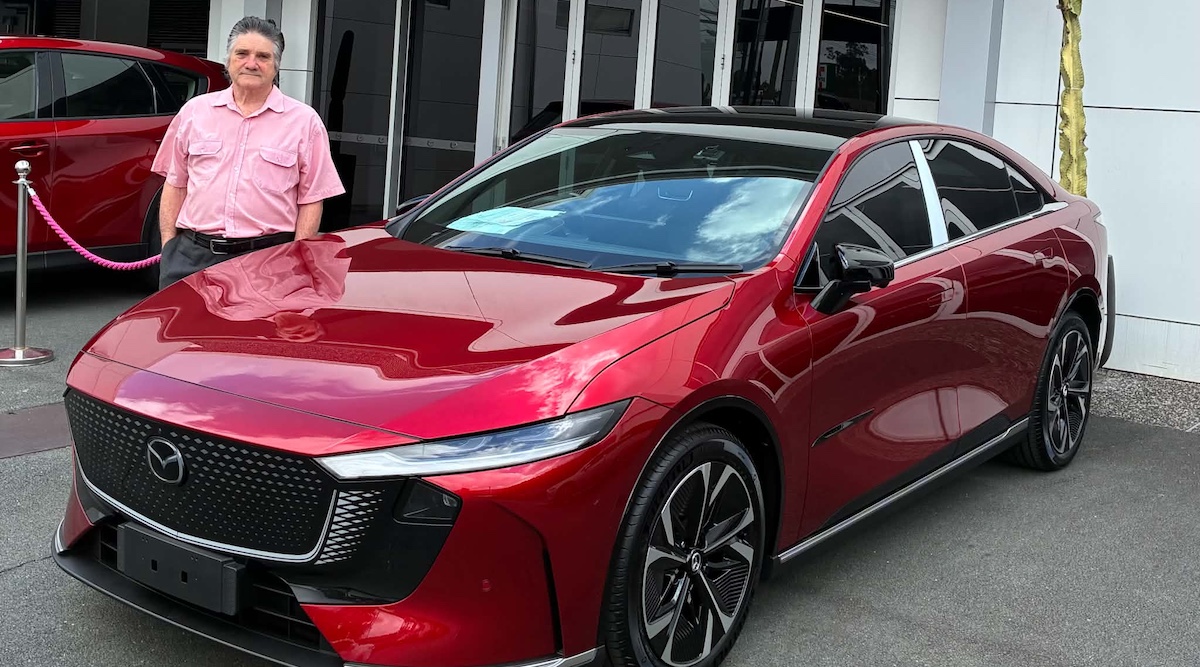
Mazda's entry into Australia's electric vehicle market reveals a widening competitive battle between Japanese manufacturers and Chinese rivals reshaping global automotive dynamics. The Mazda 6e arrived eight months ago with 2,000 pre-orders but has delivered only 693 vehicles in the past four months, signaling supply chain constraints or demand mismatches in a market increasingly saturated with EV options.
This rollout matters because Australia represents a critical test case for Japanese automakers attempting to reclaim market share in the electric segment. China's BYD, NIO, and other manufacturers have aggressively penetrated the Australian market with affordable, feature-rich EVs. Mazda's 6e launch strategy suggests Japanese companies recognize the urgency of competing directly rather than ceding the segment to Asian competitors.
The Australian EV market has transformed dramatically. In 2024, electric vehicles accounted for approximately 12 percent of new vehicle sales nationally, driven largely by Chinese manufacturers offering competitive pricing and advanced battery technology. Traditional Japanese brands like Toyota, Honda, and Nissan entered the EV space later, giving Chinese competitors first-mover advantages in brand awareness and dealer networks.
Mazda's approach differs slightly. The 6e targets the premium compact sedan segment, positioning itself as a design-focused alternative to mass-market Chinese offerings. The company has emphasized aesthetic refinement and driving dynamics rather than competing solely on price or battery capacity. This strategy reflects Mazda's historical strength in vehicle design and handling characteristics.
The 693 deliveries against 2,000 pre-orders within four months suggests either production bottlenecks or customers reconsidering their purchase decisions. Supply chain disruptions continue affecting Japanese manufacturers, who rely heavily on component sourcing from multiple countries. Alternatively, buyers may have waited to see competing offers from Toyota's bZ4X, Subaru's Solterra, or Chinese alternatives before finalizing purchases.
Australia's market dynamics favor well-capitalized players. Chinese EV manufacturers operate with substantial government subsidies and manufacturing scale. Japanese companies must compete without equivalent state backing in export markets. Mazda's smaller scale means higher per-unit costs than competitors producing hundreds of thousands of vehicles annually.
The 6e launch occurs as Japan's government pushes domestic automakers toward electrification. Japan targets 100 percent electrified vehicle sales by 2035, requiring manufacturers to accelerate model rollouts globally. Australia's market, with its growing EV adoption and geographic distance from China's primary markets, represents an attractive proving ground.
Success requires Mazda to improve delivery velocity and consumer awareness. The gap between pre-orders and deliveries suggests logistical challenges or production constraints that competitors like BYD have largely overcome. Japanese manufacturers must demonstrate they can match Chinese competitors in supply chain efficiency while maintaining design and quality advantages.
This competitive dynamic reflects broader shifts in automotive manufacturing. Japanese companies dominated global markets for decades through manufacturing excellence and reliability. Chinese manufacturers now compete on those same dimensions while offering lower prices and rapid innovation cycles. The Mazda 6e's modest delivery numbers suggest Japanese carmakers face steeper challenges reclaiming EV market share than many initially predicted. Market momentum increasingly favors first-movers with established distribution networks and manufacturing scale, attributes Chinese companies possess in abundance.