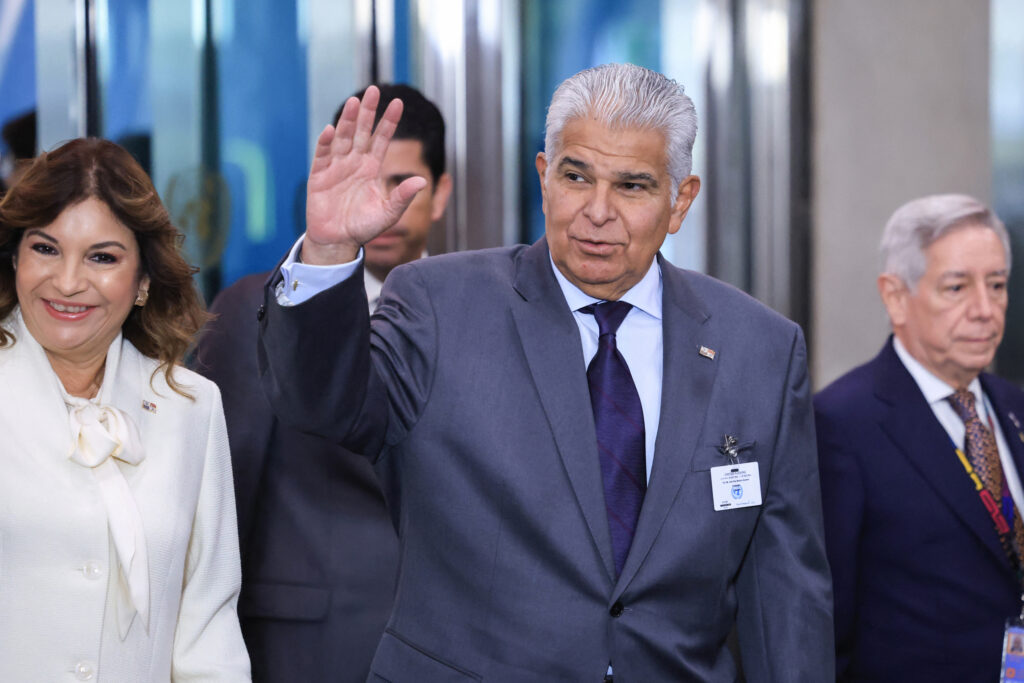
Panama introduced a sweeping proposal at the United Nations General Assembly this week to establish a binding international treaty recognizing nature as a rights-bearing entity. President José Raúl Mulino used his podium time to urge other nations to support the initiative, positioning Panama as the lead advocate for what would represent a fundamental shift in how the global community relates to the natural world.
The proposal expands beyond conventional environmental protection frameworks. Rather than treating nature as a resource to be managed, the declaration would grant ecosystems, species, and natural systems legal personhood. This approach draws from indigenous legal traditions and has gained traction in several nations. Bolivia and Ecuador embedded rights of nature in their constitutions in 2009. In 2017, New Zealand granted legal personhood to the Whanganui River. Colombia's Constitutional Court has recognized the Amazon rainforest as a living entity with its own rights. India's courts have declared that the Ganges and Yamuna rivers hold legal status as living beings.
Panama's move carries particular weight. The Central American nation sits on the Panama Canal, one of the world's most critical infrastructure assets. Its economy depends heavily on shipping, tourism, and increasingly, renewable energy. The country also hosts extraordinary biodiversity. The Darién Gap straddles the Colombia border, representing one of the Western Hemisphere's most biodiverse regions. Chocó forests in Panama rank among the planet's biodiversity hotspots. Mangrove ecosystems line its coasts. By championing rights of nature, Panama signals that economic development and environmental protection need not oppose each other.
A universal declaration faces obstacles. Nations differ sharply on property rights, resource extraction, and sovereignty over natural assets. Fossil fuel producers resist language that constrains their industries. Agricultural exporters worry about restrictions on land use. Developed nations that industrialized through resource extraction may resist frameworks that retroactively judge those practices. Translating rights of nature from philosophical concept into enforceable law requires navigating these conflicts.
Yet momentum exists. The United Nations Environment Programme has supported the concept. Numerous indigenous organizations, environmental groups, and progressive governments view rights of nature as essential to addressing the climate and biodiversity crises. The approach recognizes that protecting ecosystems requires granting them status beyond mere utility to humans. If a forest has rights, loggers cannot simply clear it for profit. If a river possesses rights, industrial pollution becomes a violation rather than an externality.
Implementation challenges remain substantial. Who enforces nature's rights? Do individuals represent nature in court? How do courts balance competing rights when humans need agricultural land or mineral resources? These questions lack simple answers. Yet Panama's initiative pushes the United Nations to grapple with them seriously.
The declaration would need broad consensus from UN member states. Panama's role as a middle power, combined with its genuine environmental stakes, gives the proposal credibility beyond what a wealthy nation might achieve. Mulino's announcement signals that smaller nations increasingly reject the assumption that they must choose between development and conservation. The effort to enshrine universal rights for nature enters a critical phase. The coming months will reveal whether this concept can move from constitutional theory in a handful of nations to binding international law.