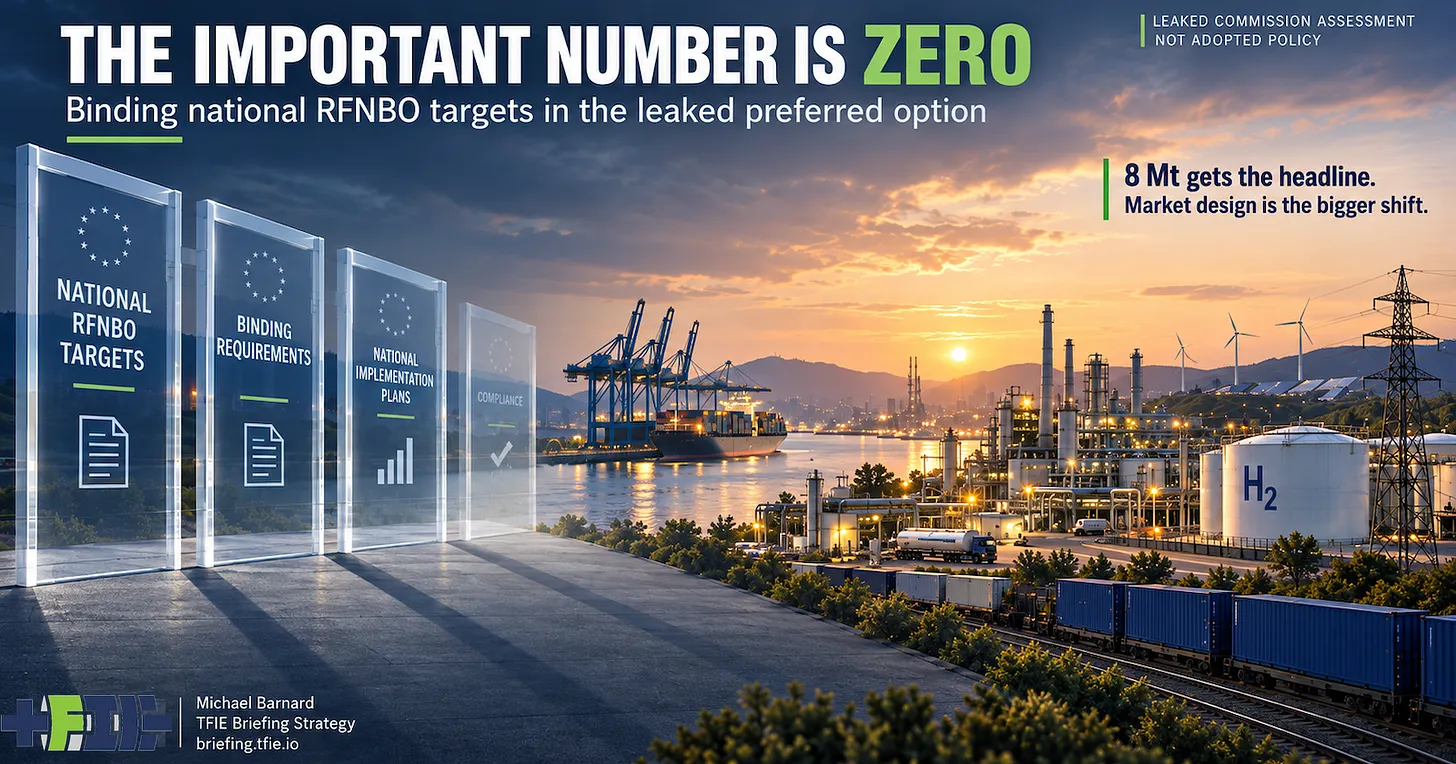
The European Union is overhauling how it mandates renewable hydrogen adoption, shifting from rigid production quotas to a flexible credit system that could reshape industrial decarbonization across the bloc.
A leaked draft of revised EU hydrogen policy reveals the regulatory overhaul moves away from the current Renewable Energy Directive's hard requirements. That directive mandates renewable fuels of non-biological origin, or RFNBOs, make up at least 42 percent of relevant industrial hydrogen use by 2030, climbing to 60 percent by 2035. The new framework would replace those fixed targets with tradeable credits, allowing companies more flexibility in how and when they source clean hydrogen.
The implications ripple across Europe's industrial landscape. Steel mills, refineries, fertilizer plants, and chemical factories consume roughly 10 million tonnes of hydrogen annually, almost entirely from fossil fuels. Under the quota system, these industries faced binding targets regardless of hydrogen availability or cost. A credit-based model introduces market mechanisms that producers and consumers can leverage to meet decarbonization goals more cheaply and efficiently.
Industry pushed hard for this shift. Manufacturers warned that rigid quotas would force them to source expensive green hydrogen or face penalties before domestic supply chains matured. The current system creates subsidy programs but also locks in compliance timelines independent of market readiness. Credits allow flexibility. A steelmaker unable to source sufficient green hydrogen in 2030 could purchase credits from a company that exceeded its renewable hydrogen production, avoiding costly penalties.
Environmental advocates express concern the pivot waters down climate ambitions. Fixed quotas guarantee minimum renewable hydrogen volumes entering industrial supply chains by specific dates. Credits based on projected future production risk allowing companies to bank compliance toward later years, potentially delaying the transition. A company purchasing credits essentially receives a compliance credit without necessarily driving immediate clean hydrogen deployment.
The draft also signals tensions between Brussels and member states over hydrogen policy design. Some nations fear quotas disadvantage their industries if green hydrogen remains scarce. Others worry credits create accounting flexibility that obscures actual emissions reductions. The European Commission must balance decarbonization urgency against industrial competitiveness concerns as Chinese and American firms expand low-cost hydrogen production.
Renewable hydrogen production remains expensive. Green hydrogen manufactured through water electrolysis powered by wind or solar typically costs 4 to 6 euros per kilogram, compared to roughly 1 to 2 euros for hydrogen from natural gas reforming. Even with falling electrolyzer costs, the price gap persists. A credit system acknowledges this reality by creating tradeable compliance mechanisms rather than forcing immediate abandonment of cheaper fossil hydrogen.
Timing matters. The EU plans to finalize revised hydrogen policy by late 2026 or early 2027, positioning it alongside broader industrial decarbonization rules. If credits become the backbone of hydrogen policy, they must include stringent accounting standards to prevent gaming. Credits based on inflated production projections or double-counting undermine climate outcomes.
The hydrogen sector watches closely. Electrolysis manufacturers, renewable energy developers, and industrial gas companies all benefit from clear, long-term demand signals. A credit system that generates genuine demand for green hydrogen strengthens investment cases. A credit system that allows companies to defer compliance weakens them.