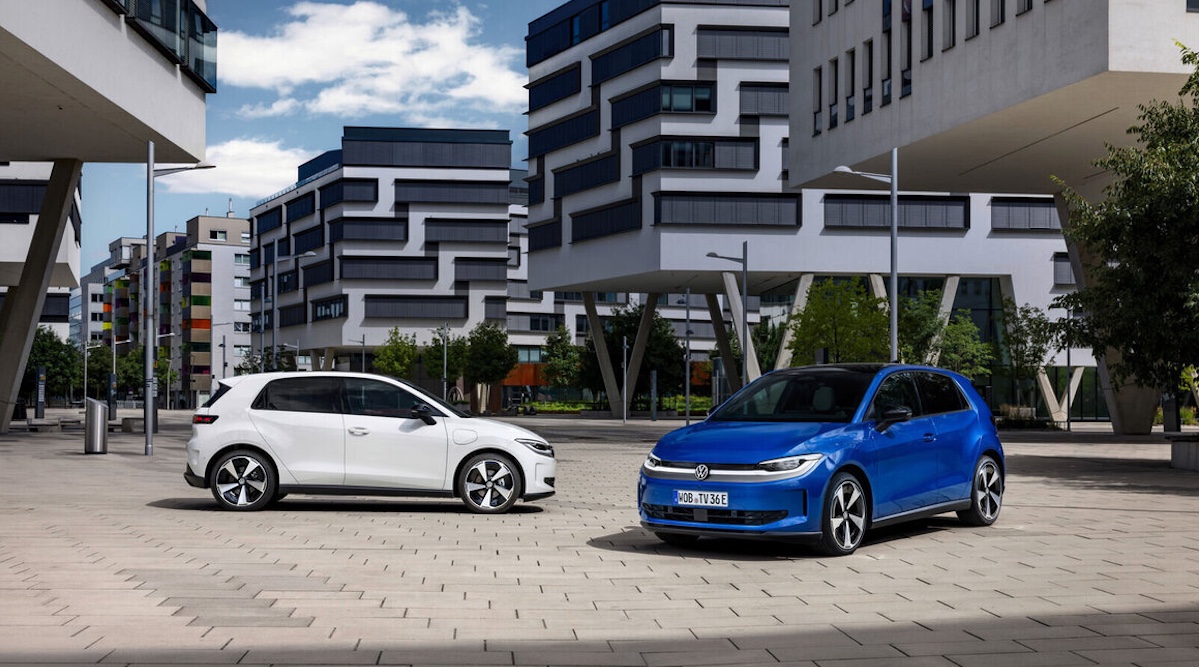
Volkswagen's all-electric ID. Polo has won the 2026 German Car of the Year award in the Budget category, marking a milestone for affordable electric vehicles in Europe's largest auto market.
The German Car of the Year (GCOTY) jury selected the ID. Polo over competitors in a field focused on cost-conscious buyers. The award recognizes the vehicle's design, driving dynamics, comfort, safety features, and technological innovation. The recognition reflects a shift in how European automotive judges evaluate vehicles, with electrification now a central criterion even in budget segments where cost constraints traditionally dominated purchasing decisions.
Volkswagen positioned the ID. Polo as an entry point to electric mobility for price-sensitive consumers. The vehicle competes directly with internal combustion engine alternatives in its category, demonstrating that battery-electric powertrains can meet performance and feature expectations at accessible price points. This development matters for Europe's transition away from fossil fuels. The European Union's automotive regulations require manufacturers to achieve fleet-wide CO2 emissions reductions. Passenger cars sold in the EU must average 93.6 grams of CO2 per kilometer by 2025, with stricter targets ahead. Affordable electric models like the ID. Polo provide automakers with compliance tools while offering consumers lower-emission alternatives to gasoline vehicles.
The ID. Polo sits in the segment dominated by models like the Fiat 500e, Renault 5 E-Tech, and Citroën e-C3. These compact, affordable EVs target first-time EV buyers and urban drivers where shorter commutes align with battery range capabilities. The GCOTY award signals market validation for this strategy. Germany remains Europe's largest vehicle market by volume, with approximately 3.3 million new car registrations annually. Award recognition influences purchase decisions among German consumers and signals market direction to other European buyers.
Volkswagen has invested heavily in battery production capacity to reduce EV costs. The company operates battery plants in Germany and other European locations, aiming to secure supply chains and improve price competitiveness. The ID. Polo's award recognition comes as European EV sales face headwinds. Registration growth slowed in 2024 and early 2025, partly due to reduced government purchase incentives and competition from Chinese EV manufacturers. The award provides marketing momentum for Volkswagen during a period when affordable EV adoption remains critical to meeting regulatory emissions targets.
The Budget category victory reflects evolving consumer expectations. Buyers no longer accept trade-offs between affordability and electrification. They expect range capabilities, charging infrastructure compatibility, and feature parity with combustion engine alternatives at similar price points. The ID. Polo's five-star safety rating and integration with Volkswagen's ID. Charging network address practical ownership concerns that historically deterred EV adoption.
This award demonstrates that electric vehicle technology has matured sufficiently to compete in price-sensitive segments. German automakers face pressure from regulatory requirements and Chinese competitors. Volkswagen's success with the ID. Polo suggests that European manufacturers can retain market share in budget segments by prioritizing cost-effective electrification alongside established strengths in engineering and safety.