# Why Tugboats Fit Batteries Better Than Their Power Ratings Suggest
Port operations appear hostile to battery power. Tugboats must exert sustained force against ships weighing thousands of tonnes, maneuver in confined channels where thrust loss invites disaster, and operate continuously throughout shifts. Their diesel engines deliver maximum horsepower for hours without interruption. Battery systems, constrained by finite energy stores and thermal limits, seem undersized for this work.
Yet tugboat operations reveal a counterintuitive pattern. These vessels do not run at full power continuously. The actual duty cycle of a modern ship-assist tug differs sharply from peak ratings.
A harbour tug spends the majority of its working hours at partial throttle or idle. The vessel moves into position at moderate speed, then applies maximum force for brief periods during the actual push or pull. Holding station in currents requires moderate thrust. Waiting for assignments consumes no fuel but drains energy in diesel-powered boats. The intensive power demands occur in concentrated bursts measured in minutes, not hours.
This operational pattern maps precisely onto battery strengths. Lithium-ion systems deliver peak power for short bursts without efficiency penalties. Battery packs cool during idle periods and lower-demand maneuvering. The thermal management challenge that plagues continuous high-power applications becomes manageable. A battery bank rated conservatively for sustained output can deliver full power during the brief windows when tugboats actually need it.
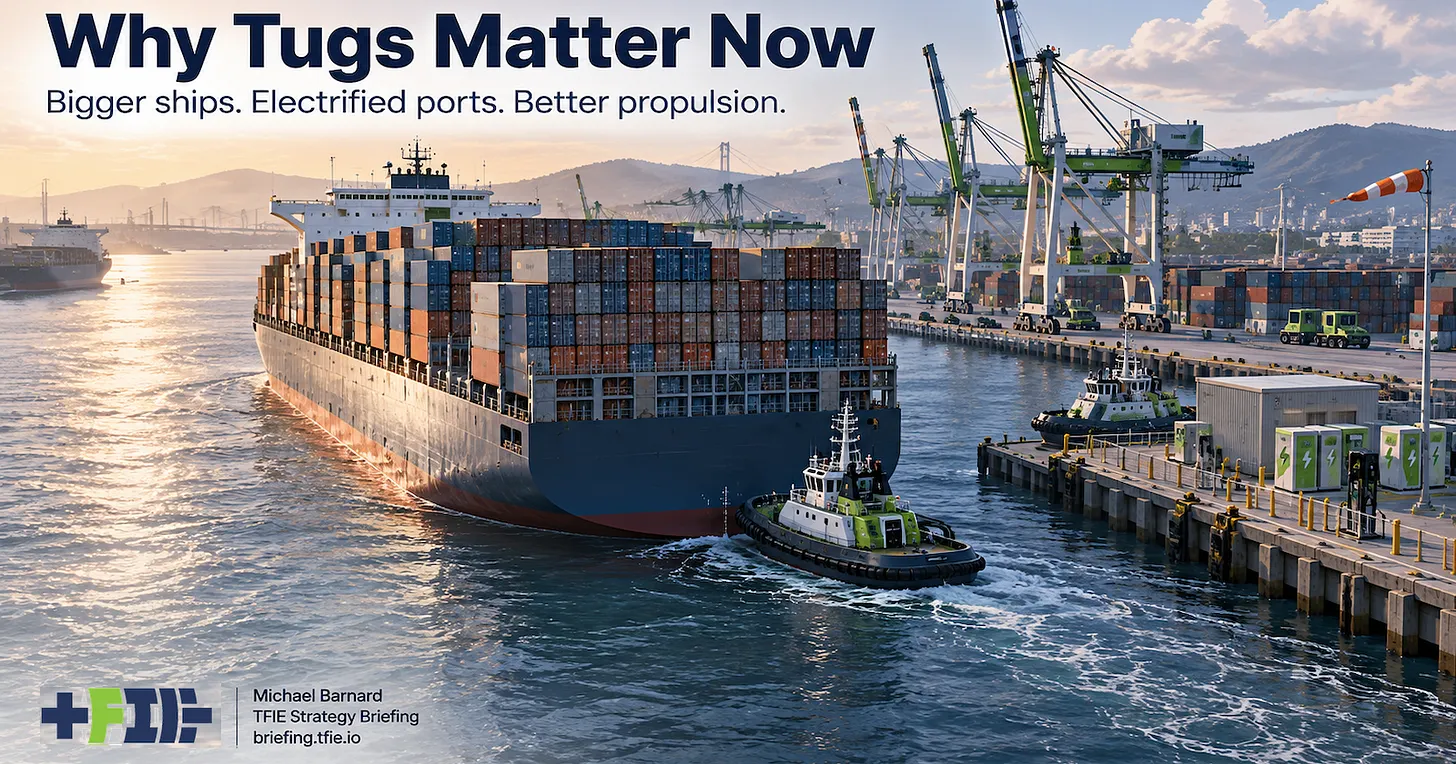
Several projects demonstrate feasibility. Swedish operator Svitzer operates hybrid and fully electric tugs in European harbours. The Port of San Francisco commissioned electric tugboats for escort operations. These vessels prove that battery propulsion works within real operational constraints, not theoretical ideal conditions.
The economic case strengthens further. Tugboats operate in ports where fuel costs are highest and diesel fuel emissions trigger regulatory penalties. Port authorities increasingly impose fees on high-emission vessels and ban the dirtiest ships during peak pollution episodes. Battery propulsion eliminates local air pollution and reduces greenhouse gas emissions, offsetting initial capital costs through avoided fuel expenses and port fee reductions.
Battery costs continue declining. A 2024 analysis from BloombergNEF found lithium-ion pack prices falling below $100 per kilowatt-hour in some markets, a threshold that triggers widespread electrification. Tugboat owners can now justify conversion based on energy savings alone, before accounting for environmental benefits or regulatory compliance advantages.
The practical challenge involves charging infrastructure. A tugboat requires rapid charging between operations to maximize daily utilization. Modern fast-charging systems can replenish batteries during brief dockside intervals, but ports must invest in high-capacity electrical connections. This infrastructure expense falls to port authorities and terminal operators, creating coordination requirements across multiple stakeholders.
Harbor decarbonization depends on electrifying the vessels that spend most operational time in port waters. Tugboats represent an entry point for this transition. Their duty cycles align with battery capabilities in ways that larger cargo ships do not. Early adoption in tug operations generates operational data that informs electrification strategies for other port equipment, from drayage trucks to container handling cranes.
The technical feasibility exists. The economic incentives align. Regulatory pressure mounts. Harbour authorities worldwide will likely accelerate tug electrification over the next three to five years, transforming one of the most visible components of port operations from diesel-powered to battery-driven.