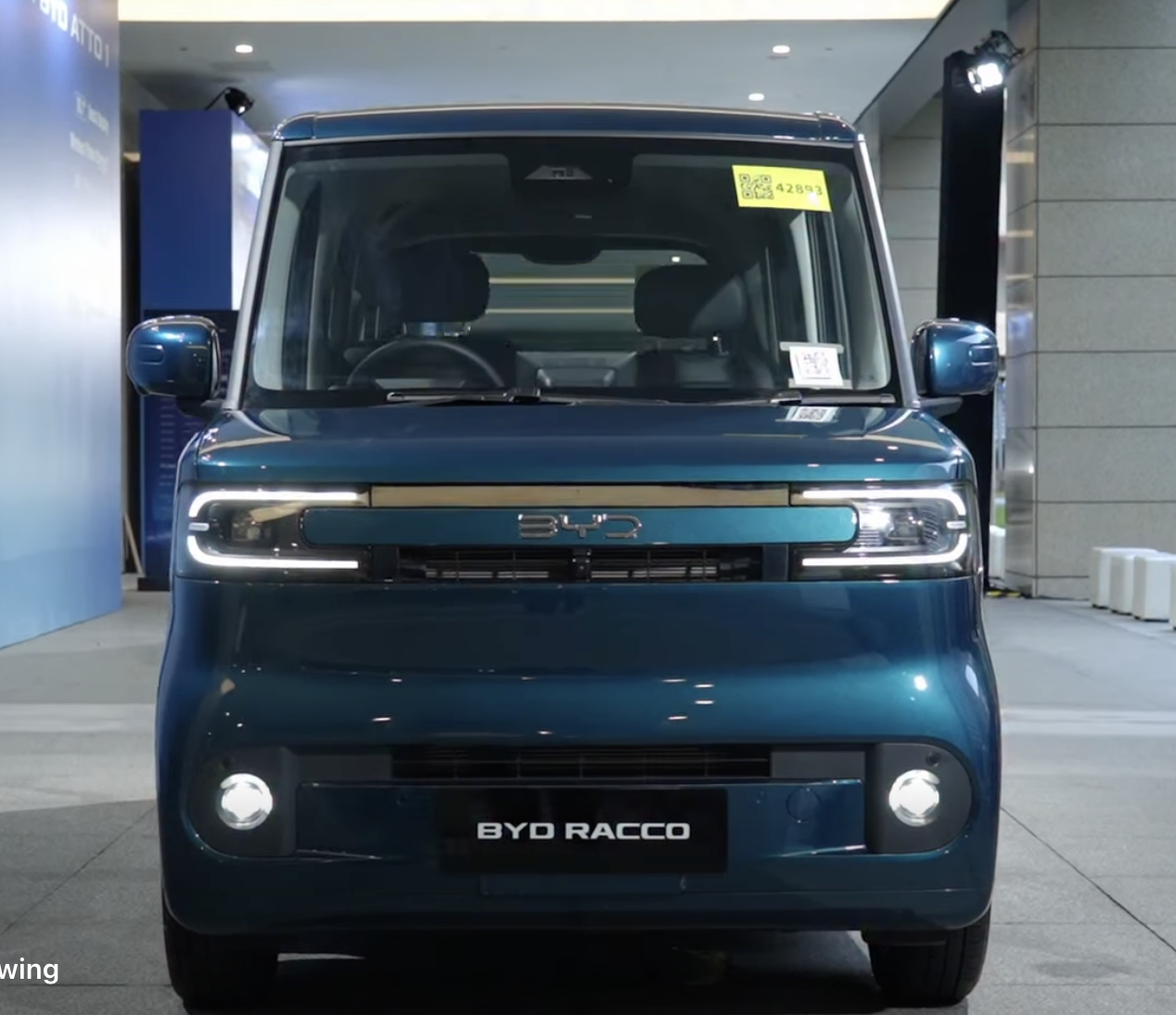
BYD, China's largest electric vehicle manufacturer, is making a calculated push into Japan's notoriously competitive automotive market with a vehicle explicitly designed for Japanese driving patterns and urban constraints. The company unveiled its RACCO electric minicar to Tokyo media, positioning the boxy microvan as a domestic solution rather than a foreign product imposed on the market.
The strategy reflects BYD's maturing approach to international expansion. Rather than exporting vehicles built for Chinese consumers, the automaker engineered the RACCO specifically around how Japanese drivers navigate daily life. Japan's market favors smaller vehicles suited to narrow streets, compact parking spaces, and fuel efficiency. BYD's executives emphasized this localization during the unveiling, framing the vehicle as purpose-built for Japanese routines rather than a generic Chinese export.
BYD holds the world's largest EV battery manufacturing capacity and ranks among global EV makers by volume. The company has already established footholds in Europe, Southeast Asia, and other markets. Japan, however, presents a distinct challenge. Toyota, Nissan, Honda, and Mazda dominate domestic sales, and Japanese consumers historically show strong brand loyalty tied to domestic manufacturers. Introducing a Chinese-branded EV requires overcoming perception gaps about quality, reliability, and service networks.
The RACCO addresses practical Japanese needs. The minicar category thrives in Japan because vehicles under certain size and engine displacement thresholds receive tax and insurance advantages. Japanese roads often feature single-lane streets in residential areas. Parking spaces, whether on-street or in buildings, demand compact dimensions. The RACCO's boxy design maximizes interior space while minimizing the footprint, directly answering these constraints.
BYD's timing targets Japan's accelerating EV transition. Japan's government committed to phasing out new petrol vehicle sales by 2035, though the timeline faces political pressure. Major automakers are ramping EV production. Competition will intensify. An affordable, purpose-designed electric minicar could capture price-sensitive Japanese buyers and early adopters skeptical of traditional manufacturers' EV offerings.
Battery technology represents BYD's competitive edge. The company manufactures lithium iron phosphate (LFP) batteries, which cost less than conventional nickel-cobalt cells while offering adequate range for urban driving. This cost advantage translates to lower vehicle prices, a persuasive selling point in price-conscious Japan.
BYD faces entrenched obstacles beyond engineering. Service networks require expansion. Japanese consumers expect dealer support systems refined over decades. Warranty coverage, parts availability, and mechanic familiarity with BYD vehicles remain underdeveloped. Building trust demands consistent quality and customer service performance over years, not months.
Japanese media coverage of the RACCO launch suggests cautious curiosity rather than enthusiasm. The vehicle enters a market where Tesla's Model 3 and domestic offerings from Nissan, Toyota, and others already established EV awareness. BYD must convince buyers that Chinese engineering justifies switching from trusted brands.
The RACCO launch signals BYD's commitment to developing markets where it lacks brand recognition. Success in Japan could validate the localization strategy for other developed markets and strengthen BYD's claim as a truly global manufacturer rather than a China-focused company exporting excess capacity.