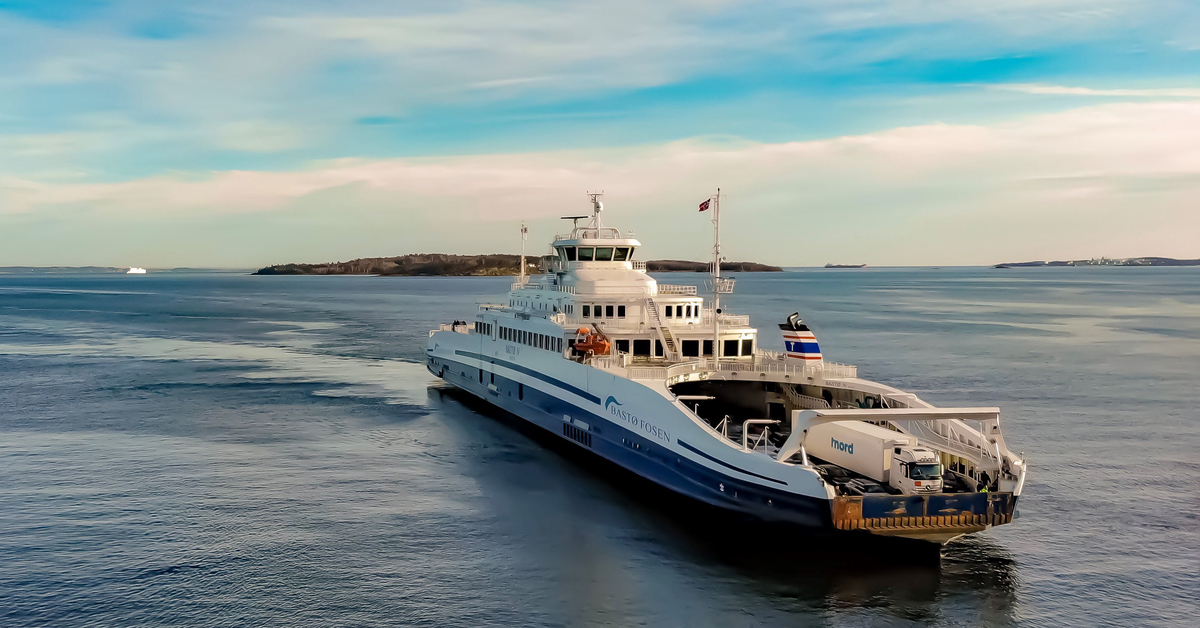
Norway's Bastø Electric ferry has operated for five years as the world's largest all-electric passenger vessel, demonstrating the viability of battery-powered maritime transport at commercial scale. The 139.2-meter ferry entered service in March 2021 carrying 600 passengers and 200 cars, powered by a 4.3-megawatt-hour battery system.
The vessel operates on the Bastø Line, a major commuter route across the Oslofjord. Five years of operational data reveal concrete performance metrics for large-scale ferry electrification. The ship replaces diesel-powered ferries that previously serviced this route, eliminating direct combustion emissions from a high-traffic transportation corridor.
Ferry electrification addresses a specific emissions source that conventional climate policy often overlooks. Maritime transport accounts for roughly 2.6 percent of global carbon dioxide emissions according to the International Maritime Organization. Short-haul ferries represent an especially viable target for battery electrification because they operate fixed routes with predictable energy demands and return to port daily for charging. Unlike deep-sea cargo vessels, ferries do not require weeks at sea without access to shore power infrastructure.
Norway leads European ferry electrification due to several factors. The country generates 95 percent of its electricity from hydropower and wind, making battery charging nearly carbon-free. Government policy actively supports maritime decarbonization through subsidies and charging infrastructure investment. Norwegian maritime companies face strong financial incentives to reduce operating costs, since battery ferries require zero fuel purchases and minimal maintenance compared to diesel counterparts.
The Bastø Electric's specifications reflect technological advances in marine battery systems. At 4.3 megawatt-hours, the battery capacity suffices for daily round-trip operations without supplemental fuel. Charging occurs overnight at the terminal, utilizing existing port infrastructure. The ferry's carrying capacity of 200 vehicles matches the previous diesel-powered vessels, eliminating service reductions during the transition.
Performance data from five years of operation informs future ferry electrification projects across Europe. The European Commission's Green Deal targets all EU ports to have zero-emissions vessels by 2050. Sweden, Germany, and Denmark have launched competing ferry electrification programs based partly on Norwegian experience. Ferry operators in these countries face similar regulatory pressure to reduce maritime emissions, though less abundant renewable electricity than Norway complicates their transition timelines.
Battery degradation rates and seasonal performance variations represent ongoing technical questions. Winter conditions reduce battery efficiency, and cold water circulation for thermal management increases energy consumption. The Bastø Electric's five-year track record provides operators and manufacturers with real-world reliability data absent from earlier prototype vessels.
Cost analysis remains central to widespread adoption. Initial capital costs for electric ferries exceed diesel vessels by 30 to 50 percent depending on specifications. Operating cost savings from eliminated fuel and reduced maintenance typically recover this premium within 8 to 12 years. Norwegian subsidy programs accelerated this financial transition by reducing upfront capital requirements.
The Bastø Electric demonstrates that all-electric ferries function as reliable commercial vessels rather than experimental prototypes. Its continued operation on a major commuter route validates electrification for similar routes across Northern Europe where renewable electricity availability supports expanded ferry electrification programs.