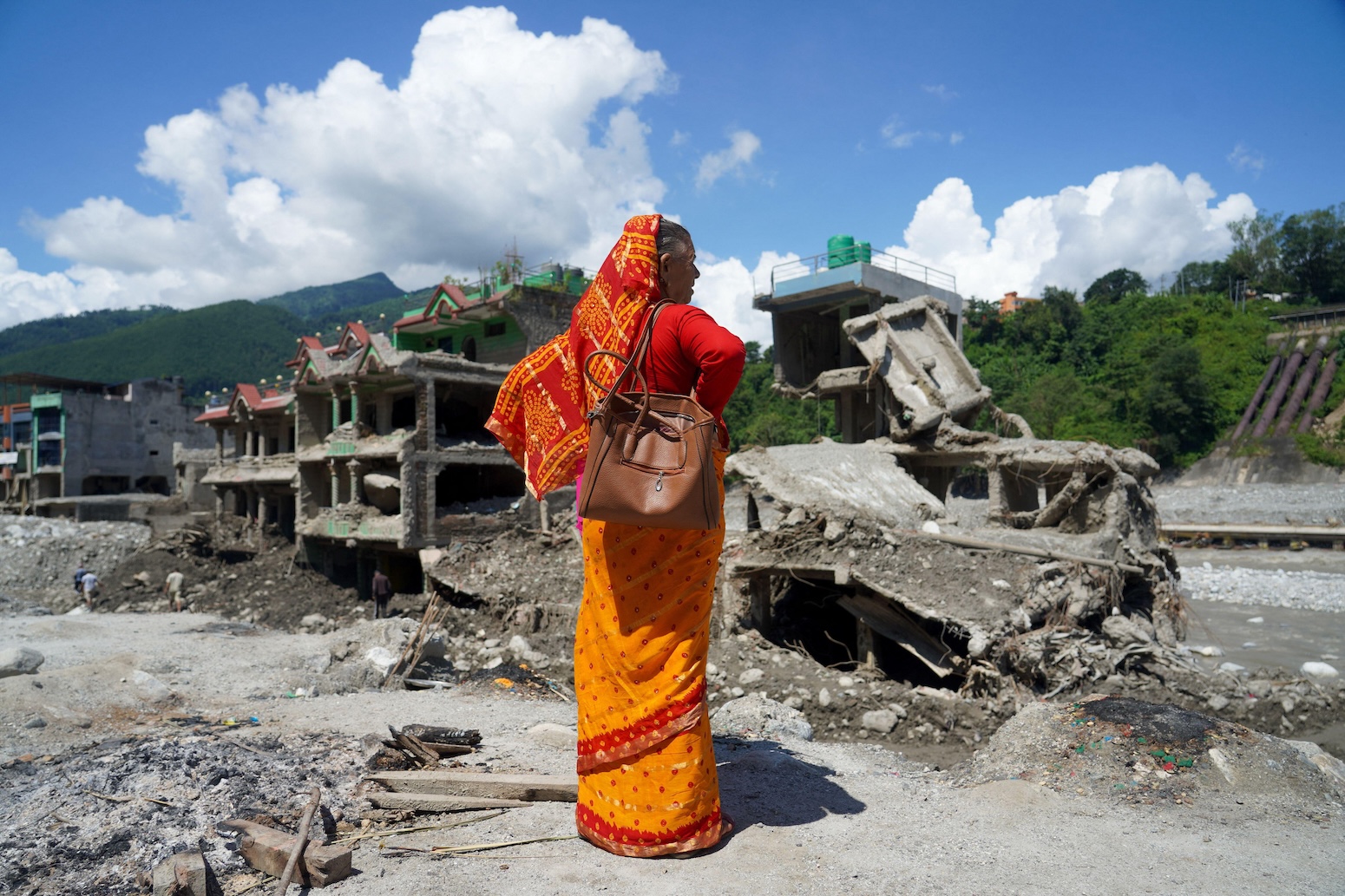
Nepal submitted a $20 million claim to the UN's loss and damage fund following catastrophic floods that devastated the country. The requested sum covers only 0.7 percent of the total damage costs, leaving a funding gap of nearly $2.9 billion, according to the Nepali government's assessment.
The loss and damage fund, established at COP27 in 2022, compensates developing nations for climate-related disasters they did not cause but suffer disproportionately. Nepal's submission represents one of the first major claims filed under the newly operational mechanism. The floods inflicted total costs estimated at approximately $2.92 billion across infrastructure, agriculture, housing, and public services.
The disparity between Nepal's claim and actual losses exposes the inadequacy of current loss and damage financing. Nepal ranks among the world's most climate-vulnerable nations despite contributing minimal greenhouse gas emissions. The country sits in the Hindu Kush Himalayan region, where glacial melt, intense monsoons, and deforestation amplify flood risk. Extreme precipitation events have intensified across South Asia over recent decades, with scientists attributing the trend partly to human-caused climate change.
Nepal's floods destroyed bridges, roads, schools, and hospitals. Agricultural zones sustained severe damage during critical planting seasons. Thousands of families lost homes and livelihoods. The $20 million request reflects what the Nepali government judged as its immediate priority needs, not the full bill for reconstruction.
The gap between claimed and actual losses reflects systemic funding shortages. The loss and damage fund launched in 2024 with initial commitments totaling approximately $700 million. While pledges have grown, they remain far below what climate scientists and developing nations argue is necessary. The World Bank estimates that climate damages in South Asia alone could reach $1.5 trillion by 2100 without aggressive emissions cuts.
Nepal's claim carries policy implications for the fund's future trajectory. If Nepal receives its full $20 million request, it sets a precedent for how losses are evaluated and compensated. Partial funding would signal that the mechanism cannot address real-world climate costs, pushing vulnerable nations to seek alternative financing or absorb losses internally.
The Nepali government faces difficult decisions about which reconstruction needs to prioritize with limited resources. Without adequate loss and damage support, Nepal must divert development funds toward recovery, slowing progress on schools, hospitals, and climate adaptation. This trade-off forces poorer nations to choose between present needs and future resilience.
International climate negotiations at COP29 in Azerbaijan highlighted this tension. Negotiators discussed scaling the loss and damage fund, with developing countries demanding at least $100 billion annually by 2030. Wealthy nations have resisted such figures, citing fiscal constraints and competing priorities. Nepal's $2.9 billion shortfall illustrates why advocates argue current pledges fail to match climate realities.
The fund's management structure also matters. Claims must navigate bureaucratic approval processes. Verification requirements, while necessary to prevent fraud, create delays that affect disaster response timelines. Nepal's submission will test how efficiently the fund processes applications.