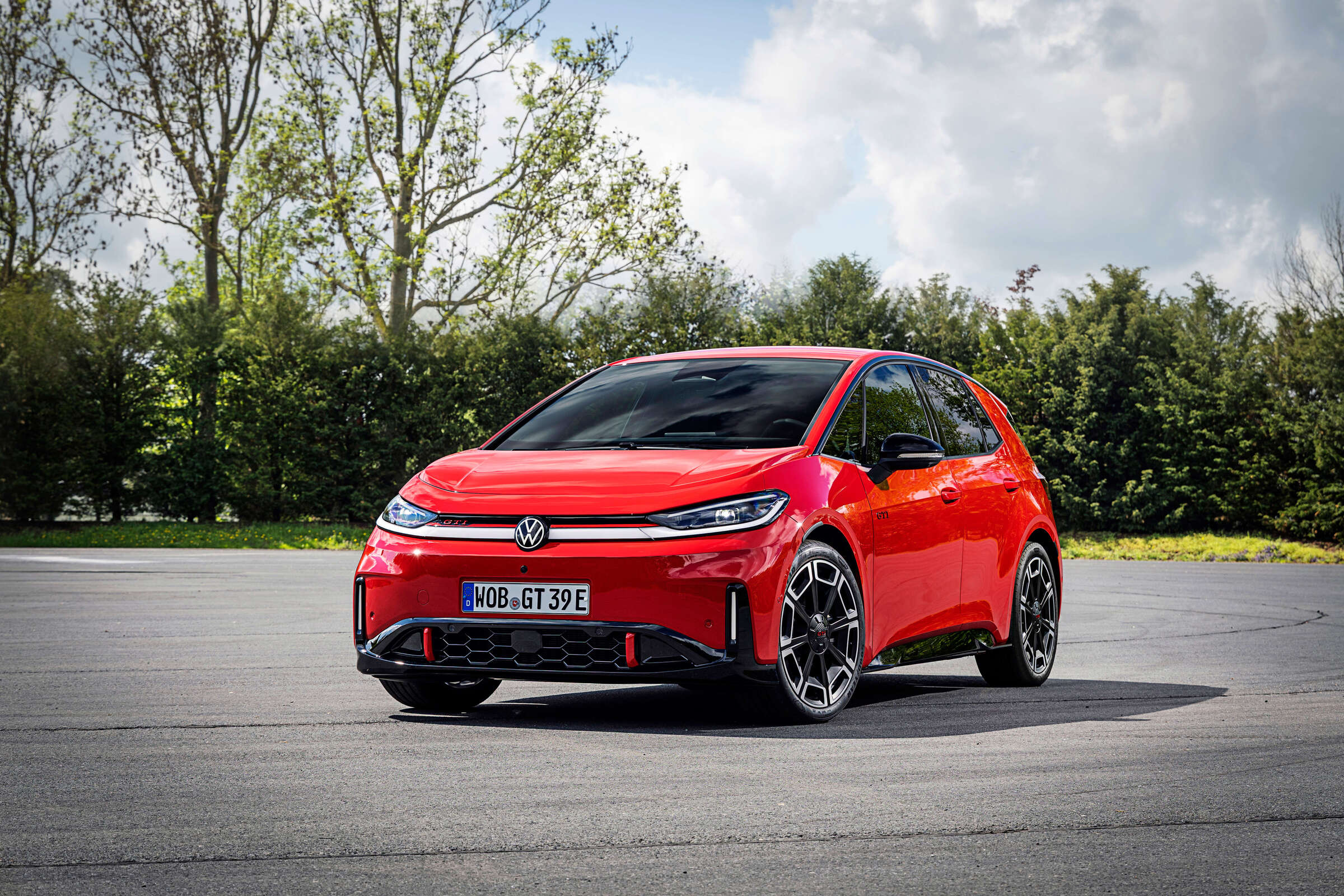
Volkswagen unveiled the all-electric ID.3 GTI, marking the first time the automaker's legendary GTI performance nameplate powers an EV rather than a combustion engine. The new vehicle delivers 240 kilowatts (326 horsepower) and 545 newton-meters of torque, making it the most powerful GTI model in the marque's five-decade history.
The ID.3 GTI accelerates from zero to 100 kilometers per hour in 5.6 seconds, positioning it as a direct competitor to other high-performance electric hatchbacks entering saturated markets. Volkswagen equipped the model with an adaptive DCC sports chassis, direct progressive steering, Launch Control technology, and a dedicated GTI drive mode to preserve the brand's handling heritage while leveraging EV acceleration advantages.
The vehicle announcement reflects a broader industry pivot toward electrifying performance car segments. Traditional automakers face pressure to offer thrilling driving experiences without internal combustion engines as stricter emissions regulations tighten across Europe and beyond. The European Union's regulations require new cars to average 93.6 grams of CO2 per kilometer by 2025, a threshold that accelerates EV adoption in high-margin performance segments where legacy carmakers traditionally earned substantial profits.
GTI models have historically served as entry points to performance driving since Volkswagen introduced the Golf GTI in 1976. The nameplate carries cultural weight among enthusiasts and consumers seeking affordable sportiness. By electrifying the GTI brand, Volkswagen signals that electric powertrains can deliver visceral driving dynamics rather than viewing EVs as purely practical appliances.
The ID.3 GTI joins a growing roster of electrified performance vehicles. Porsche's Taycan, BMW's i4 M, and Mercedes-AMG's EQE deliver comparable performance while producing zero tailpipe emissions during operation. Hyundai's Ioniq 5 N and Kia's EV6 GT offer lower-cost alternatives with serious track credentials. This proliferation reflects manufacturer confidence that battery technology and electric motor characteristics satisfy performance enthusiasts without compromise.
The GTI mode mentioned in Volkswagen's specifications likely adjusts powertrain response, regenerative braking intensity, and stability control parameters to alter driving feel. Manufacturers use such modes to differentiate brand identity and allow drivers to customize aggression levels. Launch Control enables optimized acceleration from standstill, a feature previously exclusive to high-end sports cars but now standard on performance EVs.
Battery range and charging infrastructure remain practical considerations for performance EV buyers. The ID.3 platform uses Volkswagen's modular EV architecture, shared across multiple models and price points. Specific battery capacity, real-world range, and rapid-charging capability details remain unclear from available information, though the ID.3 family typically offers configurations from 45 to 82 kilowatt-hours of usable capacity.
The ID.3 GTI's global market availability depends on regional demand and supply chain capacity. Volkswagen prioritizes European sales for the ID.3 lineup, given the continent's EV adoption leadership and GTI brand recognition. Pricing and exact production timelines remain unannounced.
This electric GTI represents Volkswagen's wager that performance enthusiasts will embrace EVs when offered comparable acceleration, handling refinement, and emotional engagement. Success depends on pricing competitively, delivering promised dynamics, and building charging networks robust enough for regular high-performance driving.