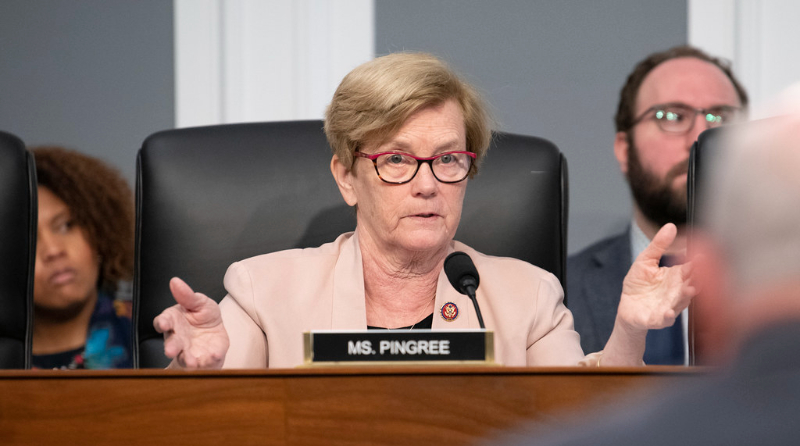
Representative Chellie Pingree (D-Maine) pressed the US Department of Agriculture to act on climate risk assessments for American farms, citing a Government Accountability Office report that found the agency has failed to adequately investigate how climate change threatens agricultural operations across the country.
Pingree, an organic farmer herself and member of the House Agriculture Committee, demanded the USDA implement GAO recommendations that remain unaddressed. The GAO report identified critical gaps in the department's climate risk evaluation framework. Farms face mounting threats from extreme weather, shifting growing seasons, water availability changes, and pest expansion. Without systematic assessment of these risks, the USDA cannot develop targeted mitigation strategies or help farmers adapt.
The USDA operates as the primary federal entity responsible for agricultural policy, crop insurance, and farm support programs. Its failure to comprehensively evaluate climate impacts leaves farmers navigating an increasingly volatile environment without federal guidance grounded in scientific analysis. Pingree's criticism targets a specific accountability failure: the agency has known about these gaps and chosen not to close them.
The GAO, Congress's independent investigative arm, conducts audits of federal agencies to assess performance and compliance. When the GAO identifies deficiencies, it issues recommendations that agencies must address. The USDA's delay in implementing climate risk assessment recommendations signals either resource constraints or institutional reluctance to confront how fundamentally climate change will reshape American agriculture.
Agricultural emissions account for roughly 10 percent of US greenhouse gas emissions, according to EPA data. Simultaneously, agriculture ranks among the sectors most vulnerable to climate impacts. Farmers operate within a system where they both contribute to and suffer from warming. Comprehensive climate risk assessment could identify opportunities to reduce farm emissions while building resilience into operations.
Pingree's intervention reflects broader frustration within agriculture-focused circles that federal support has not kept pace with climate realities. Farm bankruptcies reached their highest level in six years in 2024, driven partly by commodity price volatility and weather extremes. Crop insurance programs, the government's primary tool for helping farmers weather disasters, operate on historical weather data that no longer reflects current conditions. Without updated risk assessments, insurance pricing and coverage inadequately protect farmers against new climate threats.
The recommendations likely encompass several areas. The USDA should establish baseline vulnerability assessments across regions and crop types. It should develop early warning systems for emerging climate risks. It should integrate climate projections into all farm support decisions, from conservation program eligibility to crop insurance rates. Such work requires coordination between the USDA's multiple agencies, including the Natural Resources Conservation Service and Farm Service Agency.
Implementation requires both staff capacity and sustained funding. The USDA has experienced budget constraints and staffing shortages in recent years. However, Pingree's public pressure suggests Congress may allocate resources if the agency prioritizes the work.
The stakes extend beyond individual farms. American food security depends on sustained agricultural productivity. Export markets watch US climate adaptation closely. Other nations facing agricultural climate threats look to American innovations. Delayed assessment translates to delayed adaptation, leaving farmers and consumers vulnerable to supply disruptions and price volatility.
Pingree's call represents a specific demand for bureaucratic accountability grounded in an existing review. The GAO identified what needs doing. The USDA must now execute.