# Drone Operators Watch Australian Beaches for Shark Activity as Beach Safety Shifts to Aerial Surveillance
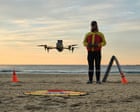
Taha Kafil-Hussain pilots a drone above Coogee Beach in Sydney, scanning the water for threats to swimmers. Most shifts involve routine surveillance, circling above seaweed beds or tracking sea turtles. Then a shark appears. In those moments, the job transforms from monotonous monitoring into rapid-response work. Kafil-Hussain alerts beach authorities, who clear the water immediately.
This deployment represents a growing shift in beach safety strategy across Australia. Drone surveillance now complements traditional shark spotting methods, offering real-time aerial reconnaissance that human lifeguards cannot match from shore or boat patrols. The technology provides comprehensive water coverage across wider areas than conventional observation posts.
Australia has invested in drone-based shark detection programs at major beaches, particularly along New South Wales and Queensland coasts, where shark incidents cluster. The approach emerged partly in response to growing public anxiety about shark encounters and partly as a more cost-effective alternative to maintaining constant human spotters in towers. Operators like Kafil-Hussain work scheduled shifts, keeping drones aloft during peak swimming hours when beaches experience highest attendance.
The work rhythm reflects the statistical reality of shark presence. Most hours produce no sightings. Operators observe marine life, monitor water conditions, and maintain flight patterns designed to cover designated zones efficiently. But the occasional shark detection justifies the entire operation. When one appears, the drone operator becomes the system's critical first link. They must correctly identify the species, assess threat level, and communicate urgently to beach management.
Current protocols direct lifeguards to clear water immediately upon shark detection, preventing potential encounters before they occur. This precautionary approach trades brief economic disruption (closed swimming) against the small but real risk of shark bites. Sydney averages roughly one shark bite per year. Australia-wide, fatal shark attacks occur at rates around one per year, though non-fatal incidents number higher.
The drone program raises questions about scalability and coverage. A single operator monitors one beach at one time. Multiple beaches require multiple operators or rotating shifts. Cost-benefit calculations center on swimmer volume and historical incident rates. High-traffic beaches like Coogee justify continuous drone surveillance. Smaller beaches may rely on periodic drone patrols or traditional methods.
Technology companies have developed specialized shark-detection algorithms using machine learning to identify species and size from aerial footage. These systems reduce false alarms and help operators respond faster. However, human operators still review detections before water closure decisions, as algorithm errors create unnecessary beach closures and lost revenue for hospitality businesses.
The work culture among drone operators mixes boredom with sudden adrenaline. Kafil-Hussain's experience captures this dynamic. Hours of scanning water produce minimal incidents, but the expectation remains that a shark could appear. Mental fatigue from sustained attention becomes the operator's primary challenge. Training emphasizes maintaining focus throughout shifts despite long periods without activity.
Shark detection drones represent Australia's pragmatic response to beach safety in an era when both technology and public risk awareness have accelerated. The program does not eliminate sharks or prevent all incidents, but it reduces undetected shark presence in popular swimming areas. For beach communities, this margin of additional warning time justifies the operational cost and the peculiar employment of operators watching water hour after hour, until suddenly they watch something that matters.