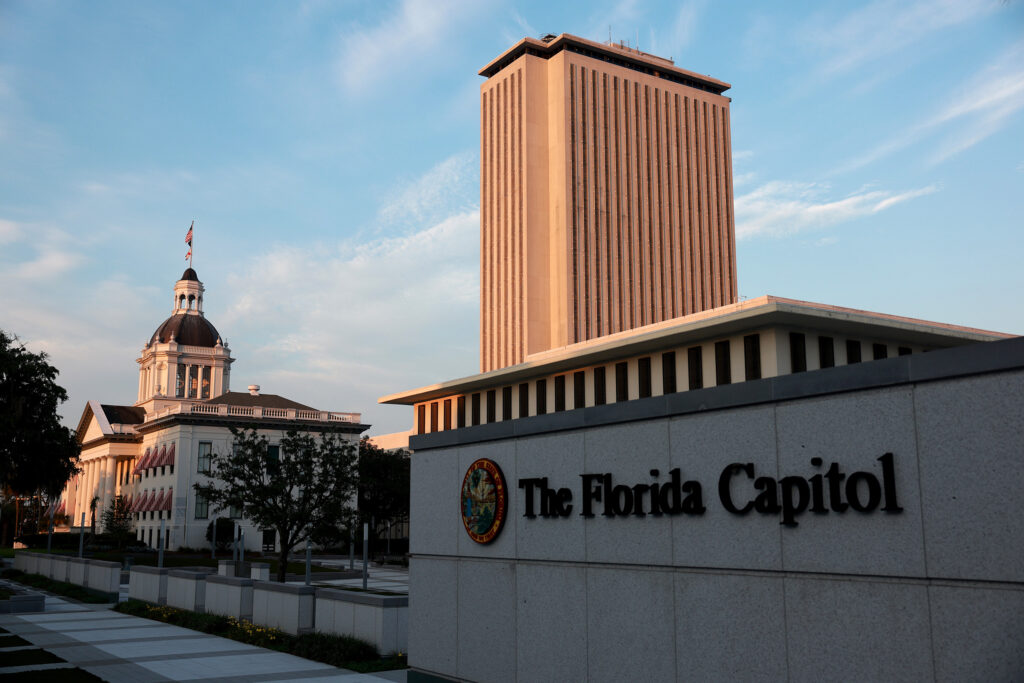
Florida's preemption laws strip local governments of authority to address environmental hazards specific to their communities, leaving inland regions particularly vulnerable to flooding and other climate impacts. During Hurricane Milton in 2024, inland Polk County neighborhoods experienced severe flooding that persisted for three weeks, yet the county lacked independent regulatory power to mitigate such risks.
Polk County Commissioner Becky Troutman observed the failure firsthand. While coastal Florida has developed institutional knowledge about hurricane preparation, inland communities along the Interstate 4 corridor face different hydrological challenges that state-level policies often overlook. These fast-growing regions lack the ability to impose local stormwater management standards, wetland protections, or development restrictions that could reduce flood vulnerability.
Florida's state preemption framework systematically prevents municipalities from enacting stricter environmental protections than state minimums. The legislature has consolidated authority over coastal management, water quality standards, wetland permitting, and land use decisions at the state level. Local governments cannot establish stronger building codes for flood resilience, mandate green infrastructure requirements, or restrict development in flood-prone areas without explicit state authorization.
This centralization reflects a decades-long pattern. Florida's 1985 Government in the Sunshine Law and subsequent legislative actions transferred environmental decision-making from county and municipal boards to state agencies like the Department of Environmental Protection. The effect systematically favors development interests over community protection.
The consequences extend beyond environmental regulation. Preemption statutes similarly prevent localities from setting wage floors above state minimums, establishing worker safety protocols beyond OSHA standards, or regulating business practices in ways that diverge from state policy. This combined regulatory capture affects climate resilience alongside labor protections.
During Hurricane Milton, the absence of localized stormwater infrastructure standards meant inland communities relied entirely on aging county systems designed for historical precipitation patterns, not intensified rainfall events. Polk County's rapid growth had not been matched with proportional flood mitigation infrastructure, and commissioners could not require developers to incorporate retention ponds, permeable surfaces, or elevation requirements before approving projects.
The preemption framework creates a perverse incentive structure. Developers face uniform state standards regardless of local hydrological vulnerability. A subdivision in Polk County built on former wetlands faces identical permitting requirements as one in higher-elevation areas, despite dramatically different flood risks. Municipalities cannot correct this regulatory mismatch through local ordinance.
Several other states employ similar preemption models, but Florida's version uniquely restricts adaptation to climate-specific threats. States like California and Massachusetts grant local governments broader authority to exceed state environmental baselines for region-specific hazards. Florida's approach assumes one-size-fits-all regulation serves all regions equally, an assumption contradicted by Hurricane Milton's inland devastation.
Advocacy groups including the Sierra Club and Earthjustice have challenged specific preemption statutes in court, arguing they violate constitutional due process protections and prevent rational land use planning. Litigation remains ongoing, but legislative change appears unlikely given conservative legislative dominance.
The 2024 hurricane season demonstrated that climate vulnerability varies geographically. Inland Florida's flooding patterns differ fundamentally from coastal storm surge, yet both face regulatory constraints that prevent adaptive local responses. Until preemption laws change, fast-growing inland communities will absorb climate impacts with limited capacity to implement protective infrastructure.