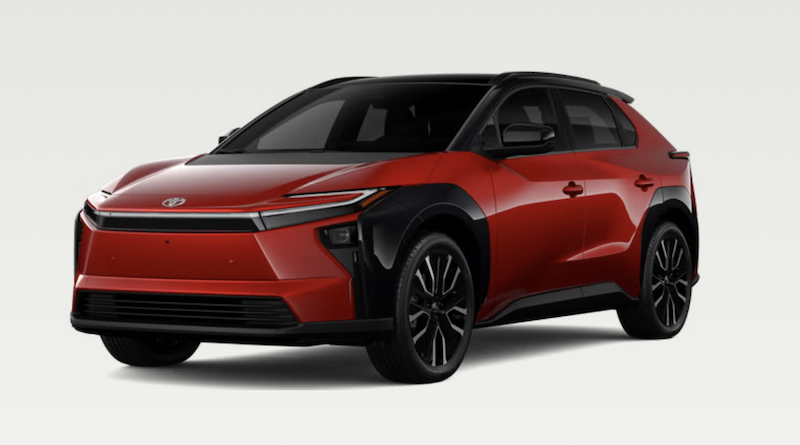
Harvard economists released research projecting that US electric vehicle sales will reach between 32 and 38 percent of the total new vehicle market by 2030, a dramatic acceleration despite the Trump administration's reversal of federal clean energy policies last year.
The study challenges assumptions that policy rollbacks would significantly derail EV adoption. Researchers attribute continued growth to multiple factors operating independently of federal support. Battery costs continue falling due to manufacturing scale and technological advances. Consumer preferences shift toward electric drivetrains as charging infrastructure expands. State-level regulations, particularly California's emission standards and zero-emission vehicle mandates, maintain regulatory pressure on automakers. Manufacturing economics favor electrification as producers invest in EV-capable facilities and supply chains.
The Harvard analysis presents two scenarios. The lower estimate of 32 percent assumes moderate market conditions and consumer uptake. The higher projection of 38 percent accounts for accelerating cost competitiveness between electric and internal combustion vehicles. Both figures represent substantial growth from 2024 levels, when EVs comprised roughly 9 percent of US new vehicle sales.
Federal policy reversals created uncertainty across the sector. The Trump administration paused EPA emission standards that would have required higher EV percentages. Tax credits for EV purchases faced potential elimination. Funding for charging infrastructure development stalled. These actions initially triggered concerns that EV adoption would plateau.
The Harvard study suggests structural forces override policy headwinds. Battery production costs dropped from approximately $132 per kilowatt-hour in 2010 to roughly $94 in 2023, according to BloombergNEF data cited in energy sector analysis. Projections indicate further declines to $70 per kilowatt-hour by 2030. At that price point, EVs achieve price parity with gasoline vehicles without subsidies, fundamentally altering purchase calculations.
Automaker commitments reinforce the trend. General Motors, Ford, and Volkswagen each committed billions to EV production capacity before the policy shift. Reorienting factories carries enormous costs, making retreat economically irrational even without government incentives. Chinese manufacturers continue expanding EV production and exporting vehicles to US markets, intensifying competition and driving innovation.
State policy maintains regulatory floors. California, which controls roughly 15 percent of the US vehicle market, enforces stringent emission rules. Massachusetts, New York, and Vermont adopted California's standards. These states collectively influence vehicle design decisions for manufacturers serving the entire country.
The Harvard research carries implications for emissions targets. Transportation generates roughly 27 percent of US greenhouse gas emissions, with light-duty vehicles responsible for the largest share. EV adoption at 32 to 38 percent by 2030 would reduce transportation sector emissions substantially, though reaching zero-emission vehicles across the entire fleet requires higher penetration rates.
Workforce transitions emerge as the parallel challenge. EV manufacturing requires different skill sets than traditional automotive production. Battery assembly, electric motor manufacturing, and software engineering dominate EV factories. Regional economies dependent on traditional automotive employment face disruption absent workforce retraining programs.
The Harvard analysis reflects growing consensus among economists and industry analysts that EV adoption reflects market fundamentals, not merely policy choices. Federal support accelerates timelines and smooths transitions, but cannot arrest fundamental economic shifts driving electrification.