# Donut Lab Battery Dispute: Ziroth's NMC Claim Collapses Under Material Evidence
A technical dispute over battery chemistry has exposed a fundamental misidentification. Ziroth incorrectly classified Donut Lab's battery cell as nickel-manganese-cobalt (NMC) chemistry when physical and video evidence demonstrates otherwise.
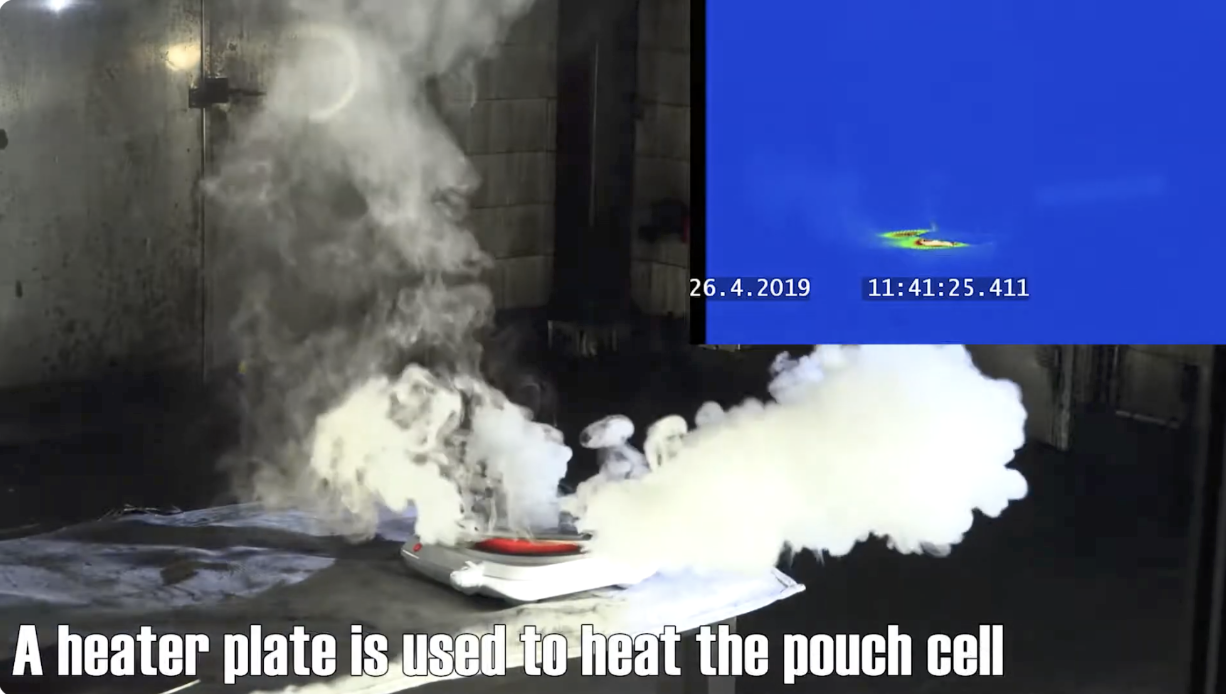
The confusion hinges on visual morphology. NMC cells, when subjected to thermal or mechanical stress, develop a characteristic pillow-like swelling pattern. Donut Lab's battery exhibited a distinctly different deformation geometry, resembling a Pop-Tart shape rather than the puffed profile associated with NMC degradation. This distinction matters because it points to fundamentally different cathode chemistry and thermal behavior.
Ziroth's error originated from misinterpreting video documentation of an actual NMC battery undergoing similar testing conditions. The source NMC cell displayed the expected pillow swelling. Donut Lab's cell, placed in identical conditions, produced markedly different physical deformation. The departure from predicted NMC behavior strongly suggests the cell uses an alternative chemistry, potentially lithium iron phosphate (LFP), sodium-ion, or another emerging cathode formulation.
The accuracy of battery chemistry identification carries operational weight. NMC cells dominate passenger vehicle applications, delivering high energy density and established thermal management protocols. Alternative chemistries present different safety profiles, thermal runaway characteristics, and degradation patterns. Misidentifying a cell's chemistry can lead to incorrect failure mode predictions and flawed safety assessments.
Donut Lab has not publicly disclosed the specific cathode chemistry used in their test cells. The organization focuses on publishing teardowns and stress-test videos to demonstrate cell performance and failure modes. This transparency approach, while valuable for the engineering community, has created space for interpretation errors when external analysts attempt to classify unmarked or obscured cells.
The battery industry relies on standardized naming conventions precisely to avoid such confusion. Cells arrive with data sheets specifying chemistry, nominal voltage, capacity, and thermal specifications. When cells arrive without documentation or undergo blind testing, morphological clues become primary diagnostic tools. Trained battery engineers recognize NMC's distinctive swelling behavior, yet the visual distinction between chemistries requires careful comparison.
Ziroth's misidentification highlights a broader pattern in battery research discourse. As new chemistries enter commercialization, including sodium-ion cells, lithium-ion ferrophosphate variants, and solid-state prototypes, consistent material science communication becomes harder to maintain. Online commentary frequently conflates similar-looking cells across different chemistries.
For stakeholders tracking battery technology development, accuracy in chemistry identification carries real implications. Supply chain analysts, thermal engineers, and policy researchers all depend on correctly classified cell data to build accurate models of battery fleet composition and projected performance. Donut Lab's work contributes valuable real-world stress-test data to the research commons. That contribution strengthens when the source material receives accurate categorization.
Ziroth's correction reflects the self-correcting nature of technical communities. As evidence accumulates, misclassifications get challenged and refined. The physical evidence from side-by-side comparison, backed by video documentation, provides the definitive answer: Donut Lab's battery is not NMC.