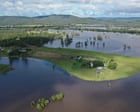
Australia's coastal properties face an unprecedented threat from rising seas, with the Climate Council projecting that more than 267,000 homes and farms will experience damaging flooding by 2100. The cost to the nation will reach hundreds of billions of dollars as saltwater intrusion, storm surge, and permanent inundation reshape the country's geography and economy.
Peter's farm represents a concrete example of this coming crisis. Situated in what locals call "flood country," his property sits in the direct path of accelerating sea-level rise driven by global warming. Australian coastal communities stretching from Queensland to Tasmania now confront a reality that was once theoretical. The water is arriving earlier and with greater intensity than many property owners anticipated.
The Climate Council's modeling incorporates Australia's specific oceanographic conditions. The continent experiences some of the fastest regional sea-level rise on the planet, driven by thermal expansion of warming ocean waters and ice sheet melt in Antarctica. Australian coastlines are particularly vulnerable because much of the population clusters within kilometers of the shore. Major cities including Sydney, Melbourne, Brisbane, and Perth have built critical infrastructure, housing, and agricultural operations in zones that will become uninhabitable or economically unviable within decades.
The 267,000-property figure represents properties that will face "damage" from flooding, a term that encompasses both temporary inundation from storm events and chronic, permanent saltwater encroachment. For agricultural operations like Peter's farm, saltwater infiltration poisons soil, rendering it unsuitable for crop production. For residential properties, repeated flooding destroys foundations, corrodes building materials, and erodes insurance viability.
The financial dimensions dwarf other climate adaptation costs Australia currently contemplates. Hundreds of billions in losses translate to damaged property values, destroyed infrastructure requiring replacement, lost agricultural productivity, and massive insurance claim payouts. Some properties will become stranded assets, worthless to their owners but still carrying tax obligations and mortgages. Property insurance in coastal zones will become prohibitively expensive or unavailable entirely, shifting risk onto individual homeowners and state governments.
Current adaptation responses remain fragmented. Some local councils implement managed retreat policies, buying out willing sellers in high-risk zones. Others pursue expensive coastal defense infrastructure like seawalls and levees, temporary solutions that merely delay inevitable losses. Most coastal communities lack comprehensive relocation plans or funding mechanisms to resettle displaced populations.
The temporal urgency has intensified. While 2100 seems distant, sea-level rise compounds nonlinearly. Properties experiencing occasional flooding today will face regular inundation by mid-century. Insurance companies and mortgage lenders already price in these risks, making it harder for new buyers to finance coastal purchases. Agricultural banks reassess loan viability for farms in affected regions. The economic consequences arrive before the water reaches its peak.
Peter's situation encapsulates broader policy failures. Australia committed to net-zero emissions by 2050 under the Climate Change Act, yet emissions reduction remains insufficient to prevent at least one to two meters of sea-level rise by 2100. Past emissions lock in decades of additional warming. Coastal communities now face adaptation as a certainty rather than a precaution.
Planning for managed retreat, defending only the most economically critical coastal infrastructure, and establishing relocation funds for affected residents represent the realistic options remaining. Without deliberate policy intervention, market forces alone will create humanitarian crises as property owners discover their assets have vanished beneath the rising seas.