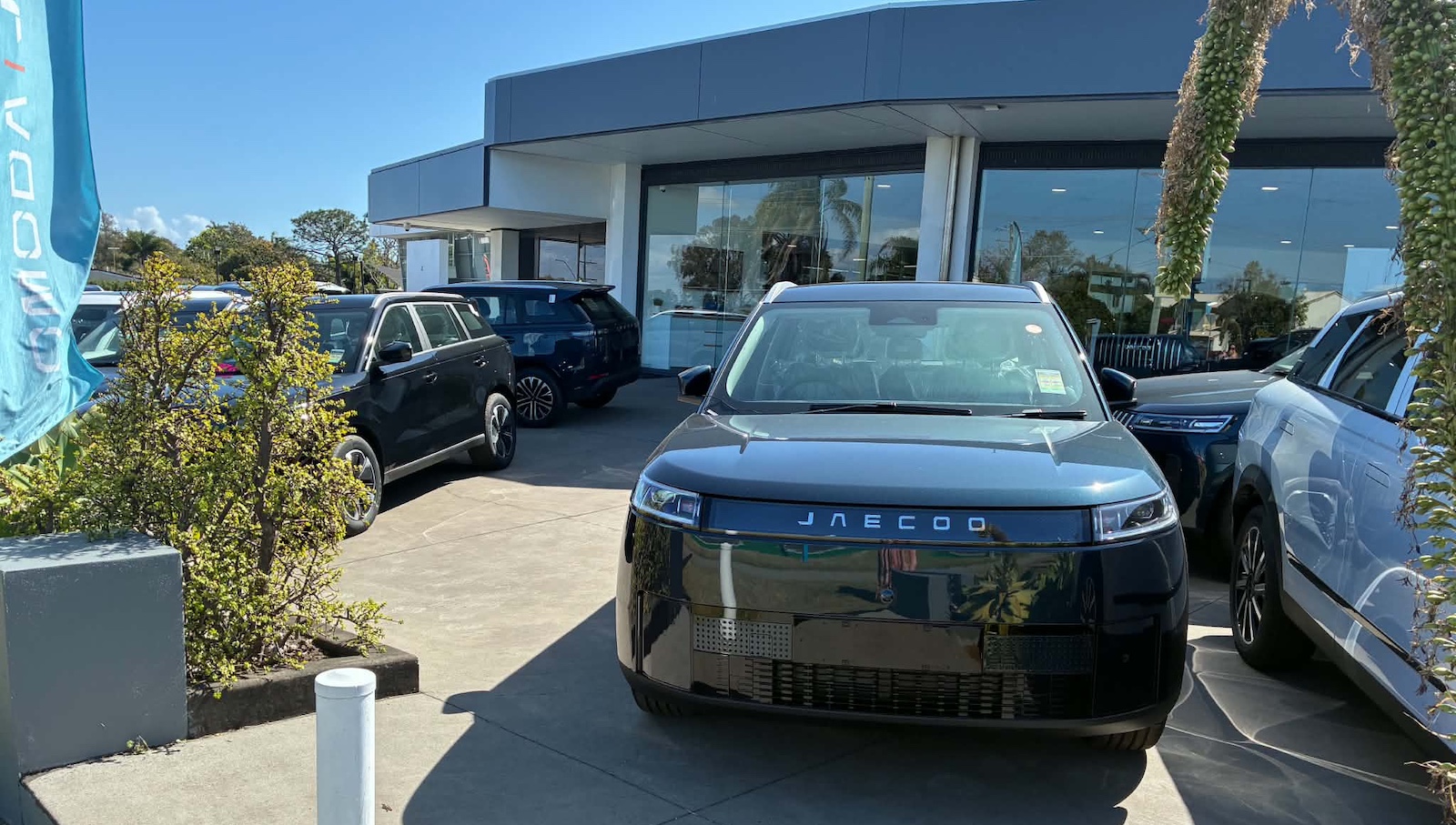
# Chinese EV Jaecoo J5 Surges in Australian Market, Signaling Shift in Consumer Acceptance
Consumer skepticism toward Chinese-made vehicles has evaporated in Australia as the Jaecoo J5 becomes a sales force since entering the market months ago. The compact SUV combines affordability with advanced technology features, capturing buyer demand in a price-conscious market segment.
The J5 represents a broader trend reshaping the automotive landscape. Chinese manufacturers have historically faced resistance in Western markets, but improved engineering, competitive pricing, and electrification capabilities have shifted perceptions. The J5's consistent performance on Australian sales charts reflects this turning point.
Jaecoo, a sub-brand under Chery Automobile Group, designed the J5 specifically for international markets including Australia. The vehicle arrives as conventional automakers face mounting pressure to compete on price while transitioning to electric powertrains. Traditional manufacturers struggle with the cost structure needed to deliver comparable technology at lower price points.
The J5 appeals to Australian buyers through multiple factors. First, pricing undercuts established competitors in the compact SUV segment by thousands of dollars. Second, the vehicle incorporates modern infotainment systems, driver assistance features, and connectivity options previously found only in premium models. Third, Chinese manufacturers have invested heavily in battery supply chains and production efficiency, allowing them to price aggressively.
Market data shows Chinese vehicle imports into Australia accelerating. In 2025, Chinese brands captured approximately 4% of the Australian new vehicle market, up from negligible shares five years earlier. The J5's strong initial sales figures contribute to this trajectory.
The environmental implications deserve attention. Electric and hybrid vehicles from Chinese makers increase overall EV adoption rates, which reduces transport sector emissions. However, the manufacturing footprint matters. Vehicles produced in China and shipped internationally generate supply chain emissions. Battery production, particularly in coal-heavy regions, affects the true carbon calculus of each unit sold.
The J5 comes with petrol and hybrid powertrain options, not as a fully electric vehicle. This hybrid approach caters to Australian buyers concerned about charging infrastructure and battery costs. It also extends the sales window during the transition period before pure EV adoption becomes universal.
Dealership expansion accompanies rising sales. Jaecoo has established service networks across major Australian cities, addressing previous concerns about spare parts availability and repair accessibility for Chinese vehicles. This infrastructure investment signals long-term market commitment.
Traditional Australian automotive retailers face disruption. Declining domestic manufacturing capacity means local dealerships now stock more imported vehicles. Chinese brands require less dealer markup because of lower production costs, pressuring dealer profit margins across the industry.
Consumer reports document generally positive owner experiences with J5 reliability and features. Warranty coverage matches or exceeds some established competitors. These practical realities shape buyer confidence more than historical prejudice.
The competitive response from established manufacturers remains cautious. Ford, Toyota, and Mazda dominate the compact SUV segment in Australia, but face price pressure from the J5 and similar Chinese offerings. Cost-cutting measures and platform sharing across models represent their adjustment strategies.
The J5's Australian success story extends beyond a single model. It demonstrates that quality engineering and value proposition override origin prejudice when products deliver measurable benefits. Chinese automakers have capitalized on this opportunity while Western manufacturers stabilize their Australian operations.