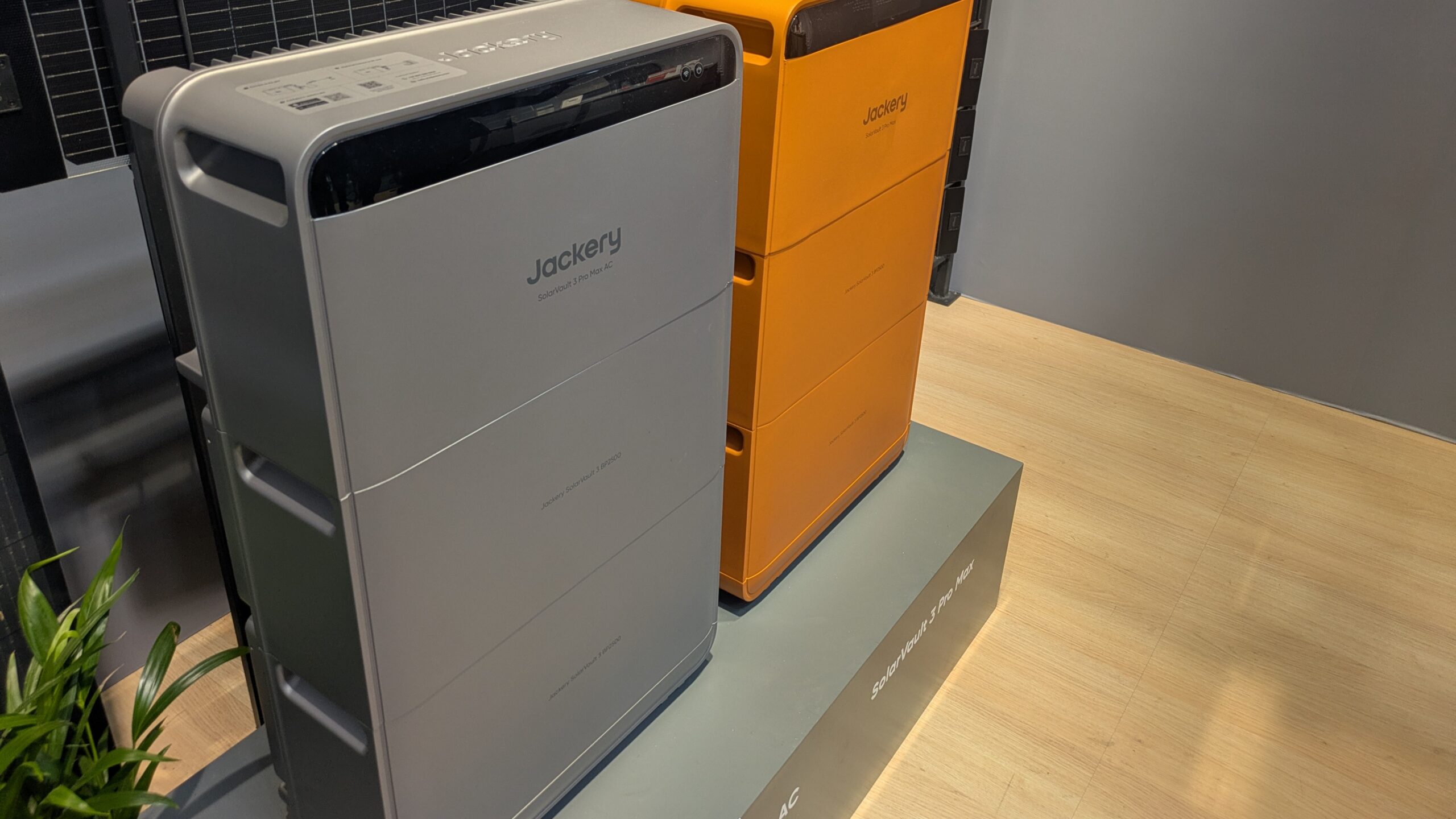
# Jackery SolarVault 3 Positions Modular Battery Storage as Scalable Home Energy Solution
Jackery has introduced the SolarVault 3, a modular battery storage system designed to scale from small residential applications to whole-home energy management. The announcement follows the company's unveiling of the EnergyGuard Max 100 kWh battery at IFA Berlin, signaling a shift toward flexible energy storage solutions that accommodate varying electrification needs.
The modular approach addresses a central challenge in residential energy storage: not all households require identical battery capacity. A household with rooftop solar panels and an electric vehicle may need different storage configurations than a fully electrified home with multiple EVs and heat pump systems. The SolarVault 3 architecture allows customers to start with smaller installations, typically mounted on balconies or in limited spaces, and expand storage capacity as household energy demands increase.
This scalability holds particular value for renters and homeowners in space-constrained urban environments. Traditional whole-home battery systems require dedicated installation space and substantial upfront investment. The SolarVault 3 framework permits incremental purchases, reducing initial capital barriers and allowing households to synchronize battery expansion with solar panel additions or vehicle electrification timelines.
The larger EnergyGuard Max 100 kWh system targets fully electrified households where demand peaks exceed standard battery capacity. At 100 kilowatt-hours, this system provides sufficient storage for homes running electric heating, cooling, and multiple vehicle chargers simultaneously. Households with this configuration maintain reserve capacity to participate in demand response programs, where utilities compensate customers for reducing consumption during peak hours.
Energy storage systems play an increasingly central role in grid stability as residential solar adoption accelerates. The U.S. Energy Information Administration projects residential battery storage capacity will reach 18.9 gigawatt-hours by 2030. These systems reduce reliance on fossil fuel peaking plants during evening hours when solar generation stops but household demand peaks. They also provide backup power during grid outages, a benefit underscored by the California Public Utilities Commission's recent mandate requiring battery storage installations with rooftop solar.
Jackery's modular strategy reflects broader industry trends. Tesla's Powerwall and LG Chem's RESU systems offer similar stacking capabilities, enabling customers to purchase additional batteries as needs evolve. This approach reduces waste from oversized single-unit installations while providing pathway flexibility for households transitioning toward full home electrification.
The cost-per-kilowatt-hour metric determines long-term adoption rates. As lithium-ion battery prices decline, residential storage becomes economically viable in markets with high electricity rates and time-of-use pricing structures. California, where electricity rates exceed 30 cents per kilowatt-hour during peak periods, represents a prime market for storage expansion.
Installation complexity and permitting requirements remain barriers. Building codes across jurisdictions impose varying electrical safety standards for home battery systems. Homeowners must navigate these regulations before connecting storage systems to existing electrical panels.
Jackery's SolarVault 3 and EnergyGuard Max systems indicate the company anticipates continued growth in residential electrification. The modular design acknowledges that energy storage adoption follows household electrification patterns rather than preceding them. Customers add batteries as solar arrays, heat pumps, and electric vehicles enter their homes, creating a staggered market opportunity rather than a single installation event.