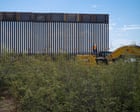
The Trump administration continues construction of a 30-foot border wall through Big Bend, a remote and ecologically sensitive region of west Texas, despite mounting bipartisan opposition from local residents and environmental advocates.
U.S. Customs and Border Protection (CBP) authorized the wall project to run through terrain near Big Bend National Park and adjacent public lands. The structure cuts across a landscape characterized by fragile desert ecosystems, underground aquifers, and wildlife corridors that connect habitats across the Texas-Mexico border.
Local opposition spans political lines. Texas ranchers, conservation groups, and community leaders have publicly objected to the construction, citing threats to groundwater resources, disruption of migration routes for pronghorn antelope and jaguars, and damage to Native American archaeological sites. The Big Bend region supports species found nowhere else in North America, including the endangered ocelot and various desert tortoise populations.
The wall's path traverses private ranch land, state property, and federal holdings managed by the Bureau of Land Management. CBP invoked national security authority to waive environmental review requirements under the National Environmental Policy Act (NEPA) and the Endangered Species Act, provisions the administration has used repeatedly to accelerate border barrier construction without full environmental impact assessments.
Water availability presents a distinct concern. The region relies on underground aquifers that feed springs and riparian zones supporting wildlife in an otherwise arid landscape. Construction activity risks contamination and disruption of these finite water sources. Local groundwater-dependent agriculture depends on these same aquifers.
The Biden administration had paused this specific project in 2021, but the Trump administration reversed that decision upon taking office in 2025. CBP has allocated funding and contracted construction firms to move the project forward. The agency argues the barrier serves national security and immigration enforcement objectives along a remote section of the southern border.
Environmental groups including the Sierra Club and Defenders of Wildlife have challenged the legal basis for waiving environmental review. They argue that CBP's use of emergency authority violates the Administrative Procedure Act and circumvents congressionally mandated environmental protections. A federal lawsuit challenging the wall's construction remains pending in U.S. District Court for the Western District of Texas.
Texas state lawmakers from both parties have sent letters to federal officials urging reconsideration. Governor Greg Abbott's office has remained largely silent on the project, complicating the bipartisan opposition message. Some Republican ranchers in the area have expressed openness to alternative border security approaches that would not require permanent physical barriers across their property.
The Big Bend wall project exemplifies the tension between border security enforcement and environmental protection in sensitive ecosystems. The region's remoteness and sparse population meant minimal urban impact from the wall, but maximum ecological impact. Construction equipment and materials must travel hundreds of miles across desert terrain, increasing the project's footprint beyond the wall itself.
CBP expects wall construction to reach completion within 18 months. The agency has not released detailed environmental monitoring protocols for the project, despite pressure from conservation groups to establish baseline ecological assessments and post-construction impact studies.