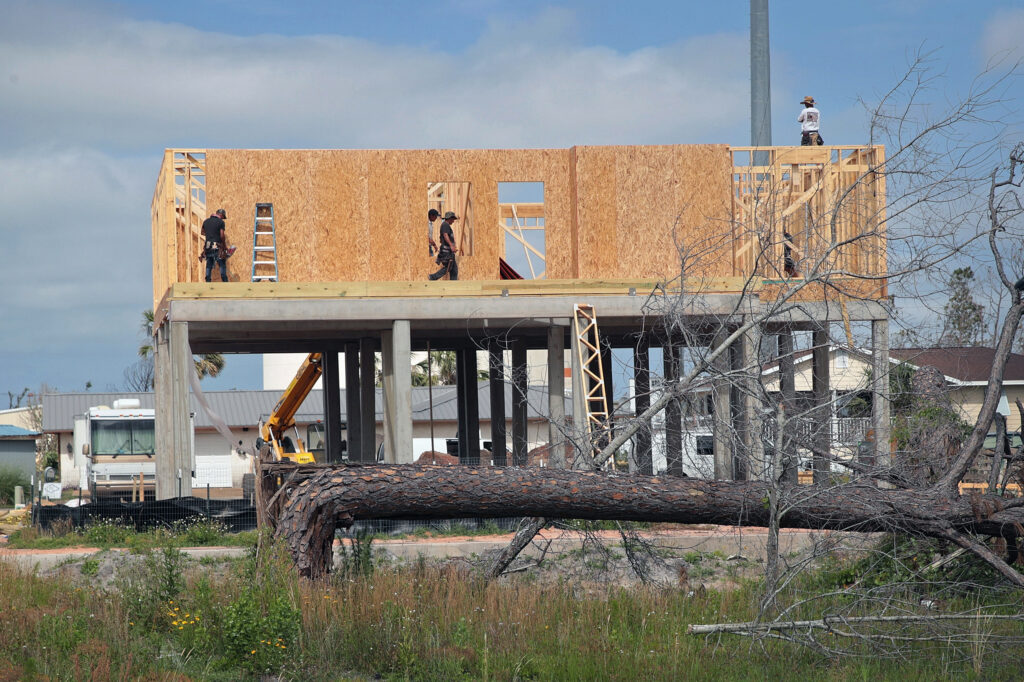
Hurricane recovery in coastal Florida communities reveals a troubling pattern. Wealthy residents and investors rebuild quickly after major storms, while lower-income households sell their damaged properties at depressed prices and leave. The result reshapes entire neighborhoods, replacing working-class communities with affluent ones in a process researchers call "post-disaster gentrification."
The Sebastiaos' experience in Mexico Beach exemplifies this divide. When Hurricane Michael struck in October 2018 with 155 mile-per-hour winds, it destroyed nearly every building in the Panhandle fishing village. Two years later, the Sebastiaos had reconstructed their two-bedroom home. Most of their former neighbors had not. Insurance gaps proved decisive. Those without adequate coverage could not afford reconstruction costs. Others faced prolonged insurance disputes that drained savings. Property values plummeted, creating conditions where residents felt forced to sell to investors and wealthier buyers who could absorb reconstruction expenses.
This pattern repeats across Florida hurricane zones. Post-disaster gentrification follows a predictable sequence: storm impact, unequal recovery resources, property value collapse, displacement, demographic shift. The mechanics are straightforward. Middle and working-class households lack sufficient liquid assets and insurance coverage to wait out lengthy claims processing. Investors and affluent relocators move in, purchase undervalued properties, renovate them, and establish new communities with higher property values and tax bases.
The stakes extend beyond individual displacement. Gentrification following hurricanes erases community history and severs social networks that sustained working-class neighborhoods for generations. Long-established fishing communities lose their character. Schools lose enrollment. Local institutions that served vulnerable populations close. The tax base shifts upward, but property turnover disrupts the affordable housing stock that low-income residents depend on.
Climate science amplifies these concerns. The National Oceanic and Atmospheric Administration projects increased hurricane intensity and rainfall from climate change. Atlantic hurricane seasons will likely produce more storms exceeding Category 3 intensity. Florida's exposure grows because the state contains the nation's longest coastline and lowest average elevation. Miami, Tampa, Jacksonville, and countless smaller coastal communities face repeated storm threats over the coming decades.
Insurance markets reflect this reality. Premiums have increased 50 to 100 percent in some Florida counties since 2020. Several major insurers have exited the Florida market entirely, forcing residents into the state-run insurer of last resort. Citizens Property Insurance Corp., the state's insurer of last resort, now holds 13 percent of the market, up from 4 percent a decade ago. Higher premiums strain budgets for residents with modest incomes, making it harder to maintain coverage and rebuild after storms.
Recovery inequality also reflects broader disparities in wealth and credit access. Affluent residents can secure construction loans and bridge financing. Low-income households lack such options. Federal disaster aid through FEMA provides grants capped at roughly $35,000, insufficient for most home reconstructions. State and federal housing programs offer additional assistance, but application processes prove complex and aid falls short of actual reconstruction costs.
Without intervention, coastal Florida will increasingly resemble communities where pre-disaster working-class populations have vanished. Policy solutions exist: enforced rent controls during recovery periods, community land trusts that preserve affordable housing, enhanced disaster assistance targeted to low-income residents, and insurance reforms that prevent premium spikes for vulnerable populations. But implementation remains limited. The trajectory suggests that hurricane recovery in Florida will continue rewarding wealth while displacing working people.