# Endangered Salmon May Soon Swim Freely up Maine River, But Climate Threatens Recovery
The Narraguagus River in Maine could become a critical refuge for one of North America's most imperiled fish species. A planned dam removal project aims to open roughly 20 miles of pristine habitat to Atlantic salmon, which have collapsed from historical runs of hundreds of thousands to fewer than 1,000 adults returning to U.S. rivers annually.
The Narraguagus, which flows through remote woodland in downeast Maine, retains much of what salmon need to thrive. Cold, clear water. Rocky substrate for spawning. Dense forest canopy that keeps temperatures moderate during summer months. Forest cover limits the direct sunlight that warms streams to lethal levels for cold-water fish.
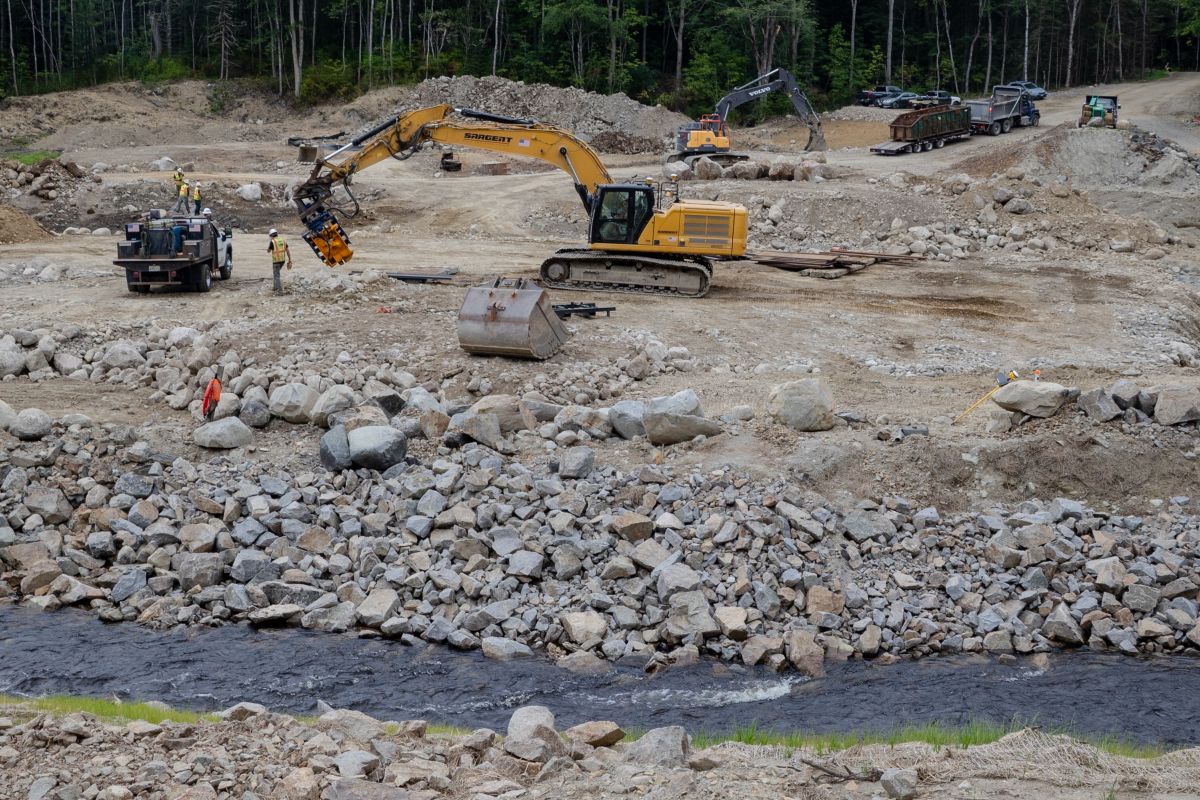
A hydroelectric dam currently blocks salmon passage on the Narraguagus. Its removal would reconnect the lower river to the upper watershed, allowing adult salmon to reach spawning grounds they have not accessed in decades. The project aligns with federal recovery efforts under the Endangered Species Act. Atlantic salmon in U.S. waters hold endangered status, making habitat restoration a legal priority.
Yet the obstacle now looming larger than any dam is warming. Maine's climate has warmed roughly 3 degrees Fahrenheit since the 1970s, faster than the continental average. Water temperatures in Atlantic salmon streams have risen accordingly. Summer highs in key Maine rivers now approach or exceed thermal thresholds where salmon experience stress and disease susceptibility.
The Narraguagus holds an advantage: its forest cover and groundwater inputs keep it among Maine's coldest rivers. Temperature modeling suggests the river could maintain suitable conditions longer than downstream systems as warming continues. But "longer" does not mean indefinitely.
Climate projections from the National Center for Atmospheric Research and others show continued warming across the North Atlantic region. Summer stream temperatures in Maine are expected to climb another 2 to 4 degrees Fahrenheit by mid-century under moderate emissions scenarios. Even the Narraguagus faces risk of exceeding salmon tolerance thresholds during peak summer weeks.
Ellie Mason, who conducted the recent habitat survey, observed the tension between opportunity and peril. The river's remoteness and forest protection create conditions salmon need now. But those same isolated conditions offer limited refuge if temperatures climb beyond adaptation. Atlantic salmon cannot migrate to cooler regions within Maine; the state's rivers all experience similar regional warming trends.
Federal and state agencies managing the dam removal project recognize the climate dimension. Recovery plans increasingly incorporate climate-adaptive strategies. These include protecting high-elevation tributaries where water remains coldest, maintaining riparian shade through forest conservation, and restoring water retention in upland areas to sustain cool baseflow during summer.
The Atlantic salmon's decline stems from multiple causes: dams, overfishing, parasite outbreaks, and habitat loss. Dam removal addresses one component. But habitat restoration alone cannot overcome warming trends if regional temperatures continue rising at current rates. The Narraguagus represents both hope and hard reality. It offers salmon a second chance on a river well-suited to their biology. That chance depends on whether climate emissions reductions arrive in time to slow the warming bearing down on Maine's coldwater streams. Without both habitat restoration and rapid emissions cuts, the Narraguagus recovery remains incomplete.