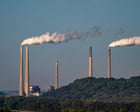
# Trump EPA's Arguments for Unlimited Power Plant Pollution Face Scientific Pushback
The Trump administration's Environmental Protection Agency has erased emissions limits on coal and gas power plants, justifying the move with two central claims: that dismantling pollution rules will lower electricity bills for Americans and that the resulting greenhouse gas emissions pose minimal climate threat. Environmental scientists and policy analysts reject both assertions as fundamentally flawed.
The EPA's action removes constraints that previously restricted carbon dioxide and methane emissions from the nation's coal and natural gas generating stations. This represents a reversal of Obama-era regulations that established the first federal limits on power plant carbon emissions. The agency's logic hinges on cost-benefit analysis favoring industry over climate mitigation.
The first EPA claim, that deregulation cuts electricity costs, contradicts recent utility sector trends. Renewable energy sources, particularly wind and solar, now generate power cheaper than coal in most U.S. markets. This economic reality, confirmed by levelized cost analyses from the National Renewable Energy Laboratory (NRLE) and Bloomberg NEF, undermines arguments that pollution controls inflate bills. In fact, coal plant retirements accelerated primarily due to economics, not regulatory burden. The infrastructure investments required to maintain aging coal facilities often exceed the cost of new renewable capacity.
The second claim, that power plant emissions carry negligible climate consequence, conflicts with established climate science. The energy sector accounts for approximately 27 percent of U.S. greenhouse gas emissions, with power generation representing the largest single source. The Intergovernmental Panel on Climate Change (IPCC) has determined that limiting warming to 1.5 degrees Celsius above pre-industrial levels requires deep decarbonization of electricity systems by 2050. Removing emissions standards eliminates regulatory drivers for that transition.
The EPA's rationale also ignores documented health and economic costs tied to coal and gas power generation. The Harvard School of Public Health estimated that air pollution from coal plants costs the economy approximately $821 billion annually in health damages, lost productivity, and healthcare expenses. These externalized costs do not appear in utility billing but represent real taxpayer burden through healthcare systems and environmental remediation.
The timing of this action coincides with record renewable energy deployment. In 2024, wind and solar generated 21 percent of U.S. electricity, up from 12 percent five years prior. Battery storage capacity has grown exponentially, addressing intermittency concerns that once justified fossil fuel baseload requirements. Market conditions, not regulatory requirements, now favor clean energy investment.
Legal challenges to the EPA's deregulation appear inevitable. Environmental groups and state attorneys general have signaled intent to contest the action in federal courts. Previous EPA rollbacks of power plant standards faced judicial scrutiny on grounds of arbitrary rulemaking and failure to adequately consider climate impacts under the Administrative Procedure Act. The Supreme Court's 2022 decision in West Virginia v. EPA, which limited EPA authority to regulate carbon emissions broadly, complicates but does not necessarily preclude challenges to this specific rule.
The stakes extend beyond domestic policy. Coal and gas plants operate for 30 to 50 years. Removing emissions constraints now locks in decades of unabated pollution, directly contradicting U.S. climate commitments under the Paris Agreement. This action effectively cedes decarbonization momentum to foreign competitors advancing renewable technology sectors that will define 21st century energy markets.