California officials are releasing nearly half a million male mosquitoes across the San Gabriel Valley near Los Angeles as part of an escalating effort to suppress invasive Aedes aegypti populations that now thrive across an extended breeding season.
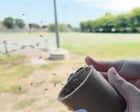
The San Gabriel Valley Mosquito and Vector Control District confirmed receipt of thousands of paper tubes containing sterile male mosquitoes, each carrying the bacterium Wolbachia. These insects will be deployed to mate with wild females, which cannot reproduce after exposure to the pathogen. The strategy, called incompatible insect technique (IIT), relies entirely on males to suppress populations without pesticides or genetic modification.
Aedes aegypti mosquitoes, originally native to Africa, have invaded California and now transmit dengue fever, Zika virus, and chikungunya. Climate change has extended their active season, allowing populations to breed year-round in warmer microclimates rather than shutting down during winter months. The extended window means longer transmission periods for diseases previously confined to tropical regions.
California's Department of Pesticide Regulation approved the Wolbachia-carrying males for release after multiple trials demonstrated safety. The bacterium does not harm humans or animals. Female mosquitoes exposed to males carrying Wolbachia produce eggs that fail to develop, naturally crashing population growth without chemical intervention.
The release campaign targets specific neighborhoods with documented Aedes aegypti infestations. Earlier pilot programs in Fresno and Clovis showed population reductions exceeding 90 percent within weeks. San Gabriel Valley officials expect similar suppression rates as they scale operations. Hallum and his team will monitor outcomes across treated zones, comparing mosquito densities to untreated control areas.
Aedes aegypti poses particular public health risks because it feeds during daylight hours and thrives in urban environments where standing water accumulates in flower pots, gutters, and discarded containers. Unlike native California mosquitoes that breed in marshes and ditches, this species adapts to human-modified landscapes. A single female produces dozens of eggs every few days during warm months.
The United States recorded 600 dengue cases in 2023 and 1,400 in 2024, mostly imported infections from travelers returning from endemic countries. However, local transmission chains have begun. Florida documented locally acquired cases in 2023 and 2024. California officials recognize that without intervention, local dengue cycles will establish across the state.
Biocontrol approaches like IIT avoid the resistance problems that accompany repeated pesticide applications. Mosquitoes in some regions have already developed resistance to pyrethroid insecticides, reducing their effectiveness. The Wolbachia method works through reproductive biology rather than toxicity, making resistance impossible.
The San Gabriel Valley releases represent California's most aggressive deployment yet. Officials plan to expand operations to other infested regions as supply increases. The strategy integrates with existing vector control efforts that include surveillance, source reduction, and public education about eliminating breeding sites.
This approach reflects a fundamental shift in pest management. Rather than poisoning target populations, scientists release incompatible insects that crash wild populations through natural reproductive failure. The technique requires sustained releases to maintain suppression but avoids chemical risks and bypasses resistance evolution.