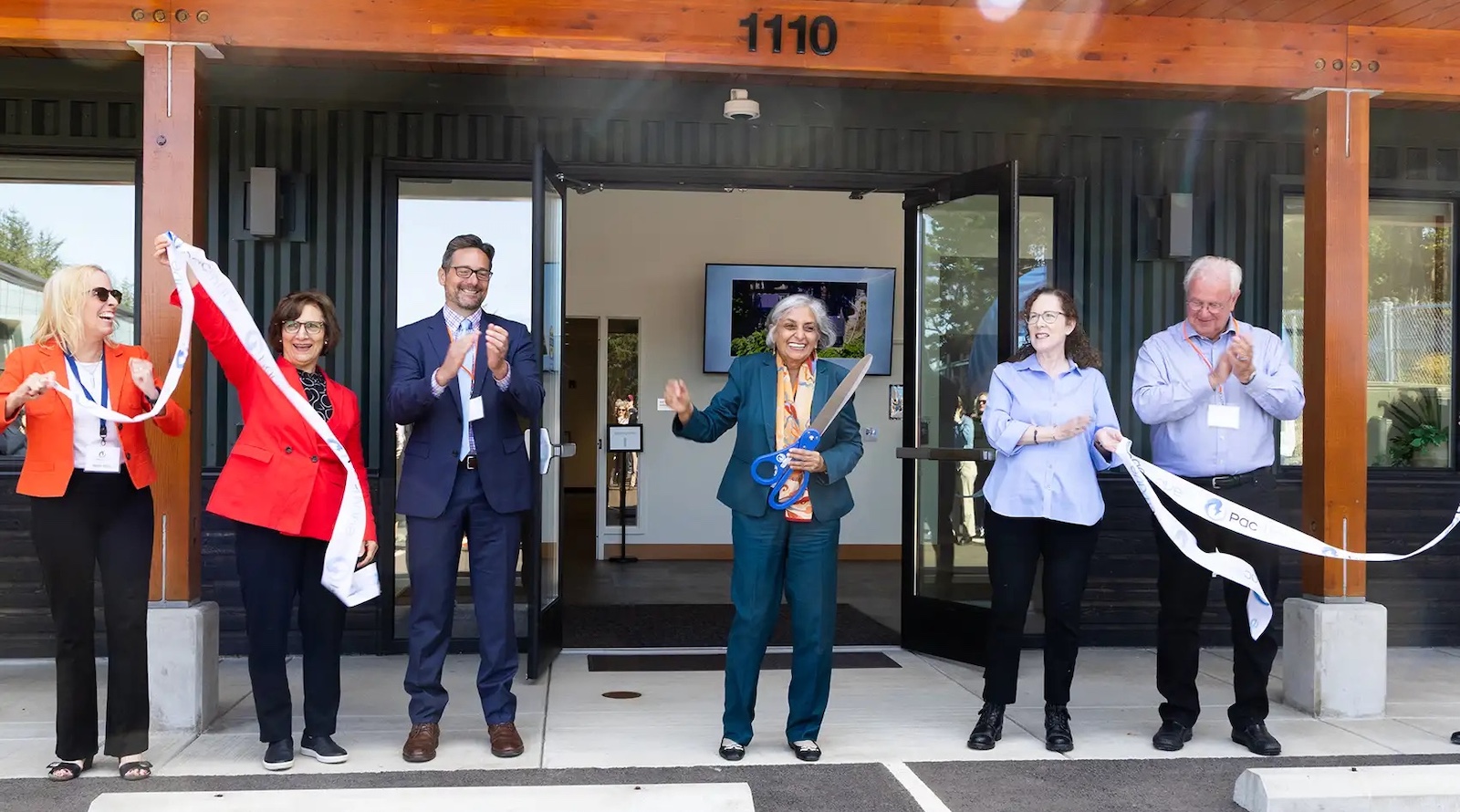
The National Laboratory of the Rockies (NLR) opened PacWave on August 27, 2026, establishing America's first grid-connected, open-ocean wave energy test facility on the Oregon coast. The installation represents the first pre-permitted proving ground in the United States designed for commercial-scale wave energy converters, marking a watershed moment for an energy sector that has struggled for decades to move from prototype to deployment.
PacWave operates as an internationally accredited testing platform where manufacturers can deploy full-scale wave energy devices in real ocean conditions. The facility sits in waters off Newport, Oregon, where consistent wave patterns and infrastructure access support multiple simultaneous testing operations. Unlike laboratory tanks or small-scale demonstrations, PacWave allows companies to gather performance data on devices operating at genuine commercial specifications in genuine marine environments.
Wave energy converters remain among the least developed renewable technologies despite theoretical potential. The resource sits abundant: waves contain roughly three times the energy density of wind at equivalent speeds, and the Pacific Northwest experiences some of the most consistent wave patterns in North America. Yet the sector has produced no commercially deployed devices at meaningful scale in American waters. Regulatory uncertainty, permitting delays, and high testing costs created barriers that kept companies from advancing technology beyond prototype stages.
The permitting pathway for PacWave itself illustrates these historical obstacles. The facility required coordination across the Army Corps of Engineers, the Federal Energy Regulatory Commission, the National Oceanic and Atmospheric Administration, and state regulators. Multi-year approval processes pushed project timelines and funding requirements higher. Now that the site operates with all necessary authorizations in place, subsequent projects can reference PacWave's permitting framework, potentially accelerating approvals for other demonstration and commercial wave facilities.
The test site accommodates up to five device deployments simultaneously across different grid connection points. This configuration allows researchers to compare how various converter designs perform under identical ocean conditions. Data collection infrastructure includes subsea sensors, mooring systems, and grid integration equipment that transmits power directly to the local utility network. Companies gain real-time performance metrics while contributing power to regional electricity supply.
PacWave addresses a specific gap in technology development pathways. Between laboratory prototypes and full commercial arrays lies a valley that kills many promising technologies. Small-scale testing proves feasibility. Large-scale deployment demands proven reliability and cost competitiveness. PacWave bridges this gap by providing the permitting, environmental monitoring, grid infrastructure, and operational support that independent companies cannot justify building individually.
The Oregon location benefits from existing marine research infrastructure, skilled technical workforce, and utilities prepared to accommodate variable renewable generation. The Pacific Northwest already leads in offshore wind development, creating supply chains and expertise that support wave energy advancement.
Wave energy developers including companies from Europe and Canada have already committed to testing devices at PacWave. The facility's opening creates pressure on the federal government and states elsewhere to establish comparable testing sites in other coastal regions. The Atlantic coast experiences different wave patterns and seasonal variations that require distinct testing environments. California waters present separate engineering challenges.
Success at PacWave depends on gathering enough operational data to demonstrate reliability improvements and cost reductions that attract commercial investment. The renewable energy sector requires proven track records before capital flows toward deployment. This facility provides that proving ground. The next phase involves translating positive test results into commercially financed arrays generating power at grid scale.