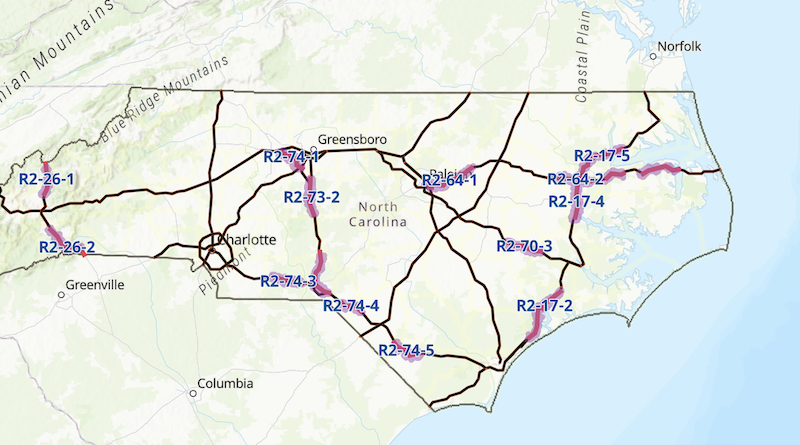
The federal network of public electric vehicle charging stations continues expanding despite the Trump administration's attempt to defund the program. States have moved forward with construction projects using money allocated through the National Electric Vehicle Infrastructure (NEVI) program, a $5 billion initiative established under the Biden-era Bipartisan Infrastructure Law.
The NEVI program mandates that states build charging networks along designated highway corridors, establishing a backbone of fast-charging stations spaced roughly 50 miles apart on interstates and major routes. The infrastructure targets corridors defined by the Federal Highway Administration, prioritizing routes that lack adequate charging coverage.
The Trump administration sought to redirect or eliminate NEVI funding during its second term. The effort reflected the administration's stated opposition to what it characterizes as costly green energy mandates. However, states proved resilient in defending the program. Several state transportation agencies and governors argued that NEVI funding represents essential infrastructure investment with bipartisan origins, noting that infrastructure development enjoys support across political divides.
State transportation departments in multiple jurisdictions proceeded with procurements, construction contracts, and site selections despite the federal uncertainty. This allowed them to lock in funding commitments before any potential policy reversals took effect. The strategy proved effective in protecting pipeline projects from cancellation.
The charging infrastructure development carries practical implications for EV adoption rates. The presence of publicly accessible fast-charging stations addresses range anxiety, a primary barrier preventing gas-vehicle owners from switching to electric cars. Highway charging networks reduce trip-planning friction for long-distance travel, expanding the utility of EVs beyond urban and suburban commuting.
Private charging networks, operated by companies like Tesla, EVgo, and Electrify America, complement the NEVI infrastructure. However, the federal program emphasizes equity and universal access by requiring stations to use the common connector standard (NACS as of recent updates) and accept multiple payment methods. This contrasts with proprietary networks that sometimes privilege subscribers or particular vehicle brands.
The program's resilience also reflects deeper political realities. Although the Trump administration opposes elements of EV policy, highway electrification generates bipartisan constituency support. Rural states receive significant NEVI allocations despite conservative politics, creating local interest in completion. Construction jobs, business development around charging hubs, and improved highway corridor competitiveness all generate support from Republican and Democratic officials alike.
Approximately 10,500 charging ports were operational or funded under NEVI as of early 2026, with additional phases continuing through the decade. The program targets a nationwide network approaching 500,000 public chargers by 2030, though this includes both DC fast chargers and Level 2 chargers funded through complementary programs.
The charging network development interconnects with broader transportation electrification trends. Commercial trucking operators increasingly evaluate EV adoption pathways, and heavy-duty charging infrastructure requirements differ substantially from light-vehicle networks. NEVI's focus on highway corridors creates foundational infrastructure that supports both passenger vehicle charging and emerging heavy-truck electrification needs.
States that secured early NEVI construction awards now operate completed charging facilities generating usage data and revenue models. These operating stations provide practical evidence for remaining state governments planning their deployments, reducing implementation risk and informing site-selection criteria. The cumulative effect accelerates network maturation across regions.