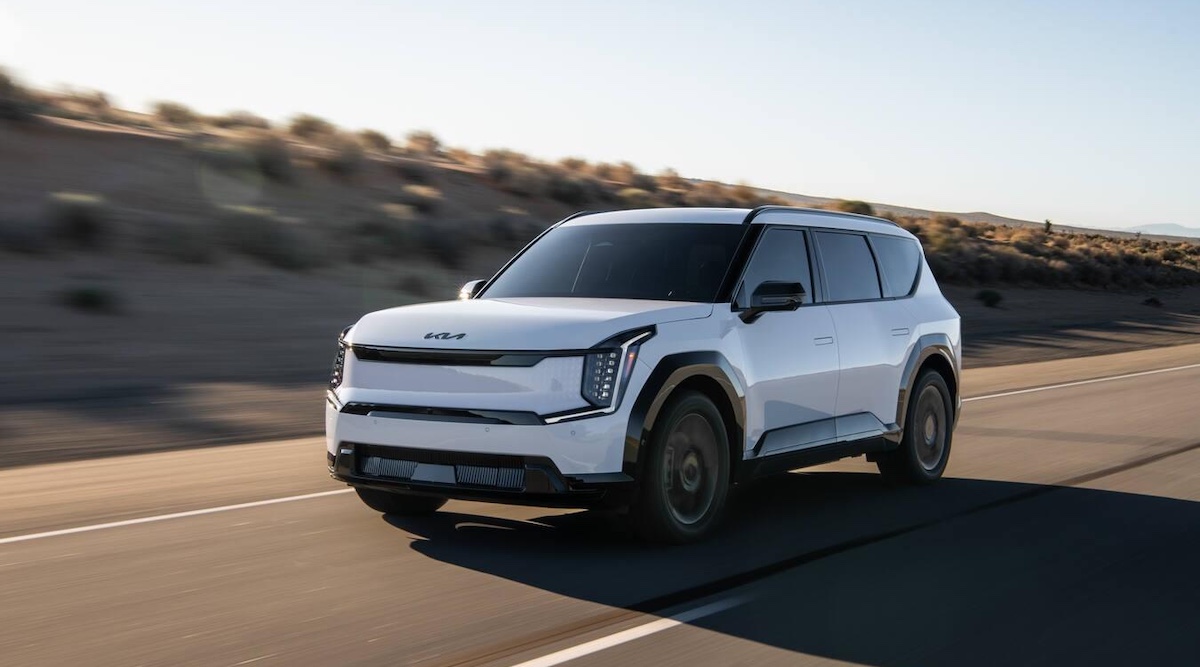
# Kia EV9 Dealership Discounts Push Three-Row Electric Vehicle Into Aggressive Price Territory
Kia dealerships have begun offering substantial discounts on the EV9, bringing the three-row electric vehicle to price points that undercut comparable gas-powered and electric competitors. The aggressive pricing reflects intensifying competition in the growing electric SUV segment and dealer inventory pressures as automakers race to meet customer demand while managing stock levels.
The EV9 represents one of the limited options for buyers seeking a three-row electric vehicle with genuine passenger capacity. Most EV makers have focused on two-row configurations or compact designs, leaving the EV9 with minimal direct competition. Toyota's upcoming three-row electric SUV and Volkswagen's ID. Buzz remain unavailable or nascent, giving Kia a temporary market advantage that the company appears willing to leverage through pricing aggression.
The vehicle itself carries substantial specifications. The EV9 offers up to 304 miles of range on the EPA estimate, accommodates up to seven passengers, and includes advanced driver assistance systems standard across most trims. The interior incorporates high-quality materials and a large touchscreen interface, features typically reserved for luxury-branded vehicles at comparable price points. Kia's engineering team delivered competitive battery performance without premium pricing, positioning the EV9 as a value proposition in the EV market.
Dealer incentives have pushed entry-level EV9 configurations to prices that approach or undercut comparable gas-powered three-row SUVs from competitors including Chevrolet, Toyota, and Ford. This pricing strategy accomplishes multiple objectives for dealers and the manufacturer. First, it accelerates inventory turnover as supply chain issues ease and production capacity increases. Second, it builds EV adoption among price-sensitive buyers who might otherwise hesitate to transition from internal combustion engines. Third, it establishes market share in a segment where early dominance matters for brand loyalty and service revenue.
The federal tax credit for electric vehicles provides additional incentive leverage. Qualified buyers can claim up to $7,500 on new EV purchases, stacking on top of dealer discounts. Combined incentives reduce effective purchase prices substantially below manufacturer suggested retail prices. Some buyers report final out-of-pocket costs that position the EV9 below comparable gas-powered SUVs when accounting for federal credits, state incentives, and dealer negotiation.
This pricing environment reflects broader market dynamics in the EV transition. Traditional automakers face pressure to shift production toward electric drivetrains while managing legacy gas vehicle inventory. Simultaneously, Tesla pricing cuts and Chinese EV manufacturer expansion have compressed profit margins across the sector. Kia and its parent company Hyundai have invested heavily in EV platforms and manufacturing capacity, betting on rapid market growth that justifies current production levels.
The EV9's aggressive pricing may accelerate consumer acceptance of electric three-row vehicles and validate Kia's investment in scalable EV architectures. As battery costs decline and manufacturing efficiency improves, the vehicles become genuinely cheaper to produce, allowing sustainable pricing without margin erosion. Current discounts may represent temporary clearing rather than long-term pricing strategy, though sustained demand at reduced prices could reshape expected price floors for this vehicle class.