# Farm Electrification Should Start With The Work, Not The Tractor
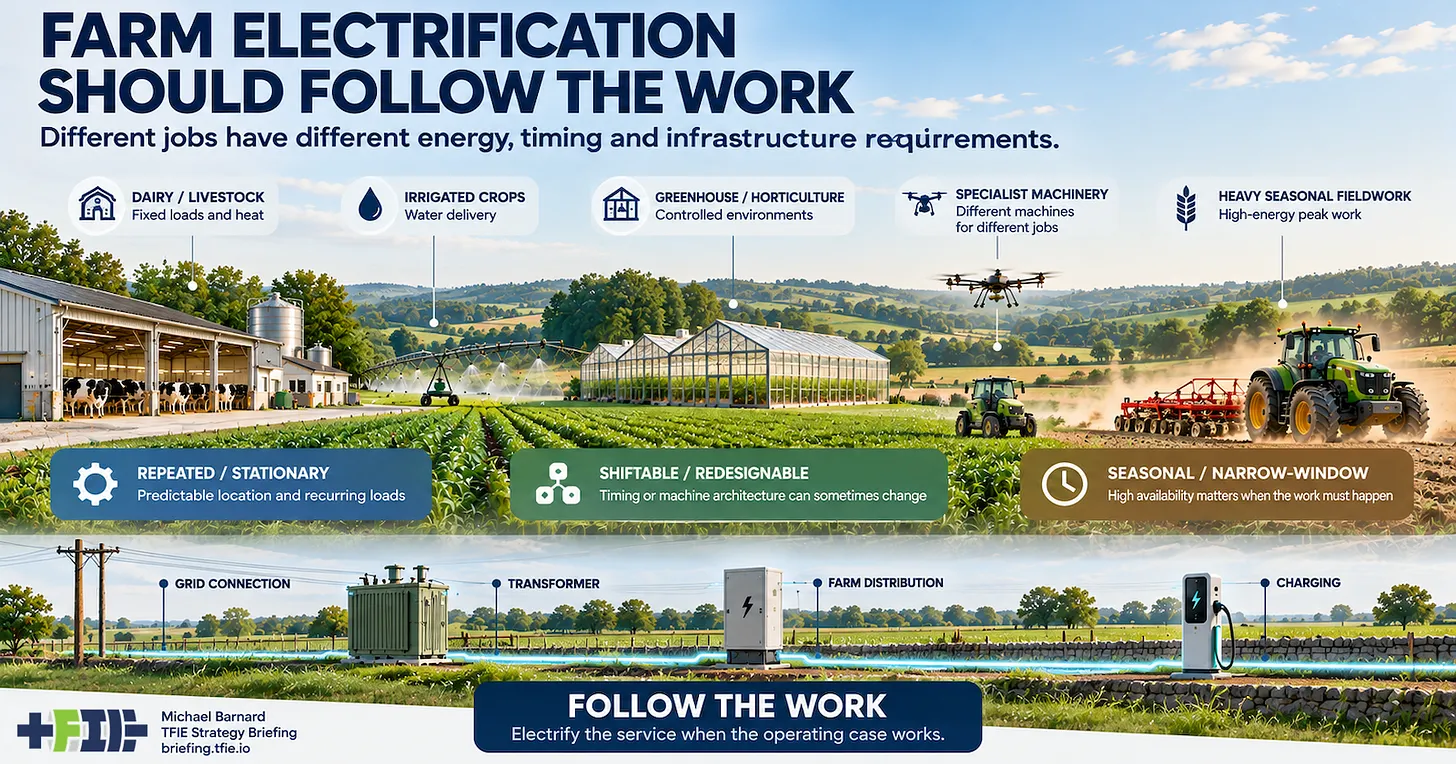
The agriculture industry's approach to decarbonization focuses on the wrong problem. Rather than centering electrification efforts on tractors, the sector should reorganize its strategy around specific farm tasks and operations.
The large diesel tractor dominates discussions about farm electrification. These machines consume enormous fuel volumes during compressed seasonal windows for planting and harvest. Their scale makes them seem like the obvious first target for emissions reductions. This reasoning, however, misses the actual structure of agricultural work and where electrification can deliver immediate results.
Farm operations involve dozens of distinct tasks beyond tractor-driven field work. Irrigation systems run continuously during growing seasons. Grain dryers operate for weeks after harvest. Ventilation systems maintain livestock facilities year-round. Feed mills grind and mix feed on schedules separate from field work. Grain elevators and storage systems function independently from tractor cycles. These operations consume significant energy across different seasons and timeframes.
Electrifying these auxiliary systems offers advantages the tractor-first approach cannot match. Many of these tasks operate on regular, predictable schedules. Irrigation pumps, for example, run during daylight hours when solar generation peaks. This alignment reduces battery storage requirements and grid stress. Grain dryers can operate overnight when electricity rates drop and renewable generation like wind turbines produces power. Feed mills handle consistent daily volumes regardless of season.
The energy requirements for these operations differ fundamentally from tractor work. A grain dryer needs steady, continuous power delivery. An irrigation system requires consistent pressure and flow. Neither demands the burst power or all-terrain capability that make tractor electrification difficult. Technologies exist today to electrify these systems effectively and affordably.
Moving beyond tractors also addresses the farm's energy ecosystem differently. Many farms operate mixed operations combining crop production and livestock. Electrifying livestock facilities, milk coolers, and ventilation systems creates integrated infrastructure that supports broader farm decarbonization. This approach builds momentum and demonstrates ROI faster than waiting for electric tractors to mature and reach affordable price points.
The economic case shifts when electrification spreads across multiple farm systems. A farm investing in renewable energy infrastructure like solar arrays can power dryers, irrigation, and animal facilities immediately. These systems depreciate faster than tractors, improving cash flow and allowing reinvestment. Battery systems can be sized for specific operations rather than attempting to power 400-horsepower machines for peak-season work.
Policymakers designing farm electrification incentives should focus on these diversified operations instead of tractors. Grants and loans for renewable energy installation, grain drying electrification, and irrigation system upgrades address real emissions while supporting immediate deployment. Tractor electrification remains important long-term, but it requires technological breakthroughs still years away from commercial viability.
The farm electrification strategy that starts with tractors postpones meaningful progress. Beginning with auxiliary systems, renewable energy infrastructure, and task-specific electrification creates tangible emissions reductions today while building the foundation for complete agricultural decarbonization.