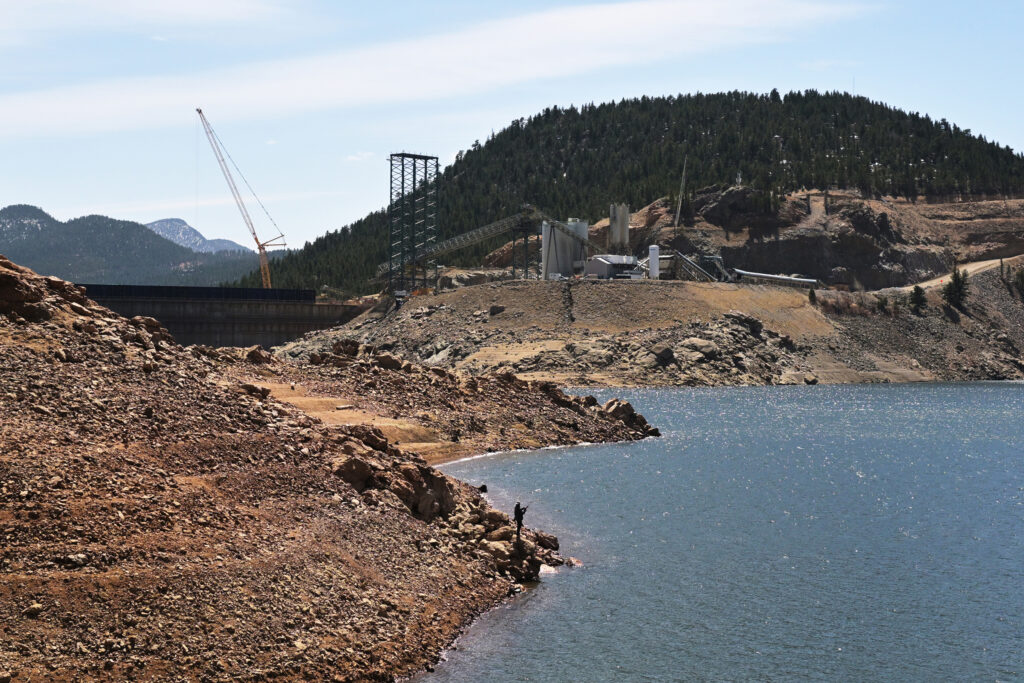
A federal appeals court cleared the way Tuesday for Denver Water to complete expansion of Gross Reservoir, overturning a lower court's halt to construction. The three-judge panel at the U.S. 10th Circuit Court of Appeals sided with the U.S. Army Corps of Engineers and the water utility against legal challenges to the project.
The dam expansion, located northwest of Denver, represents a contested infrastructure investment aimed at securing water supplies for the metropolitan area. Gross Reservoir currently stores water for Denver Water, the utility that serves approximately 1.5 million people across the Front Range. The expansion would increase the reservoir's capacity by roughly 77,000 acre-feet, raising the dam's height by about 117 feet.
Environmental groups and tribal nations filed the original lawsuit that prompted the lower court to halt construction. They challenged the Army Corps of Engineers' permit for the dam expansion, citing concerns about environmental impacts and compliance with federal environmental law. The groups argued the project violated the National Environmental Policy Act (NEPA) and failed to adequately consider alternatives.
The 10th Circuit's decision reverses the lower court's preliminary injunction that had stopped work on the project. The appeals court found that the plaintiffs lacked standing or failed to demonstrate a likelihood of success on the merits of their environmental claims. The panel did not issue a detailed explanation of its reasoning in the brief ruling released Tuesday.
Denver Water has characterized the expansion as essential infrastructure. The utility argues that population growth, increasing water demands, and climate-driven variability in precipitation require additional storage capacity. The project received approval from Colorado water officials and federal permitting agencies before environmental groups challenged it.
The expansion sits within a broader regional water management strategy for Colorado's Front Range, one of the nation's fastest-growing regions. Denver and surrounding communities face competing water demands from municipal use, agriculture, and environmental flows. Climate change has complicated these dynamics, with research indicating that warming temperatures reduce snowpack and accelerate spring runoff in the Rocky Mountains.
The project also touches on interstate water rights. The Colorado River Compact allocates water resources among seven Western states, and proposals for new storage infrastructure require careful navigation of existing agreements and tribal water rights. Ute Indian Tribe members and other indigenous groups have raised concerns about the reservoir expansion's effects on their territories and water claims.
Legal battles over Western water infrastructure have intensified as states and utilities respond to extended drought conditions and population pressures. Previous dam expansion and water diversion projects have faced multiyear litigation, with courts weighing environmental law requirements against water supply demands.
The 10th Circuit decision does not end all legal challenges. Environmental groups may seek further review, potentially appealing to the U.S. Supreme Court. However, the appeals court's action removes the injunction blocking construction, allowing Denver Water to resume and complete the dam expansion while legal proceedings continue.
The expansion project remains costly and controversial. Final environmental and engineering reviews continue as construction advances. Water managers across the West watch the litigation closely, as outcomes shape feasibility assessments for future infrastructure proposals in the region.