# Climate Change Primed Nepal Glacier for Deadly Collapse
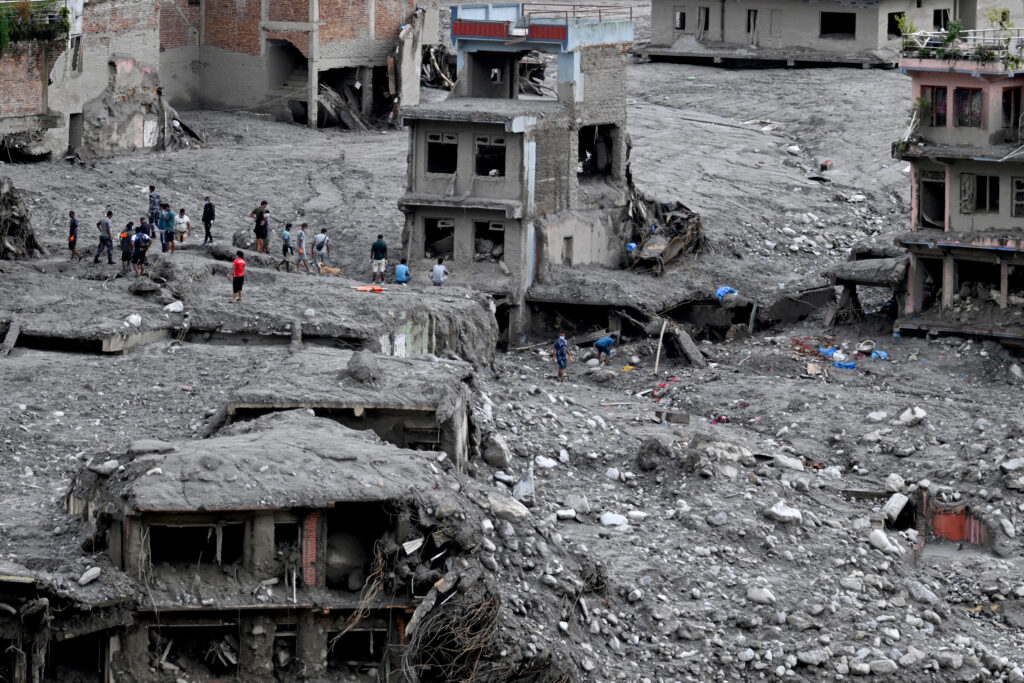
A catastrophic rock and glacier collapse that killed at least 1,300 people in Nepal's Langtang Valley in August was directly enabled by decades of warming, climate attribution researchers concluded. The disaster on Langtang Lirung Mountain sent a cascade of semi-frozen sludge, boulders, and debris racing through the region at extreme speeds, destroying villages and cutting off rescue routes for days.
Climate scientists conducting post-disaster attribution analysis found "absolutely no doubt" that rising global temperatures destabilized the mountain face preceding the collapse. Warming temperatures weaken the frozen cement that holds steep alpine terrain together. As permafrost thaws and glacial ice retreats, rock faces lose structural integrity. This process accelerates as atmospheric temperatures climb.
The Langtang region sits in the Himalayas, one of Earth's most thermally sensitive mountain systems. Researchers from the World Weather Attribution initiative and other organizations documented that regional temperatures have risen faster than the global average over recent decades. This accelerated warming directly increased the probability of catastrophic slope failure on vulnerable peaks.
Langtang Lirung Mountain had shown visible signs of instability for years. Photographs from mountaineers and researchers documented accelerating glacier retreat and exposed rock faces where ice previously provided structural support. The mountain's north face, where the collapse originated, sits at roughly 7,200 meters elevation where permafrost conditions prevail. As soil and rock that remain permanently frozen begin to thaw, the cohesion holding the mountainside together weakens substantially.
The August event represents a growing class of climate-driven disasters in the Himalayas. Nepal's mountain communities depend on stable alpine terrain for access to water resources, grazing land, and trade routes. Warming has accelerated glacier retreat across the range, reducing water availability for downstream populations while simultaneously increasing hazards from sudden collapses.
Attribution science, which quantifies how human-caused climate change alters disaster risk, has matured significantly over the past decade. Researchers now routinely assess whether specific events would have occurred without greenhouse gas emissions. For the Langtang collapse, the analysis proved straightforward. Without warming-driven permafrost thaw and ice loss, the mountainside geometry would have remained stable.
The disaster killed entire families and displaced thousands. Survivors described the sound as deafening, the debris flow arriving with minimal warning. Recovery teams struggled to access affected valleys because the collapse blocked primary routes. Nepali government officials requested international assistance for rescue and reconstruction efforts.
This event underscores how climate change translates into loss of life in mountainous regions. Unlike floods or droughts that develop gradually, sudden geological failures triggered by warming can offer no escape window. Communities in the Himalayas, the Andes, and the Alps now face elevated risk from gravitational hazards linked directly to atmospheric heating.
The research, presented in peer-reviewed analysis, establishes that similar collapses will occur with higher frequency as warming continues. Governments in mountain regions are beginning adaptation planning, including relocation of vulnerable settlements and installation of early-warning systems that detect instability in exposed slopes. Nepal's example demonstrates that such measures require urgency.