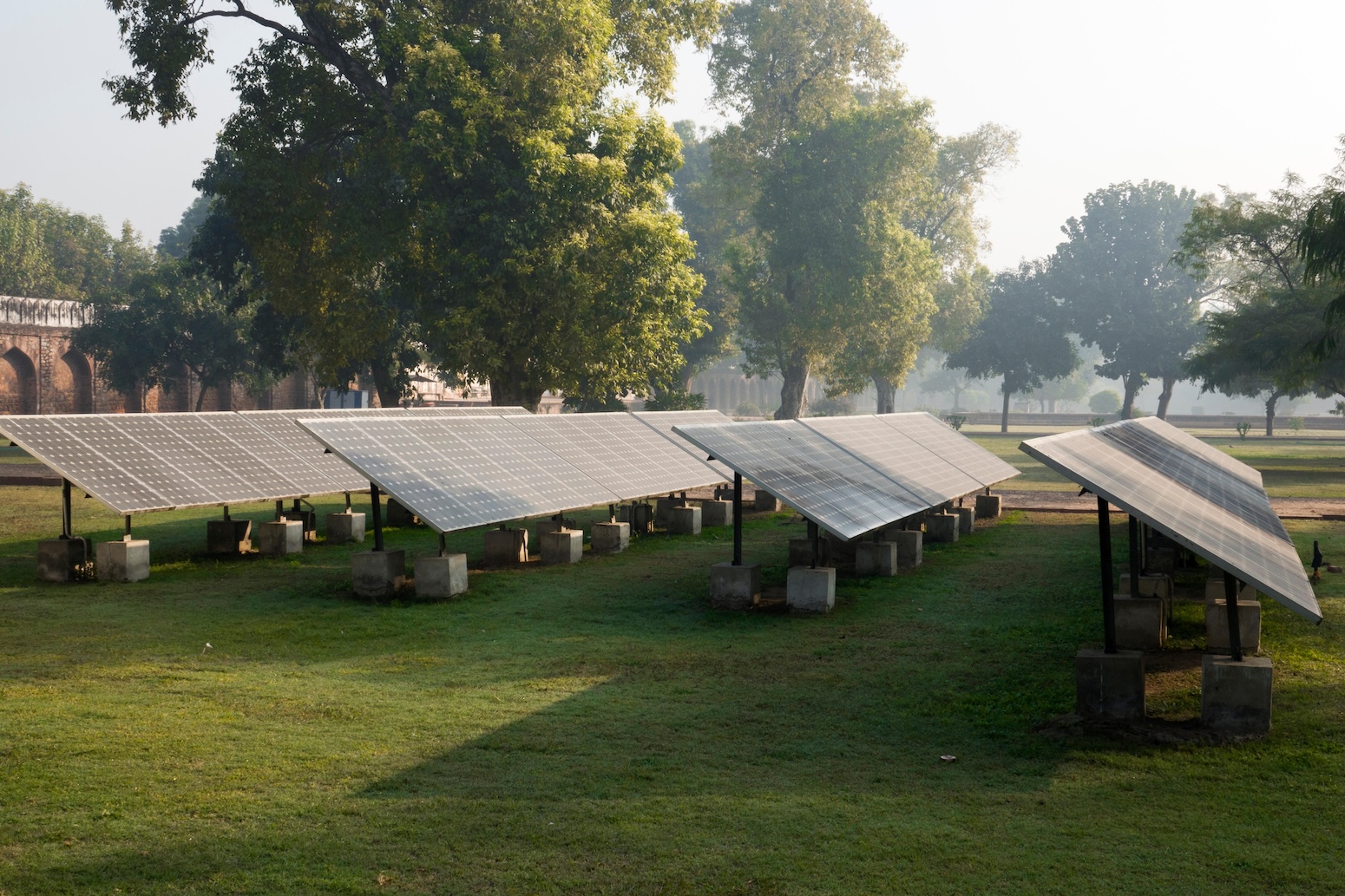
India's power sector has halted carbon dioxide emissions growth for two consecutive years, marking a historic shift driven by record renewable energy deployment. Data shows emissions remained flat in 2022 and 2023 despite continued electricity demand increases, a reversal of the sector's long-standing upward trajectory.
The stagnation reflects India's accelerating renewable capacity additions. Solar and wind installations surged during this period, offsetting coal-fired generation that would have otherwise expanded to meet the country's growing power consumption. India added approximately 15 gigawatts of renewable capacity in 2023, continuing a trend that has made the country one of the world's largest renewable energy investors by absolute megawatts.
Coal generation actually declined slightly in absolute terms during 2022 and 2023, despite remaining India's dominant fuel source at roughly 70 percent of the electricity mix. This represents the first sustained retreat in coal power generation in India's modern energy history. The shift occurred as renewable energy reached cost parity with coal-fired generation across most regions, eliminating the price advantage that had driven coal expansion for decades.
India's national targets align with this trajectory. The government committed to 500 gigawatts of renewable capacity by 2030 under its Nationally Determined Contribution to the Paris Agreement. Current progress puts the nation on track to exceed this goal. The renewable energy share of India's installed capacity reached approximately 43 percent by early 2024, up from 38 percent two years earlier.
The emissions plateau carries wider significance for global climate efforts. India ranks fourth in total greenhouse gas emissions but has the world's third-largest coal fleet. Its power sector accounts for roughly half of the country's energy-related CO2 emissions. A sustained emissions decline in Indian power generation would meaningfully impact global decarbonization trajectories.
However, challenges remain. India's electricity demand continues rising at around 5-6 percent annually, driven by economic growth and expanding grid access to rural areas. Grid integration of variable renewable sources requires substantial transmission infrastructure investment and storage capacity expansion. The country currently operates limited battery storage, creating potential grid stability constraints as wind and solar penetration deepens.
Coal-dependent regions and utilities face stranded asset risks as renewable energy gains market share. India's state-owned thermal power plants, which dominate the coal fleet, operate at declining capacity factors. Policymakers grapple with managing the transition without destabilizing employment in coal-mining regions, which employ hundreds of thousands of workers.
Natural gas, which briefly gained traction as a "bridge fuel," has struggled due to import costs and limited domestic reserves. This has left renewables as the primary low-carbon expansion option. Hydropower, which provides roughly 12 percent of India's electricity, faces climate-related water stress that threatens future output.
India's achievement in holding power-sector emissions flat while expanding electricity access demonstrates that rapid coal retirement is not prerequisite for emissions declines. Renewable energy deployment at scale proved sufficient to decouple power growth from emissions growth. Whether India can sustain this pattern through the remainder of the decade depends on maintaining renewable investment momentum, solving grid integration challenges, and securing financing for the infrastructure overhaul required to support a 70-80 percent renewable power system by 2030.