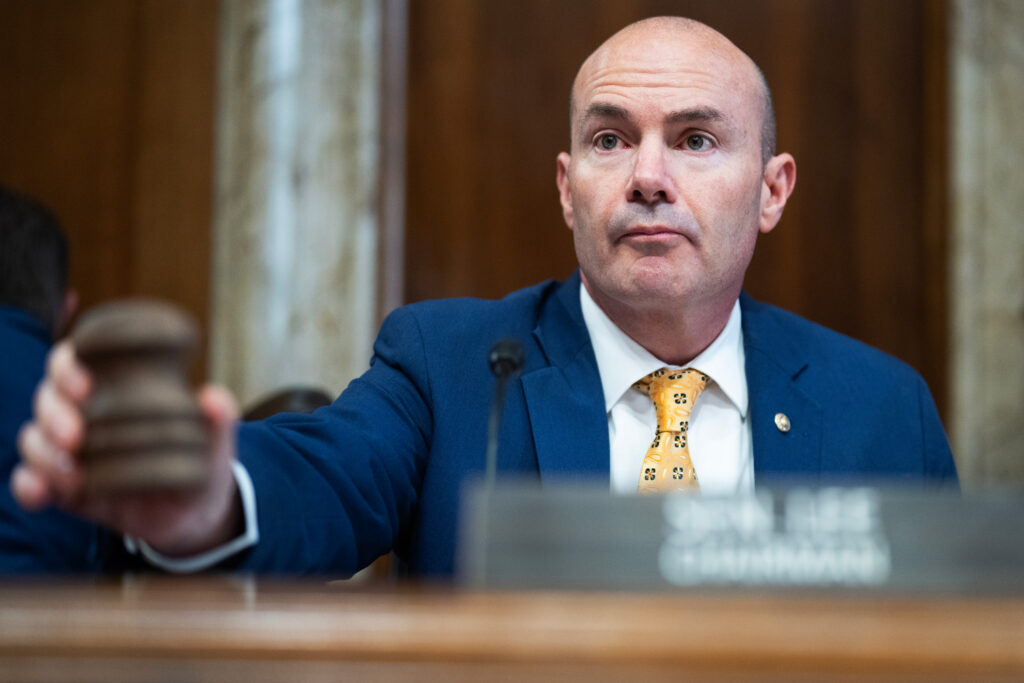
The Senate Committee on Energy and Natural Resources examined legislation Wednesday that would substantially weaken the federal government's authority to regulate appliance efficiency. The Energy Efficiency Reform Act would impose new procedural barriers on the Department of Energy, making it harder to update or establish energy efficiency standards for household appliances including dishwashers, washing machines, boilers, and refrigerators.
The bill targets one of the most cost-effective climate policy tools available to federal regulators. Energy efficiency standards have reduced household energy consumption for decades. A 2023 analysis by the Natural Resources Defense Council found that appliance efficiency standards enacted since 1987 prevent roughly 2.2 billion metric tons of carbon dioxide emissions over the lifetime of those appliances. Refrigerator standards alone have cut residential electricity use by approximately 75 percent since 1974, even as unit sizes expanded.
The Energy Efficiency Reform Act would require DOE to conduct more extensive cost-benefit analyses before proposing any new standards. It would lengthen the rulemaking timeline, currently averaging four to six years per standard. The bill also creates a mechanism for Congress to block standards through legislation, a power Congress does not currently possess. More aggressively, the measure would enable the department to repeal existing standards that have already proven effective and generated consumer savings.
The DOE implemented 35 appliance efficiency standards between 2009 and 2021 under the Obama administration. These standards cost manufacturers relatively little to comply with but generated substantial savings for consumers. A 2022 DOE analysis estimated that standards finalized between 1987 and 2020 would produce $2 trillion in net benefits to American households through reduced utility bills, with average household savings reaching $440 per year by 2030.
Appliance manufacturers themselves have split on the bill. Some manufacturers support streamlined rulemaking timelines, citing predictability concerns. Others, including leaders from major appliance companies, have opposed wholesale repeals of existing standards, arguing that regulatory certainty helps them plan production investments.
The bill reflects a broader debate about federal regulatory power and climate policy design. Supporters argue that DOE has exceeded its statutory authority in setting ever-stricter standards without adequate cost analysis. Critics counter that efficiency standards represent the cheapest path to carbon reduction and that weakening them would undermine decades of consumer protections and emissions reductions.
Climate advocates have flagged the repeal provision as particularly damaging. Once a standard is rescinded, returning to it would require restarting the entire rulemaking process, consuming years. The bill offers no sunset clause or review mechanism to evaluate whether repealed standards should be reinstated.
The committee hearing reflected the political complexity surrounding appliance efficiency. Unlike coal-heavy power generation, appliances affect households directly. Manufacturers lobby actively on timing and stringency. Consumer groups emphasize bill savings. Environmental organizations stress emissions reductions from these standards, which collectively account for roughly 5 percent of current U.S. greenhouse gas emissions.
The bill has not yet moved to a full Senate vote. Its prospects in the current Congress remain uncertain, dependent on energy committee dynamics and broader partisan alignment on climate and regulatory policy.