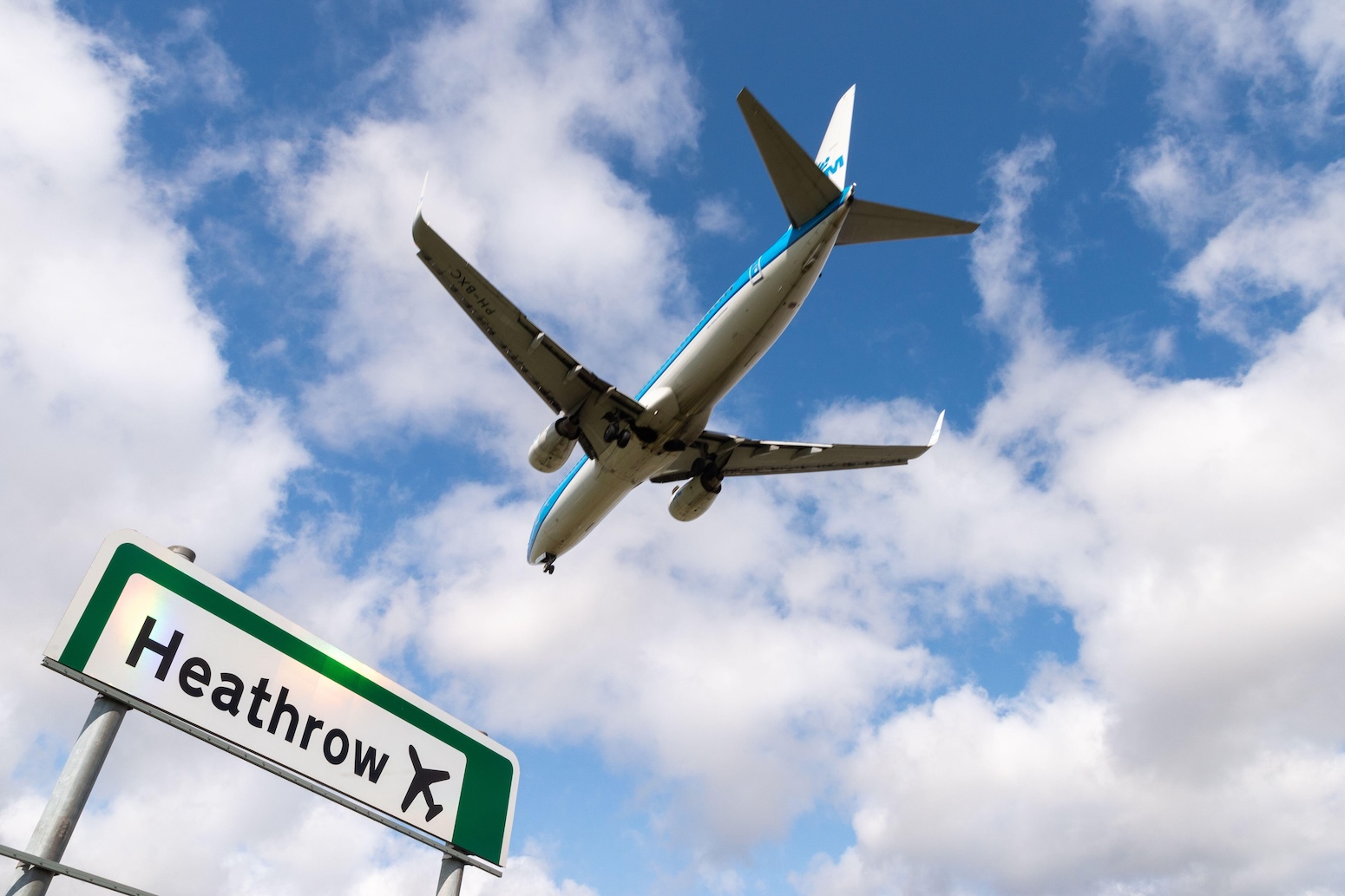
Britain's Committee on Climate Change (CCC) warns that aviation could consume 80% of the UK's total carbon budget by 2050 if Heathrow Airport expands as planned. This projection reveals a fundamental conflict between infrastructure investment and climate commitments.
The CCC analysis models a scenario where Heathrow's third runway proceeds. Under this expansion, passenger numbers would increase substantially, driving up aviation emissions while other sectors cut carbon output to meet net-zero targets. The mathematics becomes stark: as electricity decarbonizes, manufacturing shrinks, and transport electrifies, aviation's share of remaining emissions balloons simply because the sector lacks viable zero-carbon alternatives at scale.
Aviation currently accounts for roughly 2% of global CO2 emissions. Within the UK, the sector produced about 37 million tonnes of CO2 in 2018, approximately 7% of national emissions. Yet the CCC projects that without major technological breakthroughs, expanding Heathrow would lock in decades of high-carbon flight. Jet fuel combustion releases CO2 directly into the upper atmosphere, where it has greater warming impact than surface-level emissions. Electric aircraft remain years or decades away from commercial viability on long-haul routes, the profit centre for major hub airports.
The UK government adopted net-zero emissions by 2050 through the Climate Change Act. This legally binding target requires roughly 78% emissions reductions from 1990 levels by 2050, with remaining emissions offset through carbon capture or land restoration. The CCC assessment suggests Heathrow expansion consumes that offset budget rapidly, leaving little room for other sectors or residual emissions.
Several factors compound the problem. First, aviation demand historically grows faster than fuel efficiency improves. Passenger numbers at major UK airports doubled between 2000 and 2019, while per-flight emissions fell only 15-20% through engine improvements. Second, sustainable aviation fuels (SAF) currently cost three times more than conventional jet fuel and remain scarce. The UK produces virtually no SAF domestically. Third, the financial incentives favour expansion. Heathrow generates substantial employment and tax revenue. Airlines profit from growth, regardless of carbon costs absorbed by society.
The CCC's findings challenge the Department for Transport's 2018 Heathrow decision, which approved the expansion without fully accounting for climate consequences. The airport operator, Heathrow Holdings, argues the third runway is essential for UK competitiveness and jobs. Yet this argument sidesteps the carbon arithmetic. Expansion trades short-term economic benefits for long-term climate compliance costs.
Alternative approaches exist. Strengthening air passenger duty (a tax on flights) would reduce demand for short-haul routes, where train travel offers lower-carbon alternatives. The UK could require airlines to blend SAF into fuel supplies, though this requires coordinated EU and international action. Limiting airport expansion to existing capacity forces the aviation industry to innovate rather than grow consumption.
The CCC report forces a choice: expand aviation and shrink the carbon budget for every other sector, or constrain flight growth and preserve flexibility for manufacturing, agriculture, and residual industrial emissions. The UK cannot achieve both net-zero and Heathrow expansion under current technological conditions.