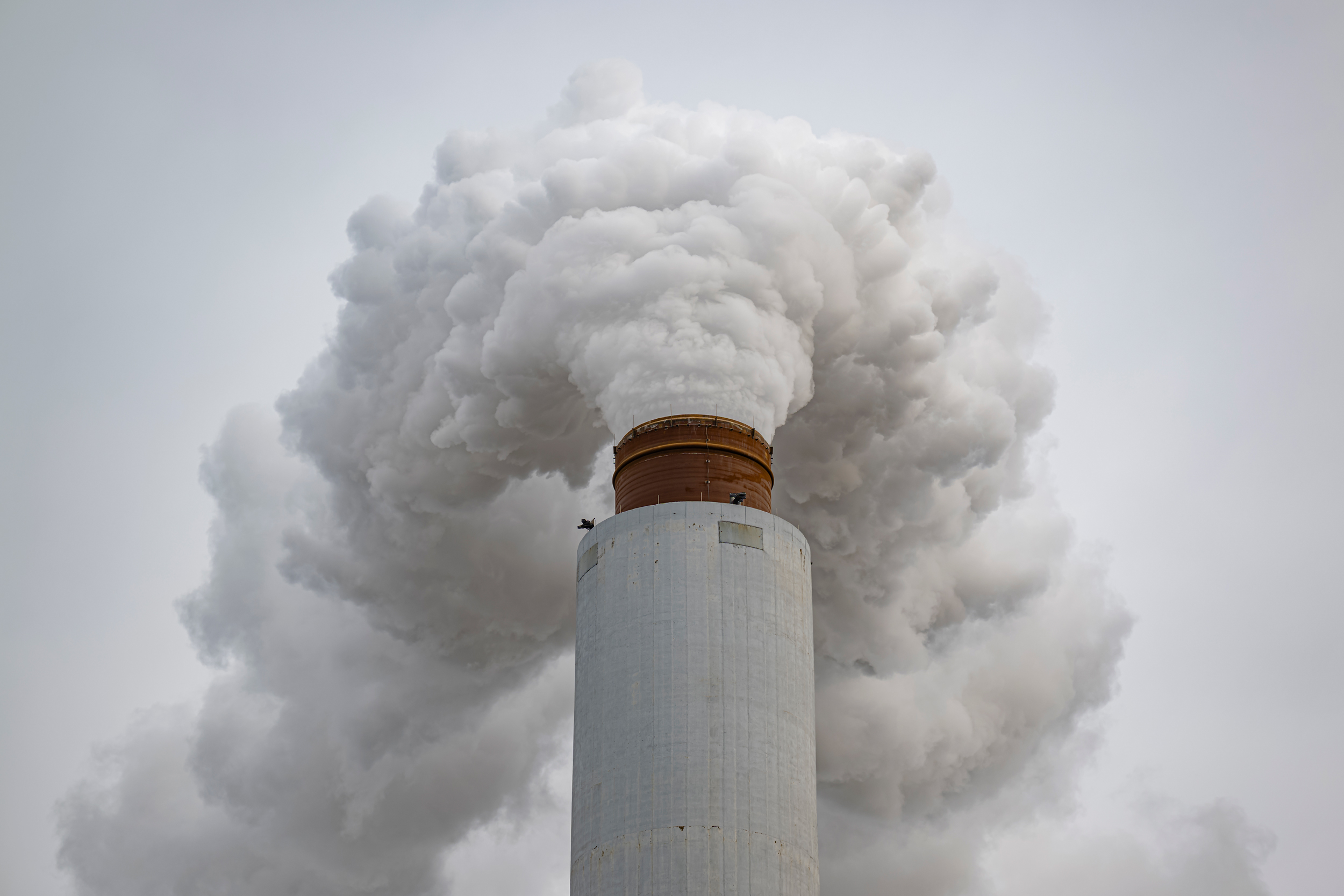
The Trump administration has repealed most of the Biden-era power plant emissions rule, a move that strips away the most aggressive federal limits on carbon dioxide from the nation's second-largest source of greenhouse gas emissions. The Environmental Protection Agency announced the reversal as new UN research warns that global temperatures continue their climb toward thresholds of irreversible climate damage.
The Biden rule, finalized in 2023, required power plants to slash carbon emissions by approximately 90 percent by 2032 through a combination of efficiency upgrades and a shift away from coal. The regulation applied to both new and existing coal and natural gas plants, establishing the first federal standards that effectively required coal-fired facilities to phase out operations or install expensive carbon capture technology within a decade.
The Trump administration's repeal eliminates most of these phase-out requirements, though it retains narrow limits on particulates and some air pollutants. Legal experts note the reversal follows the Supreme Court's 2022 decision in West Virginia v. EPA, which constrained the agency's authority to impose sweeping carbon regulations. The administration argues the original rule exceeded the EPA's statutory powers.
The power sector accounts for approximately 25 percent of U.S. greenhouse gas emissions, second only to transportation. Coal plants alone represent roughly 15 percent of national emissions. The Biden rule targeted this sector because power generation offers clearer technological pathways for decarbonization than sectors like aviation or agriculture. Solar and wind capacity have expanded rapidly over the past decade, making fossil fuel displacement technically feasible and increasingly cost-competitive.
The timing aligns with record global heat. The summer of 2024 registered as the warmest on record, according to multiple data repositories including the Copernicus Climate Change Service. Concurrently, the United Nations Environment Programme released research indicating that current national climate commitments fall far short of limiting warming to 1.5 degrees Celsius above pre-industrial levels. The gap between pledged reductions and necessary cuts widens with each year of delay.
Industry responses diverge sharply. Coal advocates welcomed the repeal, framing it as regulatory relief. Major utilities like Duke Energy and American Electric Power, however, had already invested billions in renewable capacity and grid modernization under the assumption the rule would persist. Many have announced continued transition plans independent of federal mandates, citing economic advantages and investor demand.
State regulators in California and Northeast coalition states signal they will maintain or tighten their own emissions standards. These regional approaches, while more stringent than federal requirements, create a fragmented landscape where compliance costs vary across the country.
Environmental groups including the Sierra Club and Natural Resources Defense Council have filed legal challenges, arguing the EPA overstepped its authority in reversing the rule without adequate justification. They contend the Clean Air Act and Clean Power Act grant the EPA explicit responsibility to regulate greenhouse gases from stationary sources.
The reversal removes an estimated 450 to 500 million metric tons of carbon dioxide reductions over the next decade compared to a business-as-usual baseline. That volume represents roughly 4 to 5 percent of annual U.S. emissions. Federal judges will ultimately determine whether the repeal survives legal scrutiny.