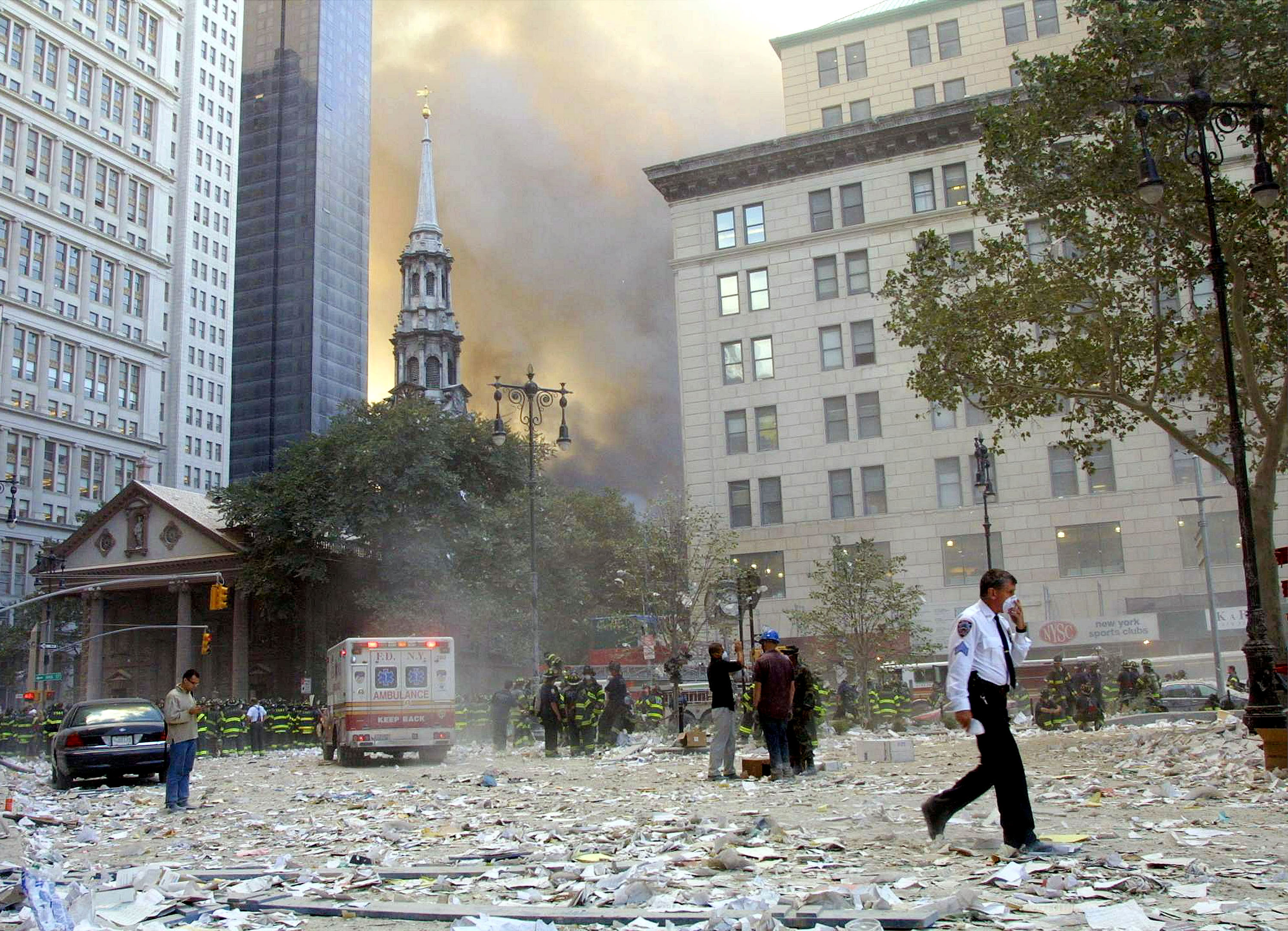
# The Dust Settled. The Health Effects of 9/11 Didn't
Philip Landrigan watched the attacks unfold on television like millions of others. As chair of the Department of Preventive Medicine at Mount Sinai School of Medicine in New York, he was positioned uniquely to grasp what the rubble meant beyond the immediate tragedy. The collapse of the Twin Towers released a plume of toxic dust across lower Manhattan containing asbestos, lead, polychlorinated biphenyls, and other hazardous materials. Landrigan and his team began tracking health outcomes almost immediately.
Nearly a quarter century later, the epidemiological record is unambiguous. First responders, residents, and workers exposed to the dust face elevated risks of cancer, respiratory disease, and mental health disorders. The World Trade Center Health Program, established by Congress in 2010, has enrolled over 130,000 people and documented thousands of diagnoses directly linked to dust exposure.
Landrigan's research at Mount Sinai established one of the first coherent pictures of the disaster's health footprint. His team identified excess lung function decline in firefighters and other workers. They documented new-onset asthma in rescue personnel. They tracked increased rates of thyroid cancer, including papillary thyroid cancer, in exposed populations. The mechanism was straightforward: particles and chemicals inhaled during the recovery effort embedded themselves in airways and lung tissue, triggering chronic inflammation and malignant transformation.
The latency period for many 9/11-related cancers stretched years. Mesothelioma cases began appearing in 2007. Lung cancers surfaced in 2010. This lag created a public health challenge. As acute injuries healed and media attention shifted, the medical community struggled to connect diagnoses occurring a decade later to exposures on a single day in 2001.
The World Trade Center Health Program currently recognizes over 50 diseases as covered conditions for program participants. The list includes gastroesophageal reflux disease, cardiovascular disease, and complex post-traumatic stress disorder. Enrollment expanded in 2015 and again in 2019 when Congress reauthorized funding through 2090, acknowledging that disease emergence would continue for decades.
Landrigan's work revealed an uncomfortable truth about environmental disasters. The hazard does not end when rescue operations conclude. The dust that descended on Manhattan contained legacy pollutants banned for decades. Asbestos, despite restrictions, remained present in older buildings. The burning of jet fuel, office materials, and construction materials created a chemical cocktail unprecedented in scale and composition.
Survivors and responders who enrolled in the health program report cancer rates running roughly three times higher than expected in comparable age groups. The program has provided medical monitoring and treatment coverage, partly offsetting the burden. But prevention proved impossible once exposure occurred.
The 9/11 story established a template for understanding occupational and environmental health disasters. Landrigan's findings influenced how agencies like the Occupational Safety and Health Administration approach future mass casualty events involving chemical exposure. His research demonstrated that epidemiologists must begin systematic health surveillance immediately, not years later when cases cluster.
Today, over 10,000 people enrolled in the health program have developed cancer diagnoses. The death toll from 9/11-related illness now rivals the death toll from the immediate attacks. Landrigan continues publishing on the long-term health trajectories of exposed populations, ensuring that the disaster's impact remains visible to the medical and policy communities responsible for protecting public health in future crises.