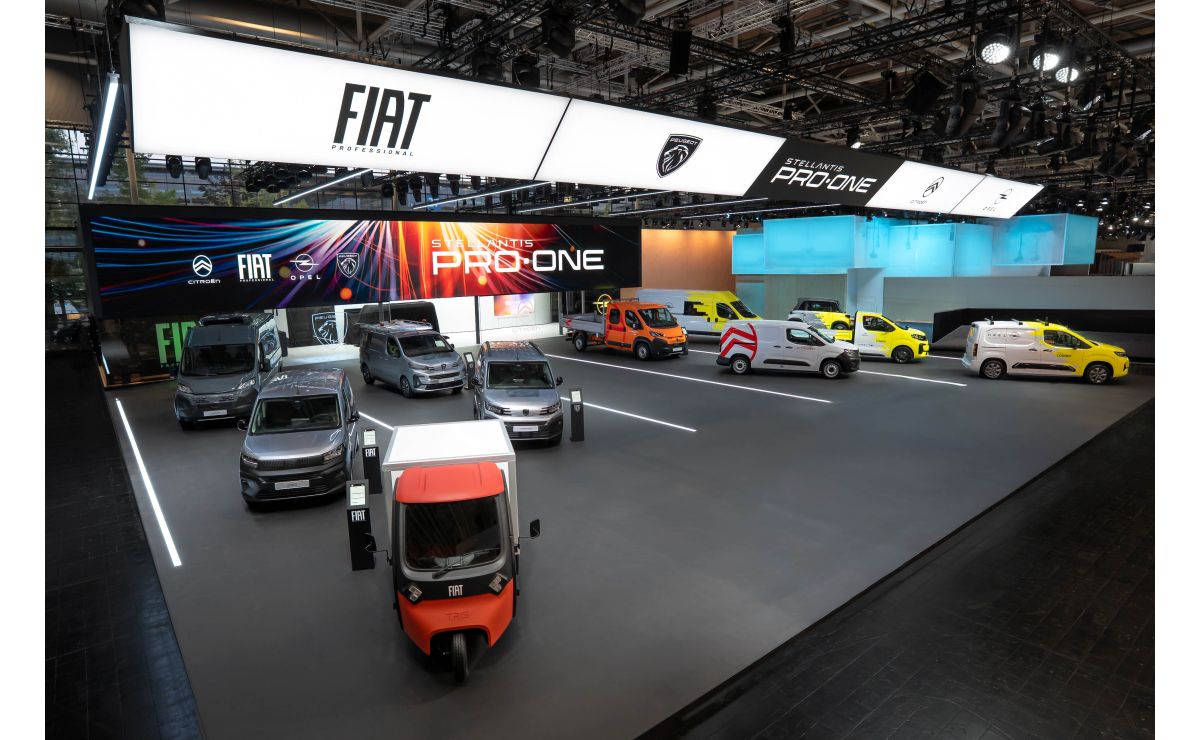
Stellantis, the multinational automaker behind Citroën, Fiat Professional, Opel, and Peugeot, showcased 13 electric commercial vehicles at IAA Transportation 2026 in Hanover, Germany this month. The display signals accelerating momentum in the electrification of light commercial vehicle fleets across Europe, a segment that historically lagged passenger car decarbonization efforts.
The vehicles on Stellantis Pro One's stand included battery-electric vans and smaller urban delivery vehicles, reflecting a market shift toward zero-emission last-mile logistics. Commercial vans represent a critical decarbonization target for European transporters, with light commercial vehicles accounting for roughly 7 percent of total EU transport emissions and growing steadily as e-commerce demand expands delivery volumes.
This expansion addresses regulatory pressure from the Euro 7 emissions standard, which tightens nitrogen oxide and particulate matter limits for commercial vehicles beginning in 2026. More directly, the EU's CO2 emission reduction targets for vans require manufacturers to cut fleet average emissions by 55 percent by 2030 relative to 2021 baselines. Under current rules, electric vans count toward these targets with zero direct emissions, creating financial incentives for rapid fleet electrification.
Stellantis enters a competitive landscape. Volkswagen Commercial Vehicles released the ID.Buzz in Europe in 2023 and now offers the ID.Cargo electric van line. Ford's electric Transit van launched in 2022 and has captured substantial European market share. Mercedes-Benz eSprinter deliveries began in 2024. Chinese competitors including BYD and Li Auto have begun exporting electric commercial vehicles to Europe, intensifying price competition.
Battery costs remain the primary barrier to affordability. Electric vans typically command 40 to 60 percent price premiums over diesel equivalents, though operating cost advantages over vehicle lifespans often justify the upfront investment for high-mileage fleet operators. European subsidy programs, including Germany's KfW electric vehicle financing and France's electric van purchase grants, help offset acquisition costs.
Stellantis' multi-brand approach using Citroën, Fiat Professional, Opel, and Peugeot platforms allows cost-efficient production across market segments. The grouping targets diverse customer bases. Citroën appeals to price-conscious buyers and small delivery services. Peugeot targets mid-market operators. Opel and Fiat Professional position themselves in premium urban mobility segments. This portfolio strategy mirrors successful approaches by Volkswagen Group, which segments electric vans across VW, Audi, and Iveco Commercial brands.
Urban delivery networks driving electrification adoption represent roughly 30 percent of total EU commercial vehicle sales. Cities including Paris, Amsterdam, and Berlin increasingly restrict diesel commercial vehicles from urban centers, creating regulatory incentives for operator fleet conversion. Companies like Amazon, DHL, and DPD have committed to zero-emission delivery fleets by 2030 or 2035, generating procurement pressure across suppliers.
Charging infrastructure expansion remains critical. European deployment of fast-charging hubs designed for commercial vehicle dwell times lags behind passenger vehicle networks. Stellantis investments in fleet electrification therefore depend partly on third-party infrastructure partnerships and grid capacity upgrades in major logistics corridors.
The IAA Transportation display indicates Stellantis committed to capturing market share in a van electrification segment projected to represent 40 to 45 percent of European light commercial vehicle sales by 2030. Execution depends on balancing pricing competitiveness with profitability amid rising battery costs and competing manufacturer investments.