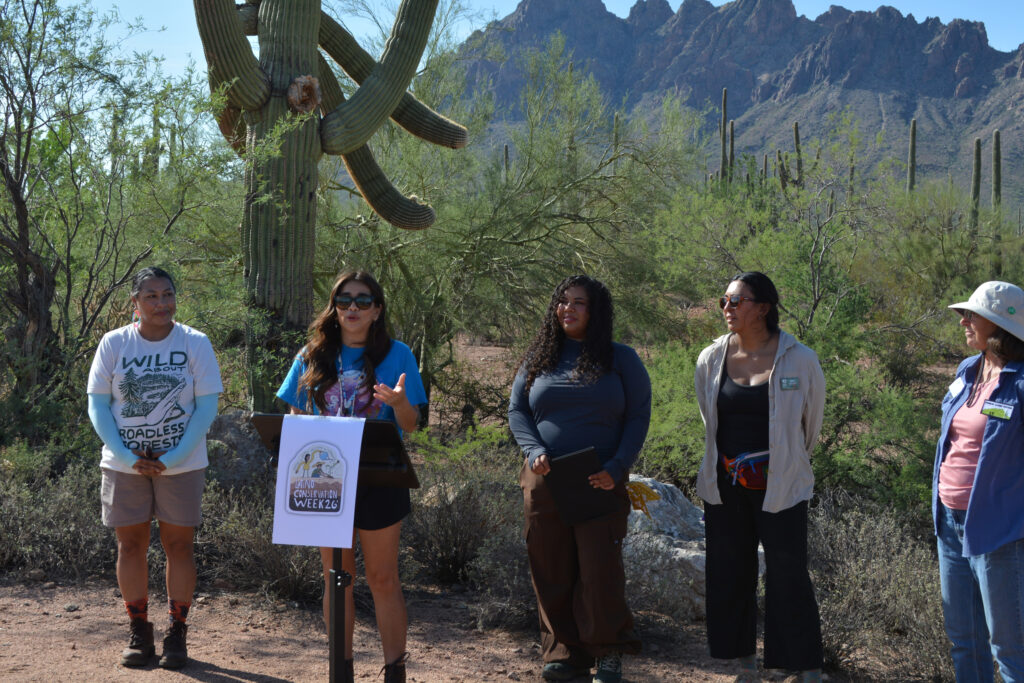
# Latino Conservation Week Launches at Arizona's Ironwood Forest as Monument Faces Political Threats
Cassandra Becerra grew up fishing in Arizona's public lands after immigrating from Mexico at age three. Her family lacked money but accessed the open spaces that define the state's landscape. Today, Becerra works as an environmental advocate. She now watches those same lands face political pressure.
Ironwood Forest National Monument in southern Arizona hosted the kickoff for Latino Conservation Week, an annual event celebrating Latino participation in environmental stewardship. The timing reflects mounting concern about the monument's future. The 129,055-acre preserve sits in Pima County and protects desert scrubland, saguaro cacti, and wildlife habitat in a region where Latino communities have deep historical roots.
The monument designation carries legal weight. President Barack Obama established Ironwood Forest in 2013 under the Antiquities Act. This federal authority allows presidents to protect public lands without congressional approval. Republican administrations have repeatedly attempted to shrink or eliminate monuments designated by Democratic predecessors. The Trump administration reduced Bears Ears National Monument in Utah by 85 percent and Grand Staircase-Escalante by nearly half. Current threats to Ironwood Forest persist despite changing administrations.
Latino populations comprise roughly 35 percent of Arizona's residents. Yet Latino voices remain underrepresented in mainstream conservation discussions and environmental organizations. Latino Conservation Week seeks to change that imbalance by highlighting Latino-led environmental initiatives and connecting communities to public lands management.
Ironwood Forest protects biodiversity in the Sonoran Desert. The monument's thorny forests harbor species found nowhere else on Earth, including the Sonoran Desert tortoise and various oak species. Water scarcity and climate change intensify pressure on these ecosystems. Rising temperatures reduce precipitation in southwestern Arizona, threatening plant survival and wildlife migration patterns.
The monument also holds archaeological significance. Indigenous peoples inhabited this region for millennia. Spanish colonial settlements followed. Mexican communities established ranches and farming operations across the landscape. These layered histories connect contemporary Latino communities to environmental conservation in direct, personal ways.Conservation efforts in Arizona increasingly recognize this legacy. Federal land agencies acknowledge that excluding Latino perspectives from decision-making produces incomplete environmental policy.
Becerra's journey mirrors broader demographic shifts in environmental activism. Younger Latino Americans engage with conservation at rising rates, though barriers persist. Language access limitations, transportation challenges, and historical exclusion from outdoor recreation spaces continue to limit participation in public lands activities.
The week-long event includes guided hikes, educational workshops, and policy discussions. Organizers invited community members to learn about monument management, climate adaptation strategies, and opportunities for Latino-led environmental organizations to secure funding and technical support.
Ironwood Forest remains vulnerable to political attack. Congressional Republicans have introduced bills targeting the monument multiple times. Mining interests and agricultural operators oppose restrictions on land use. The Biden administration has defended the monument's status, but future administrations could reverse that position.
Latino Conservation Week at Ironwood Forest sends a message. Environmental protection serves Latino families and communities directly. Public lands belong to all Americans, and environmental decision-making improves when Latino voices lead, not follow.