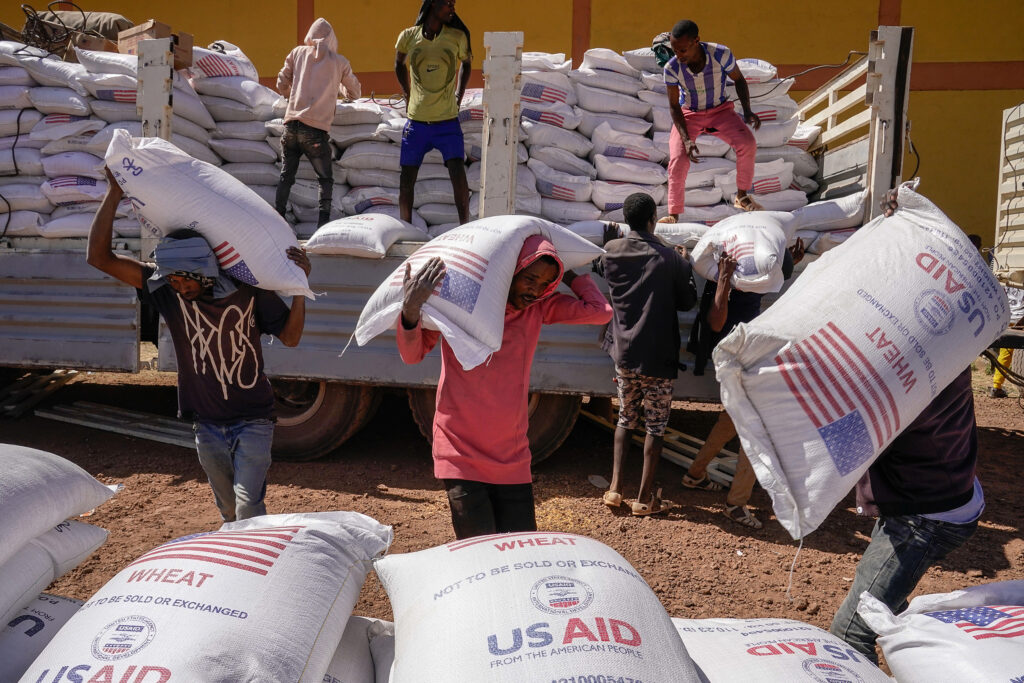
The shutdown of USAID has created a funding vacuum in global environmental work that threatens conservation initiatives across the developing world. The agency distributed billions annually to combat deforestation, build climate resilience, and scale renewable energy in countries with the fewest resources to act alone.
USAID's environmental portfolio addressed interconnected crises. The agency financed tropical forest protection programs in Brazil, Indonesia, and the Congo Basin. It funded climate adaptation projects helping farmers in sub-Saharan Africa respond to prolonged droughts and shifting rainfall patterns. It supported clean energy transitions in South Asia and Latin America. This work did not operate in isolation. Deforestation drives carbon emissions and reduces biodiversity. Rural communities dependent on agriculture face existential threats from changing climate patterns. Without external funding, these priorities collapse or scale down dramatically.
The United States has not simply redirected this funding. The abrupt dismantling eliminated programs mid-cycle, disrupting commitments to partner nations and community organizations. Local governments lose technical expertise and financial resources simultaneously. Conservation groups operating in fragile ecosystems report funding gaps that force staff reductions and project suspensions.
The environmental stakes extend beyond direct USAID programming. These initiatives supported implementation of the Paris Climate Agreement and the Convention on Biological Diversity. When the U.S. withdraws funding, it signals reduced commitment to these global frameworks. Other donors do not automatically fill the gap. The World Bank and multilateral development banks operate under different mandates and approval processes. Private climate finance requires profitability benchmarks that exclude many subsistence-level adaptation projects in least developed countries.
Deforestation acceleration follows predictable patterns when monitoring and enforcement funding disappears. In the Amazon, reduced pressure from environmental programs correlates with increased land clearing for cattle ranching and soy cultivation. Similar dynamics play out across the Congo Basin and Southeast Asia. These regions hold carbon stocks equivalent to years of global emissions. Their degradation locks in climate change trajectories independent of developed-world decarbonization efforts.
The disruption also undermines U.S. diplomatic influence. USAID funded work built relationships with host governments and local institutions. The agency's presence created channels for policy dialogue and technical cooperation. Its exit cedes this influence to other actors, including China and India, which expand development financing with fewer environmental conditions.
Climate modeling from the Intergovernmental Panel on Climate Change indicates that limiting warming to 1.5 degrees Celsius requires emissions reductions across all sectors and geographies. Developing nations account for an increasing share of emissions from land use change and energy infrastructure development. Without support for sustainable alternatives, these countries face pressure to maximize short-term economic returns through extractive resource use.
USAID's dismantling occurred without replacement mechanisms. Congress has not appropriated alternative funding streams for environmental diplomacy or climate finance contributions. The U.S. climate finance pledge, already falling short of committed levels, faces further erosion.
Organizations previously funded by USAID scramble to secure alternative sources. Some shift to philanthropic funding. Others reduce operations. The most severe impact lands on communities with lowest adaptive capacity. Smallholder farmers in drought-prone regions lose extension services. Village-level conservation efforts lose support. This asymmetry structures climate change impacts along existing lines of inequality.
The full consequences will emerge over years. Forests take decades to recover from degradation. Climate impacts compound over time. USAID's absence sets trajectories that persist long after funding decisions are reversed.