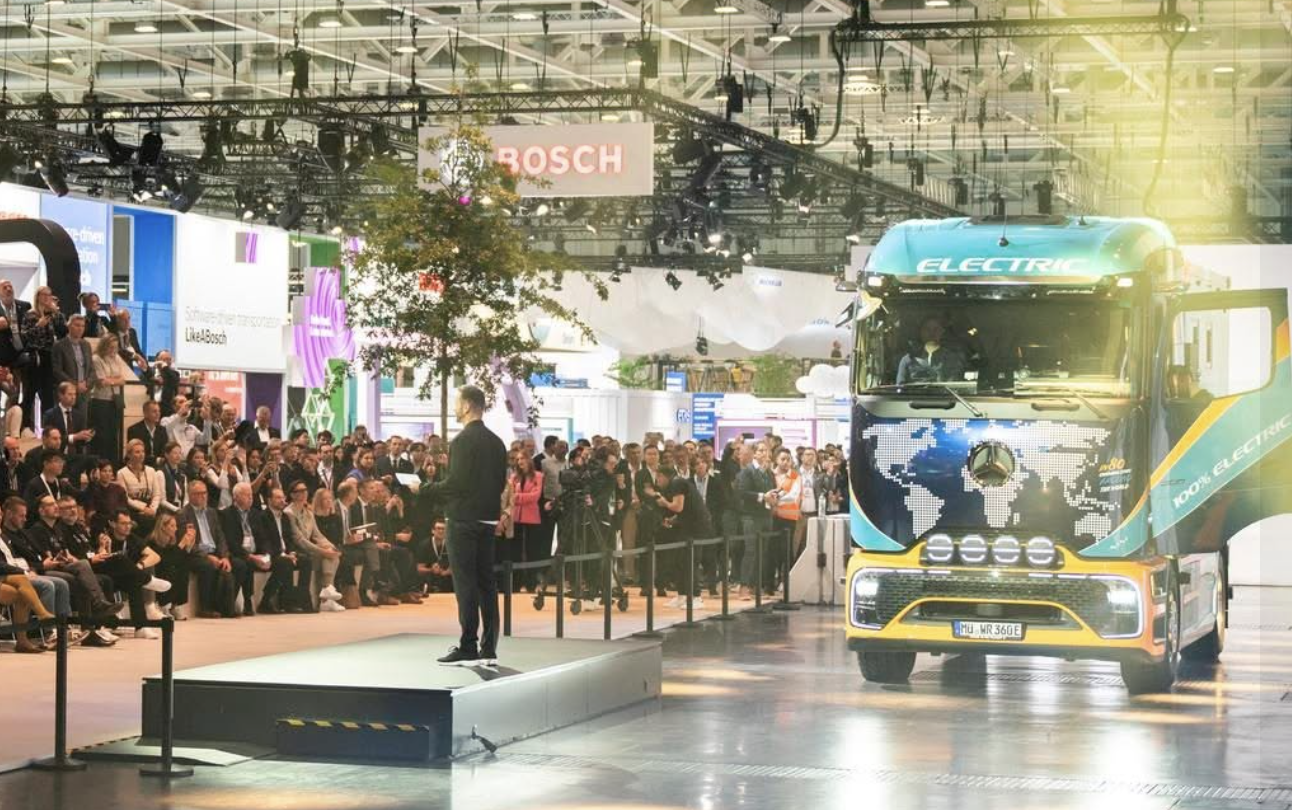
The commercial vehicle industry accelerated its shift toward electrification this week as the IAA Transportation 2026 trade show opened in Hanover, Germany, drawing 1,589 exhibitors from 46 countries. The expanded attendance reflects the sector's growing commitment to zero-emission and alternative-fuel technologies that manufacturers view as essential for meeting tightening European Union emissions standards and responding to fleet operator demand for lower operating costs.
Electric trucks and hydrogen-powered vehicles dominated conversations on the show floor, signaling that major automakers and specialty manufacturers have moved beyond pilots and into serious production planning. The diversity of powertrains on display reflects the current reality of commercial vehicle decarbonization: no single technology will replace diesel across all applications. Long-haul trucking, urban delivery, and specialized transport each require different solutions.
The IAA Transportation show holds particular weight in the global commercial vehicle sector. Europe, where this show takes place, has enacted strict CO2 standards requiring truck manufacturers to reduce fleet average emissions by 55 percent between 2019 and 2030, with further cuts to 93 percent by 2040. These binding targets have forced companies like Volvo Trucks, Scania, and MAN to commercialize electric powertrains at scale rather than as niche offerings.
Battery electric trucks now represent the fastest-growing segment for urban and regional delivery in Europe, where routes are shorter and battery range constraints matter less. Companies like Volkswagen's MAN and Daimler Truck have begun mass production of electric models. Meanwhile, hydrogen fuel cell trucks remain under development for longer-haul applications, with manufacturers targeting mid-decade deployment for serious commercial operations.
The increase in international participation at this year's show points to growing global interest in commercial vehicle electrification. Manufacturers from China, India, and other regions now compete alongside established European players. This competitive pressure accelerates innovation timelines and drives down costs, though supply chain constraints for battery materials remain a bottleneck.
Fleet operators attending the show face concrete business decisions. Operating costs for electric trucks have dropped substantially as battery prices declined roughly 14 percent annually over the past five years. Total cost of ownership calculations now favor electrification for many fleet profiles, particularly in regions with government purchase incentives and charging infrastructure investment.
Hanover's show floor also reflected infrastructure realities. Charging networks across Europe remain fragmented and underdeveloped compared to truck volumes expected in 2030 and beyond. Public investment in megawatt-scale depot charging and corridor fast-charging stations continues to lag manufacturer deployment timelines. Logistics companies expressed concern about stranded assets if charging infrastructure fails to materialize on schedule.
The commercial vehicle sector's electrification pace differs markedly from passenger vehicle transitions. Trucks generate revenue and operate consistently across long hours, making the economics of electrification more straightforward once infrastructure exists. A delivery truck running 200 kilometers daily benefits from lower fuel and maintenance costs far more than a passenger car driven occasionally.
IAA Transportation 2026's packed attendance and technology focus suggest manufacturers view 2026 as an inflection point for the industry. Investment decisions announced this week will determine which companies lead the transition and which struggle to compete in a rapidly decarbonizing market. Regulatory deadlines are fixed. Manufacturers cannot delay.