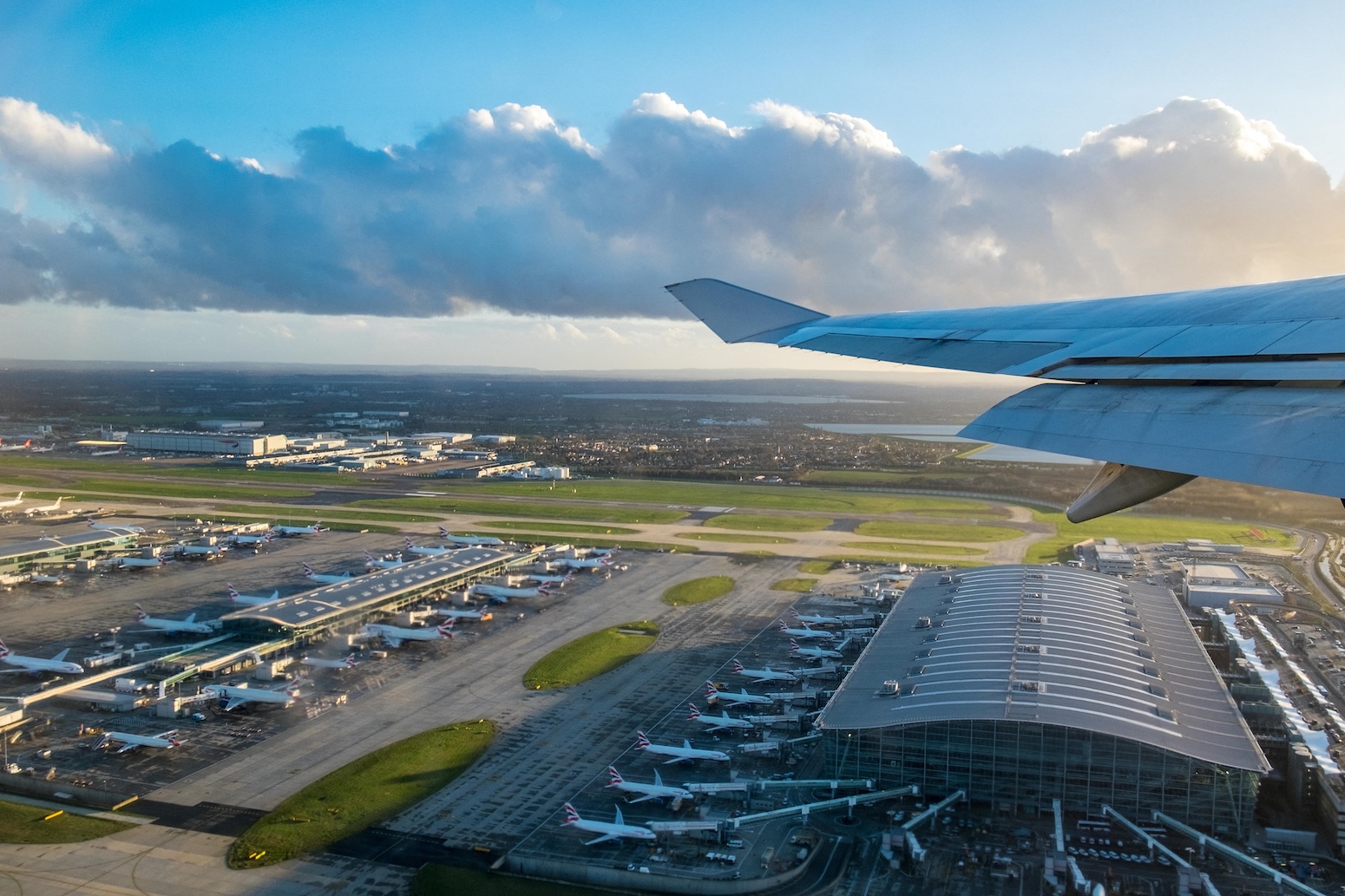
The UK government substantially revised upward its projections for aviation emissions in 2050, now expecting them to be 50% higher than previous forecasts, the Department for Transport confirmed this week. The revision reflects a dramatic downgrade in official assumptions about the adoption of electric aircraft and sustainable aviation fuels (SAFs) over the next three decades.
The Department for Transport updated its aviation demand projections and decarbonization pathways as part of ongoing work on the UK's Net Zero Strategy. The new figures assume that electric planes will penetrate only a small fraction of the market by 2050, limited primarily to short-haul regional flights. The government also cut its expectations for SAF uptake, which had been positioned as a near-term emissions reduction tool. Under the revised scenario, SAF comprises a much lower percentage of jet fuel consumption by mid-century than previously modeled.
This revision carries major implications for the UK's overall emissions targets. Aviation currently accounts for roughly 2% of global carbon emissions and 6% of UK domestic greenhouse gas emissions. If the sector's projected output rises substantially, achieving the nation's legally binding 2050 net-zero commitment becomes more difficult. The Climate Change Committee, the independent statutory body that advises the government on emissions reductions, has flagged aviation as one of the hardest sectors to decarbonize.
The downward revision in technology expectations reflects current technological realities. Battery electric planes remain in early development stages, with limited range and payload capacity. Airbus and other manufacturers have sketched concepts for electric regional aircraft carrying fewer than 100 passengers, but commercial viability remains years away. Larger, long-haul electric aircraft face fundamental physics constraints. Battery energy density, weight considerations, and charging infrastructure all present barriers that engineers have not yet overcome at scale.
SAFs, derived from waste biomass, recycled carbon, or synthetic hydrogen, offer a more immediately deployable option. However, production capacity remains minimal. Current global SAF output represents less than 0.1% of jet fuel consumption. Scaling production to displace significant volumes of conventional fuel requires substantial capital investment and regulatory support that governments have hesitated to mandate.
The government's revised projections do not alter existing aviation policy frameworks. The Department for Transport's strategy continues to rely on technological improvement, efficiency gains in fleet operations, and increased use of SAFs as primary decarbonization levers. No new restrictions on aviation growth have been announced, nor have targets for reducing air passenger numbers been introduced.
The revision underscores a critical gap between the pace of technological change and the timeline for net-zero compliance. Aviation emissions trajectories now threaten to become a larger compliance burden than previously assumed. The Climate Change Committee will assess whether current policies adequately address this trajectory during its next statutory progress report to Parliament.
The admission reflects broader challenges facing hard-to-abate sectors globally. Decarbonization pathways that rely on breakthrough technologies often face headwinds when those technologies develop more slowly than projections assume.