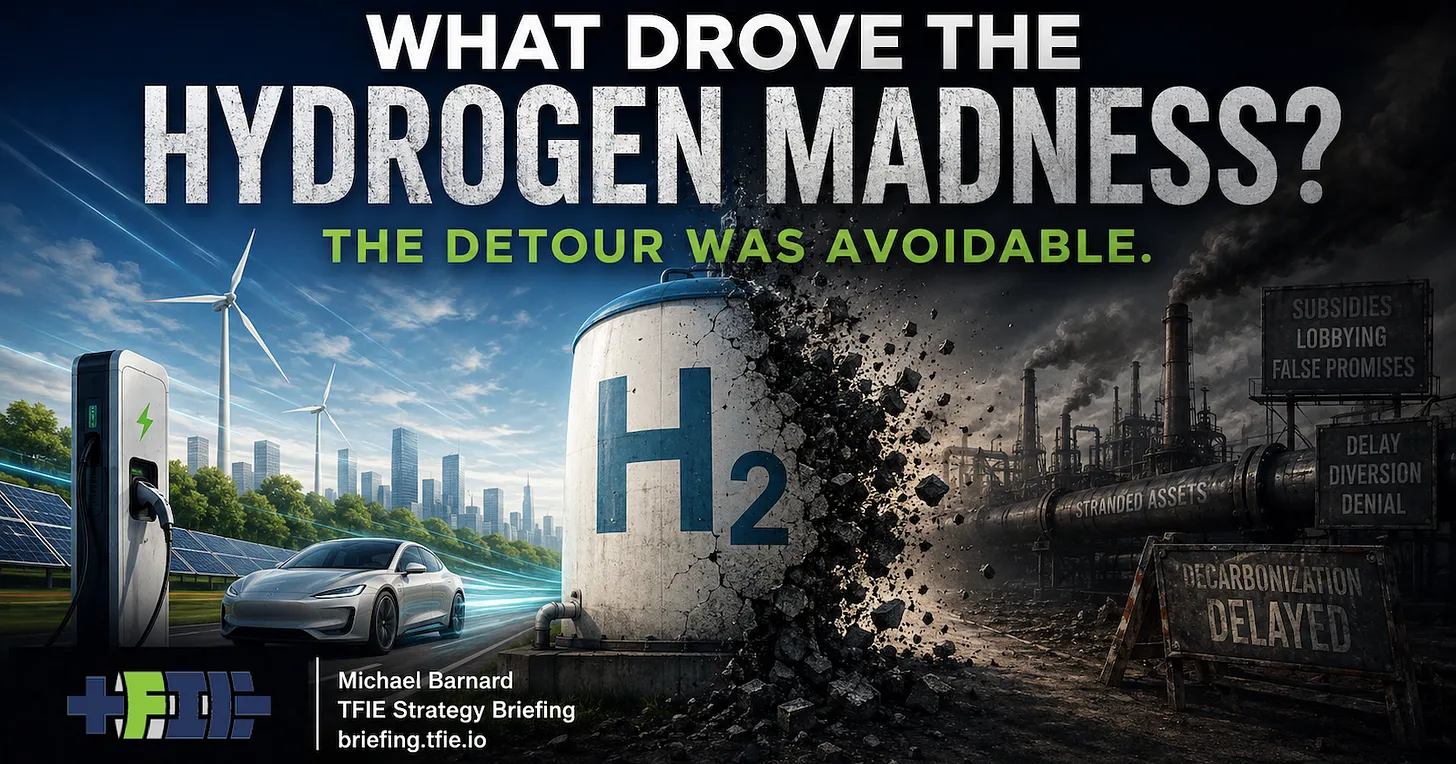
Hydrogen projects continue to advance despite persistent technical and economic failures, revealing a pattern where unsuccessful hydrogen applications receive repeated funding and policy support rather than being abandoned for more efficient alternatives.
A senior executive at a major transportation decarbonization firm expressed frustration in 2023 about hydrogen proposals arriving for uses where energy efficiency and cost-benefit analyses showed poor performance. This anecdote captures a broader trend: hydrogen projects that fail technical or economic tests often secure new opportunities and fresh investment instead of facing elimination from decarbonization portfolios.
The hydrogen sector exhibits what analysts describe as unusual resilience to negative results. Projects designed for freight, heating, industrial processes, and power generation have repeatedly underperformed in pilot phases and real-world deployment. Energy losses during hydrogen production, compression, transport, and reconversion to electricity or heat typically exceed 40 to 60 percent depending on the pathway. Battery electric alternatives achieve 85 to 90 percent efficiency in comparable applications. Despite these documented disparities, hydrogen proposals resurface in policy discussions and corporate sustainability commitments with regularity.
This pattern reflects several structural factors. Hydrogen maintains appeal among policymakers and industry leaders because it preserves existing infrastructure and workforce models in fossil fuel-dependent sectors. Retrofitting oil refineries, steelworks, and heavy transport operations to use hydrogen requires less operational disruption than switching to electrification or alternative technologies. Fossil fuel companies and their supply chains benefit from hydrogen's position as a potential bridge fuel, allowing gradual rather than immediate transitions away from carbon-intensive processes.
Government support amplifies this dynamic. The U.S. Inflation Reduction Act allocated $9.5 billion specifically for hydrogen hubs. The European Union's hydrogen strategy targets 10 million tons of renewable hydrogen production by 2030. These commitments create institutional incentives for continued hydrogen development regardless of pilot outcomes. Once hydrogen receives policy designation as a priority decarbonization pathway, reversing course becomes politically difficult, even when empirical evidence suggests alternatives deliver faster emissions reductions at lower cost.
The economics of hydrogen projects often improve through public subsidy rather than market competition. A power-to-hydrogen-to-power cycle loses substantial energy, making it uncompetitive for grid storage against lithium batteries or pumped hydroelectric systems. Yet hydrogen proposals for long-duration energy storage continue securing funding. Heavy-duty truck manufacturers propose hydrogen fuel cells despite battery electric trucks demonstrating superior total cost of ownership in early commercial deployments.
This cycle undermines decarbonization timelines. Resources directed toward hydrogen projects with poor energy balance represent capital not deployed toward electrification, renewable generation, or grid modernization. Since climate targets depend on emissions reductions within specific decades, inefficient pathways consume resources that delay achievement of necessary cuts.
The hydrogen sector's repeated second chances reflect institutional factors more than technological progress. Without rigorous gatekeeping that eliminates failing applications permanently, hydrogen continues consuming investment and policy attention in domains where alternatives outperform on efficiency, cost, and deployment speed. Breaking this pattern requires decision-makers to accept that some technologies, despite attractive narratives and political support, belong outside decarbonization strategies.