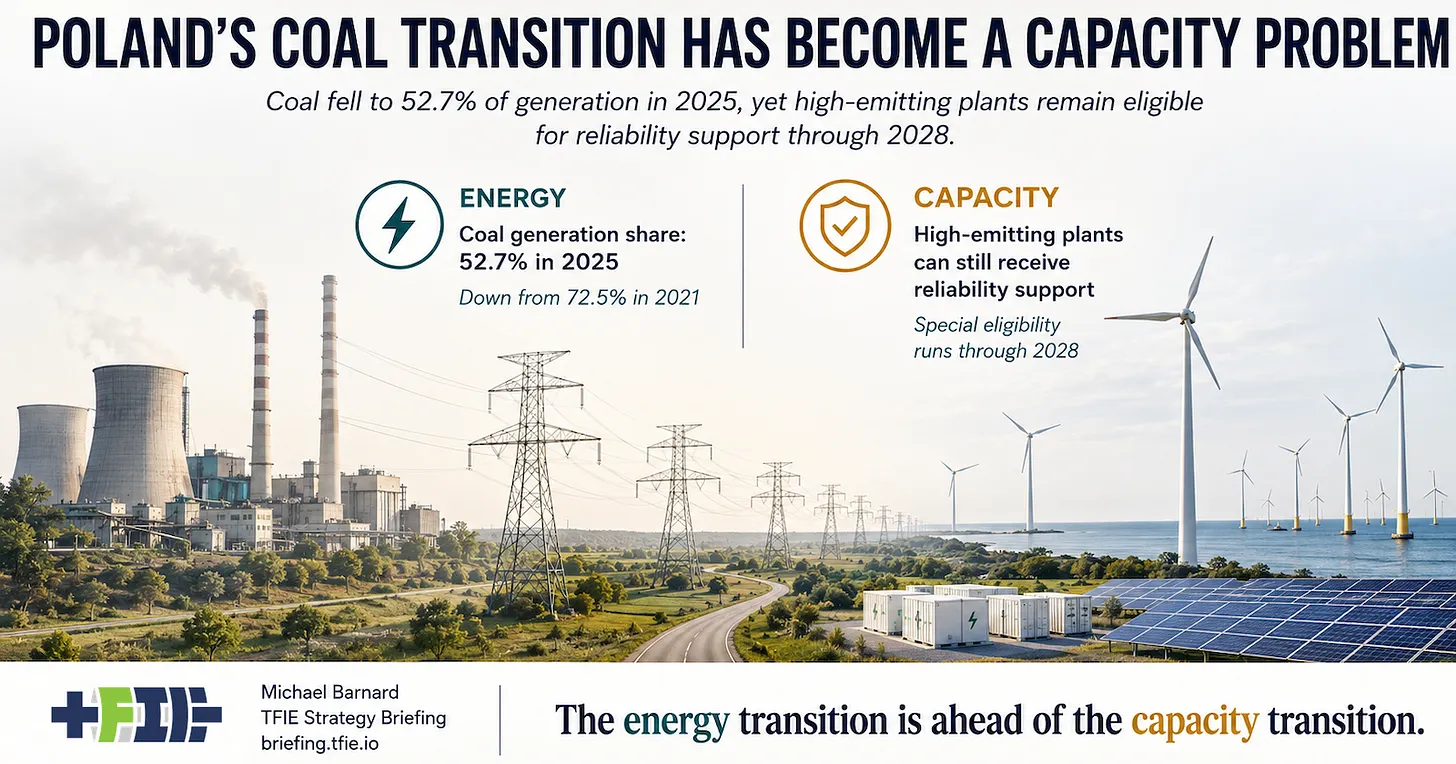
Poland's electricity grid transformed faster than international observers anticipated. Coal's share of generation plummeted from 72.5 percent in 2021 to 52.7 percent by 2025, a drop of nearly 20 percentage points in just four years. Renewable energy sources simultaneously surged to 31.4 percent of the grid, demonstrating that Poland's energy transition accelerated substantially despite the country's historical reliance on coal mining and exports.
The scale of this shift becomes clearer when examining monthly data. Coal supplied less than half of Poland's electricity generation in five separate months during 2025. In June alone, renewable sources generated more electricity than coal for the first time, marking a watershed moment for a nation that once exported coal and built its industrial economy around deep mines in Silesia.
Poland's transition matters because the European Union sets binding renewable energy targets for member states. The bloc aims for 42.5 percent renewables across all EU electricity by 2030. Poland's rapid progress toward this goal reflects aggressive investment in wind farms and solar capacity, particularly across northern plains suited to wind generation. The country added significant offshore wind projects in the Baltic Sea and expanded onshore wind installations substantially.
Several factors drove this transition faster than predicted. EU climate regulations tightened after 2023, imposing stricter carbon pricing through the Emissions Trading System. Carbon allowances grew expensive, making coal-fired power plants less economically competitive. Simultaneously, renewable energy costs declined dramatically. Wind turbines and solar panels became cheaper to install than new coal infrastructure, shifting investment patterns. Poland's government recognized this economic reality and began supporting renewable development through subsidies and grid modernization.
Challenges persist. Poland still holds the EU's fourth-largest coal workforce, concentrated in Silesian mines and power plants. Mining communities face unemployment risks as coal retires. The government must manage this social transition carefully to avoid regional economic collapse. Poland established a Just Transition Mechanism with EU funding to support workers and communities dependent on coal, though implementation remains incomplete.
Grid stability presents technical questions. High renewable penetration requires battery storage and flexible backup capacity. Poland developed natural gas plants to balance intermittent wind and solar generation, but gas prices spiked after Russia invaded Ukraine, straining budgets. The country now prioritizes pumped hydro storage and battery installations to smooth supply variations.
Winter generation patterns create seasonal challenges. Poland experiences lower solar output during darker months and variable wind conditions. The grid relies on nuclear power to address this gap. Construction began on Poland's first nuclear plant at Paczkowo in 2023, with completion expected in 2033. This decision reflects recognition that renewables alone cannot reliably serve Poland's electricity needs year-round.
The 2025 data reveals Poland's energy sector at an inflection point. Coal remains substantial but no longer dominant. Renewables expanded faster than most analysts projected just three years ago. If current trends continue, Poland could achieve 40 to 45 percent renewable generation by 2030, positioning the country to meet or exceed EU targets.
This trajectory reshapes Poland's international profile. The country shifts from being characterized as a climate laggard dependent on coal to a European leader demonstrating rapid energy transition. However, sustaining this momentum requires continued investment in grid infrastructure, workforce transition support, and nuclear baseload capacity development.