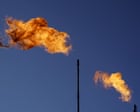
Turkmenistan has begun repairing cracked pipelines and faulty equipment at aging oil and gas facilities, marking the first documented reduction in methane emissions from the Central Asian nation after satellite data exposed it as the world's worst offender for greenhouse gas leaks.
United Nations monitoring confirmed the repairs started in recent months. Turkmenistan's methane footprint had become so severe that emissions from the country alone rivaled those of entire nations. The leaks originated from deteriorating infrastructure across the Caspian Sea region's energy sector, where pipelines, compressor stations, and storage facilities operated decades past their intended lifespan without proper maintenance.
Methane ranks among the fastest drivers of climate warming. The gas traps approximately 80 times more heat than carbon dioxide over a 20-year period, and current atmospheric methane concentrations contribute roughly 25 percent of global heating today. Unlike long-lived carbon dioxide, methane breaks down in the atmosphere within a decade, making emissions reductions deliver rapid climate benefits. Repair projects that seal leaks represent some of the cheapest and fastest emissions cuts available to policymakers.
Satellite imagery and atmospheric monitoring by independent researchers and international agencies revealed Turkmenistan's methane problem in recent years. The secretive nation had long resisted international scrutiny of its energy sector. Previous assessments suggested Turkmenistan's methane leakage rates exceeded those of major producers like Russia and the United States, despite far smaller overall gas production. The disparity pointed to negligent maintenance and aging infrastructure rather than production scale.
The breakthrough came after sustained pressure from climate researchers, international organizations, and peer nations within the Central Asian region. European Union officials and United Nations Environment Programme representatives publicly documented Turkmenistan's emissions during 2023 and 2024, creating diplomatic and reputational costs. Energy markets also shifted incentives. Buyers in Europe and Asia increasingly demand verification that natural gas comes from lower-emissions sources, penalizing producers with chronic leak problems through price discounts or contract restrictions.
Turkmenistan's government initiated repairs at multiple sites. Infrastructure upgrades addressed compressor station leaks, pipeline fractures, and faulty seals at processing facilities. The scale of required work remains substantial. Engineers estimate that completing repairs across all facilities will take years and require hundreds of millions in investment. Yet initial fixes demonstrate willingness to tackle the problem.
Climate scientists emphasize that Turkmenistan's repairs matter globally. Every ton of methane prevented from entering the atmosphere reduces warming pressure over the coming decades. The International Energy Agency calculates that capturing just half of current methane leaks from oil and gas operations worldwide would represent emissions cuts equivalent to removing hundreds of millions of cars from roads annually.
The repairs also carry economic logic. Methane that leaks represents lost product and revenue. Fixing leaks increases gas volume available for sale. Companies recoup repair costs through recovered product sales within months or a few years, making the economics attractive alongside climate benefits.
Turkmenistan's shift from denial to action may establish precedent. Other nations with aging energy infrastructure face similar pressure. Kazakhstan, Russia, and Iran all operate facilities with documented leak problems. Turkmenistan's acceptance of repairs signals that even secretive, energy-dependent states acknowledge the cost of ignoring methane emissions in an increasingly climate-conscious market.