# Data Centers Face Growing Political Resistance Over Energy Demands
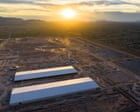
Opposition to data center expansion is hardening across the American political landscape, driven by concerns about electricity consumption and rising power costs for households. More than a dozen U.S. states have now pursued moratoria on data center construction, signaling a shift from quiet acceptance to open resistance against an industry many voters never knew existed.
New York became the first state to formally enact a moratorium last month, a temporary ban targeting facilities that power artificial intelligence training and operations. The move breaks a long period of regulatory silence around data centers, which have operated with minimal public scrutiny despite their ballooning energy footprint.
Data centers consume electricity at rates comparable to entire cities. A single large facility can demand hundreds of megawatts of continuous power, equivalent to the needs of 150,000 to 200,000 households. The U.S. data center sector already accounts for roughly 4 percent of national electricity consumption and is growing rapidly as artificial intelligence workloads intensify demand. The International Energy Agency projects data center power consumption could double or triple by 2026.
Bipartisan frustration reflects a convergence of concerns. Rural communities hosting data centers report strain on local water supplies, as facilities require massive quantities for cooling systems. Residents in Virginia, which hosts one of the nation's largest data center clusters, have raised alarms about groundwater depletion. Urban areas worry about congestion on aging electrical grids. Energy costs create the most direct pressure on household budgets.
Public awareness remains low. Most Americans understand data centers exist, but few grasp their energy demands or connection to climbing electricity bills. As states implement climate commitments requiring dramatic emissions cuts, data centers compete for renewable energy capacity that could otherwise power homes and businesses. In regions relying on fossil fuels, additional data center load raises carbon emissions rather than preventing them.
The regulatory response varies. Some states pursue outright moratoria on new construction. Others impose conditions: environmental impact reviews, water use restrictions, or requirements that facilities source 100 percent renewable power. Virginia imposed a two-year conditional moratorium in 2024, requiring new facilities to meet renewable energy standards. Several states now demand enhanced water management protocols.
Industry lobbyists argue data centers drive economic development and tax revenue. Tech companies counter that global competition for infrastructure requires permissive regulatory environments. They also contend that on-site renewable installations offset grid impacts. Yet independent analysis shows many U.S. data centers still draw from coal-heavy grids, particularly in the Southeast and Midwest.
The New York ban targets a specific problem. The state recognized that AI training facilities consume energy at rates exceeding traditional data centers by five to ten times. Given New York's aggressive climate targets, lawmakers determined that uncontrolled AI infrastructure expansion contradicts emissions reduction goals. The moratorium runs through 2026, allowing time for regulatory development.
This moment reflects growing public understanding that energy infrastructure choices carry real costs. Voters now ask whether unlimited data center expansion serves public interest or merely shareholder returns. Several states scheduled votes on data center regulations for 2024 and 2025, suggesting momentum will intensify. Tech companies face pressure to either drastically cut energy demand through efficiency improvements or site new facilities in regions with abundant renewable capacity. The era of data center construction free from democratic scrutiny appears to be ending.